Meta Is Cutting 8,000 Jobs and Reassigning 7,000 More, All in the Same Week
Meta is cutting 8,000 jobs and moving 7,000 employees into new AI units in the same week. A breakdown of the restructuring, the severance terms, and what it signals about where Big Tech is actually heading.
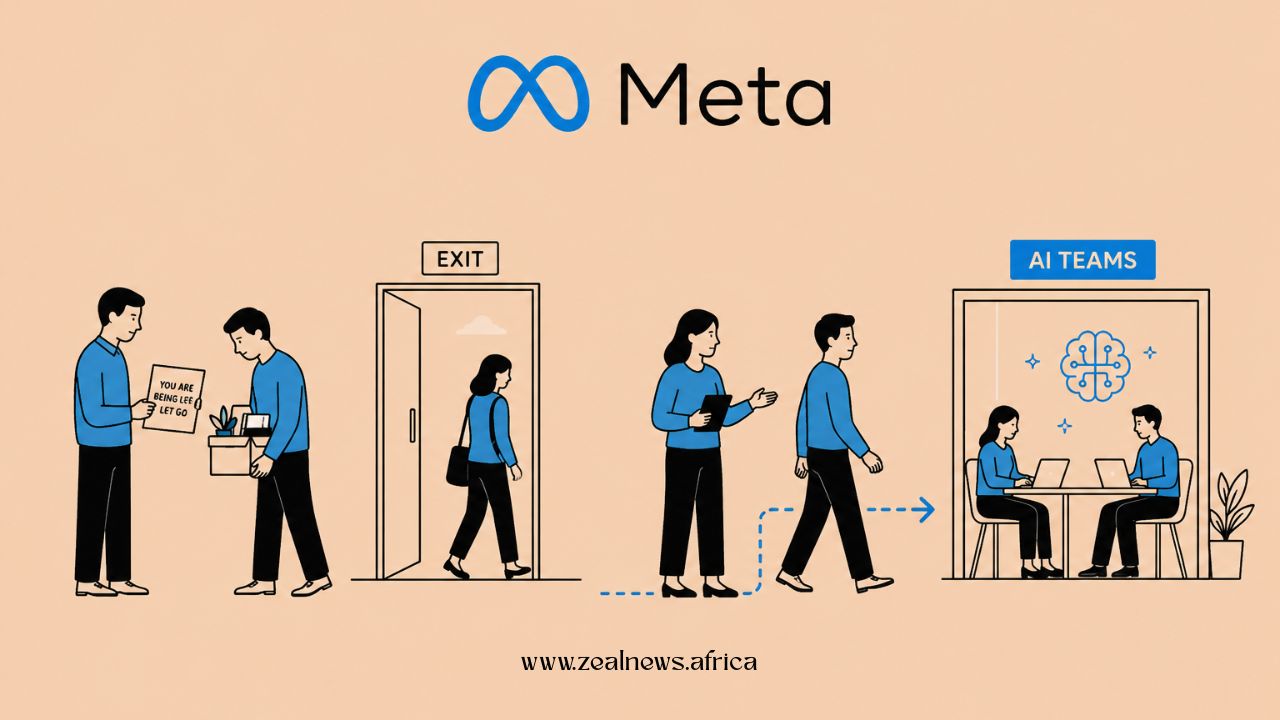
Meta Platforms is executing one of the most significant internal restructurings in its history this week, simultaneously cutting roughly 8,000 employees and reassigning approximately 7,000 others into newly created AI-focused units.
The two announcements, delivered within the same corporate window, capture the exact tension running through Big Tech right now: headcount is shrinking, but the ambition is expanding, and the gap between the two is being filled by artificial intelligence.
What Is Actually Happening This Week
Meta's Head of Human Resources, Janelle Gale, notified employees on Tuesday that 7,000 of them would be moved into four new units focused on building AI tools and applications.
The restructuring is designed to create flatter teams with smaller working groups, a structure Meta says will increase both productivity and the quality of the work itself.
Employees were instructed to work from home on Wednesday, May 20, a date that will carry very different meanings depending on which notification lands in your inbox. For approximately 8,000 staff, it arrives as a layoff notice. For the 7,000 being reassigned, it is a transfer into the company's new direction.
The layoff announcement itself is not new; Meta informed employees in April that 8,000 roles would be eliminated and around 6,000 open positions would be closed as part of an efficiency push.
What is new is the scale of the parallel reassignment and the clarity with which Meta is signalling where it intends to concentrate its remaining human capital. Those being laid off will receive 16 weeks of severance pay, with an additional two weeks added for every year of service at the company.
At the end of 2025, Meta employed approximately 78,000 people. The current round of cuts represents roughly 10% of that workforce. Analysts have projected that further reductions are likely before the end of 2026 as the company continues to streamline around its AI priorities.
Why Meta Is Betting This Hard on AI

The restructuring reflects a company recalibrating after a costly detour. Meta's heavy investment in the metaverse, a bet that consumed billions and generated far less consumer adoption than projected, left the company needing a credible next chapter.
AI is that chapter, and Meta is pursuing it with a scale that makes its metaverse spending look cautious by comparison. Mark Zuckerberg is reportedly planning to spend between $115 billion and $135 billion on AI development in 2026 alone, a figure that positions Meta at the upper end of Big Tech's AI spending race alongside Google, Amazon, and Microsoft.
The company has already moved on multiple fronts. Meta recently formed a dedicated superintelligence team, with Zuckerberg personally involved in recruiting for it.
AI agents are being integrated across Meta's product suite, Facebook, Instagram, WhatsApp, and Messenger, and the company is planning data centre infrastructure at a scale measured in tens of gigawatts.
The four new AI units that the 7,000 reassigned employees are moving into sit within this framework, suggesting that the restructuring is not just an efficiency exercise but a deliberate reallocation of institutional knowledge toward the company's most consequential long-term bet.
What This Signals for the Tech Industry
Meta's moves this week are not happening in isolation. The tech industry has been shedding jobs at scale since 2022, with layoffs accelerating in 2024 and 2025 as companies reorganised around AI-first strategies.
What distinguishes the current wave from earlier rounds is its directional clarity: the cuts are not primarily about financial difficulty but about reorienting workforces toward a specific capability set. Meta is not simply reducing headcount; it is trading one kind of employee composition for another.
For the 8,000 employees receiving notices on Wednesday, that distinction may offer little comfort. But for the industry watching, it confirms the pattern: AI is not replacing jobs in the abstract sense that economists debate.
It is replacing specific functions while creating specific new ones, and the companies willing to execute that trade-off at speed are the ones structuring themselves for the next decade.