Kegites Club of Nigeria: History, Language, and the Campus Culture Behind It
The Kegites Club of Nigeria, its roots in campus life, and the unique mix of palm wine culture and slang that has kept it active across generations of Nigerian universities.
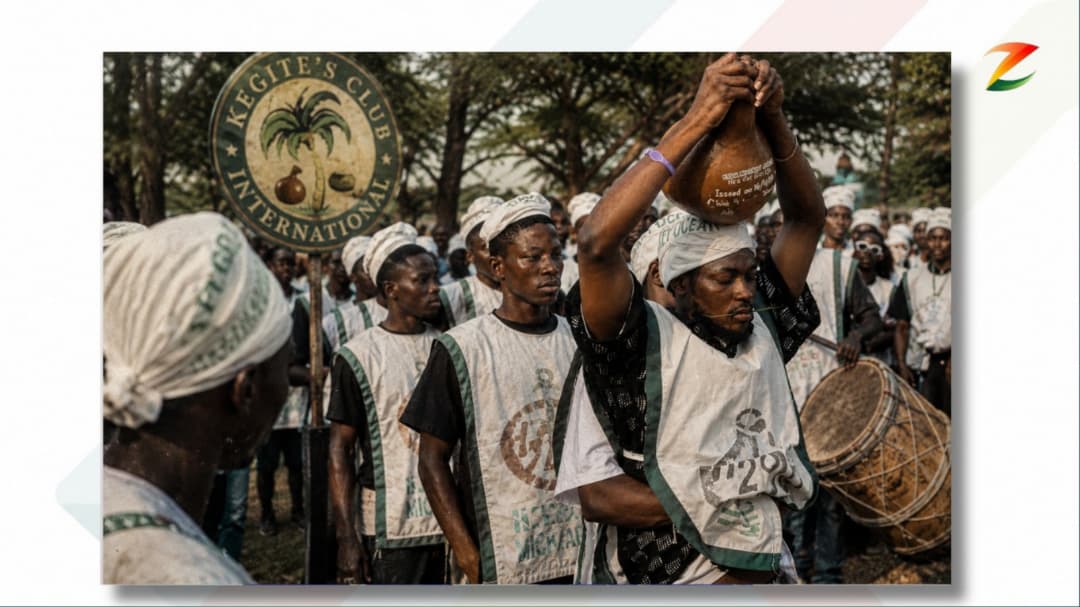
If you once stayed in a Nigerian campus, there’s a probability that you have seen or heard of a group gathered in a circle, singing, laughing, and passing around palm wine.
Their energy is usually hard to ignore, though structured, but also free at the same time. That is often someone’s first encounter with the Kegites Club.
It is not just about drinking or music. For members, it is a culture built around identity, performance, and shared language.
What the Kegites Club actually is and how it started
The Kegites Club is a student-based socio-cultural organisation found mainly in Nigerian tertiary institutions. It is known for its use of palm wine, music, dance, and stylised forms of communication during gatherings.
The club traces its origins to the University of Ife, now Obafemi Awolowo University, Ile-Ife. It began in the early 1960s and gradually grew into a wider student movement across campuses in Nigeria.
By the 1970s, similar groups had begun forming in other institutions, each adapting the same core identity but developing its own branch culture.
What started as a campus social circle eventually spread beyond a single university, becoming a recognised part of student life in many schools.
Why students joined and why it spread
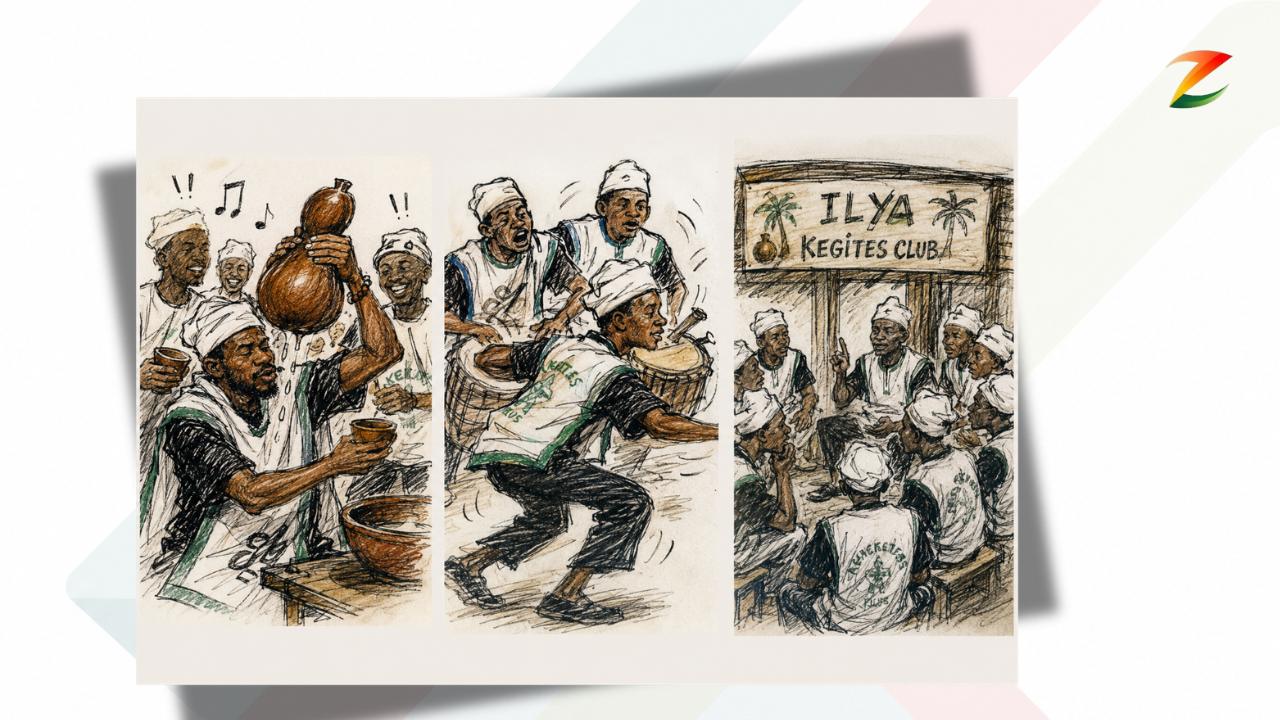
The appeal of the Kegites Club was never just one thing.
For some students, it was the music and performance, for others, it was the sense of belonging. The gatherings created a space where people could relax, express themselves, and participate in something different from formal campus life.
There was also a strong cultural layer to it.
The club leaned heavily on African identity, oral tradition, and communal expression. That mix helped it spread across campuses and even outside Nigeria over time.
History
Rewind the Stories that Made Africa, Africa
A Journey Through Time, Narrated with Insight.
At its core, it offered students something simple: community through shared ritual.
Jarasis: the language inside the culture
One of the most distinctive parts of the Kegites Club is its language system, commonly referred to as Jarasis.
Jarasis is a creative mix of English, Yoruba expressions, and invented slang used during gatherings. It works like an internal code that members understand and use to communicate during events. As documented by researchers,the language functions as a sociolinguistic register unique to the club's cultural identity.
For example, palm wine is often called “holy water,” while members may refer to themselves as "comrades." A gathering space may be called an “Ilya,” which simply means a club branch.

This language is part of what makes the club feel separate from everyday speech. It creates identity, but also belonging.
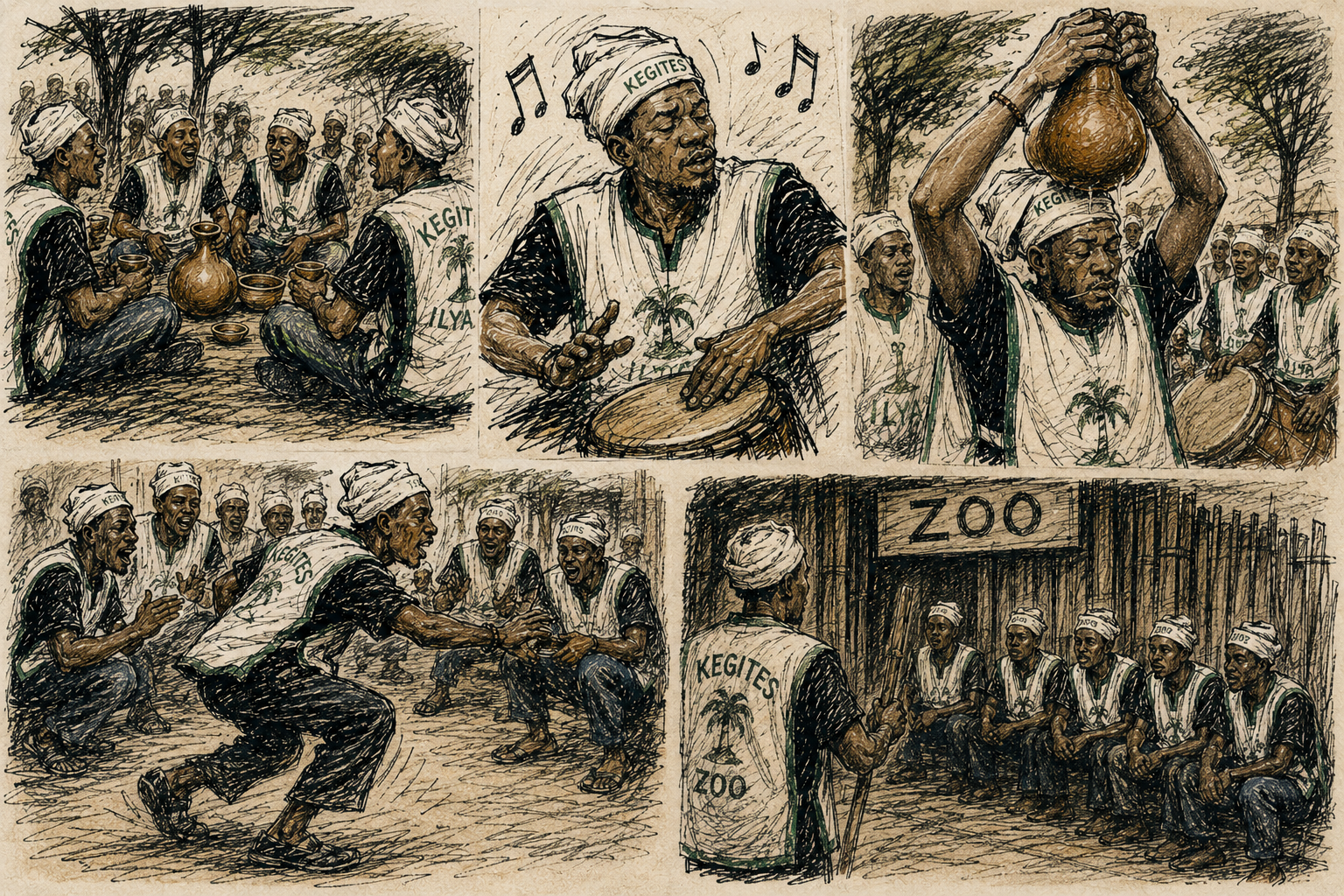
Ranks and roles inside the club
The structure of the Kegites Club is organised through different roles.
Leadership and Governance
Chief – The head of an Ilya (club branch). Responsible for overall leadership, welcoming new members (liberation), and guiding major decisions.
Elder – The second-in-command who supports the Chief in leadership duties.
FEDA – The secretary of the Ilya, handling records and administrative coordination.
Eldersis Council – A group involved in selecting Chiefs and Elders and making key decisions for the club’s progress.
Chiefsis Council – The highest governing body, made up of senior figures who oversee broader club structure and direction.
Communication and Cultural Roles
Parrot – The director of information, responsible for passing announcements and updates to members.
Songito – The lead vocalist who guides songs and chants during gatherings.
Philosopher – A member seen as knowledgeable about the club’s traditions, often guiding and teaching others in the “zoo” space.
Music and Performance
H.O.D (Head of Drums) – Oversees drumming and rhythm during gatherings and trains others in percussion.
Drumito – Supports drum performances and musical coordination during events.
Operations and Logistics
Migrator – Organises transportation for external gatherings and events.
Tapper – Responsible for serving and rotating palm wine (“holy water”).
Marshal – Maintains order and discipline during club activities.
Lupour – Assists in distributing palm wine among members.
Ajuctant – Handles the Chief’s personal items and logistical support.
Special Duty (Spedu) – Assigned flexible responsibilities depending on event needs.
Ritual and Internal Structure
Zoo Commandant – Oversees the “zoo” space where new members are introduced and groomed into the system.
Curator – Custodian of ceremonial items and club artefacts, including symbolic regalia and objects.
These roles are not just symbolic. They shape how events flow, especially during large gatherings.
Common slang used by members
History
Rewind the Stories that Made Africa, Africa
A Journey Through Time, Narrated with Insight.
Alongside Jarasis, the club also developed a set of commonly used expressions. Some of these include:
Comrad – a member of the club
Holy water – palm wine
Regalia – official club attire
Kegistic language – approved internal communication style
Zoo – initiation or training space for new members
Emblem – calabash used in ceremonies
Opeke – female member
Transformjara – initiation process
These terms form part of the identity of the club and are often used during gatherings in a rhythmic, stylised way.
A culture built on expression

At its heart, the Kegites Club is not only about structure or roles. It is about expression through sound, language, and community.
But within campus culture, it has remained a long-standing tradition that continues to evolve across generations of students.