Nigeria’s Press Freedom Ranking Improved in 2026, But Has the Reality Changed?
Nigeria recorded a 10-place improvement in the 2026 World Press Freedom Index, but concerns around journalist safety, legal pressure, and reporting restrictions continue to question the real state of media freedom in the country.
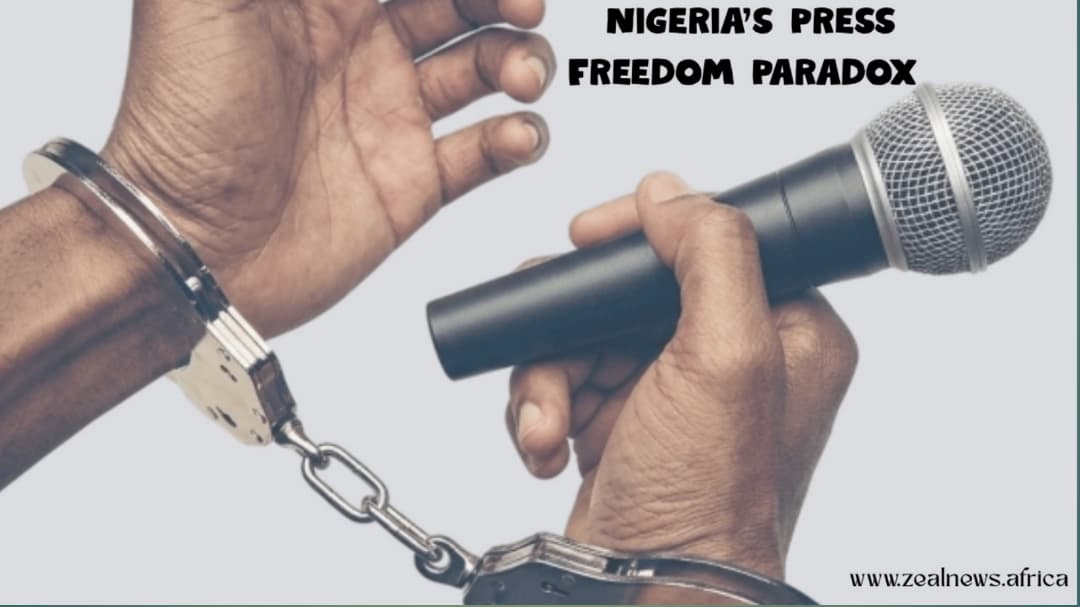
Nigeria's position in the 2026 World Press Freedom Index shows a measurable improvement as the country moved from 122nd place in 2025 to 112th out of 180 countries.
On the surface, that movement suggests progress. A higher ranking usually signals better conditions for journalists or stronger institutional protection for the media, but the reality behind such rankings is often more complicated.
In Nigeria's case, the improvement raises a more important question: what has actually changed for journalists on the ground?
A Ranking Shift in a Difficult Global Climate
The World Press Freedom Index is one of the most widely referenced global measures of media independence. It assesses countries based on political conditions, legal protections, economic pressures, and the safety of journalists.
Nigeria's 10-place rise is therefore not insignificant. It reflects relative movement in a global environment where press freedom is under serious pressure. RSF notes thatmore than half of countries assessed now fall under "difficult" or "very serious" conditions for journalism, the worst result in the index's 25-year history.
Still, the index is a broad measurement. It captures trends across systems, not the daily experience of reporting in specific environments. That distinction becomes important when looking at Nigeria more closely.
Pressure That Still Shapes Journalism

Despite the improved ranking, concerns about how journalism operates in Nigeria remain well-documented.
In 2024 alone, theInternational Press Centre documented 65 cases of attacks on journalists, ranging from physical assault and harassment to threats to life, intimidation, and unlawful detention.Media Rights Agenda's 2025 annual report tracked 86 separate incidents of attacks on press freedom across the country.
These incidents directly affect how news is gathered and reported. A journalist who risks detention or intimidation may avoid sensitive stories. Restricted access limits what the public gets to see. Over time, these pressures can quietly narrow the space for independent reporting.
This is where rankings and reality begin to diverge. A country can move up in global indices while journalists continue to operate under familiar constraints.
Security Risks Remain a Core Concern
One of the most persistent challenges for press freedom in Nigeria is physical safety.
During the#EndBadGovernance protests of August 2024, CPJ documented at least 56 journalists assaulted or harassed by Nigerian security forces or members of the public. Masked security personnel fired bullets and tear gas in the direction of 18 journalists, several of whom were wearing clearly marked press vests. Since 1992,CPJ has documented the killing of at least 23 journalists in Nigeria, with two others missing and presumed dead.
When reporting becomes linked with personal risk, journalism shifts from being purely informational to something navigated with caution. This has long-term consequences for how openly and critically the media can function.
Even with a better ranking, these underlying risks remain a defining part of the media landscape.

Legal Tensions Around Journalism

Nigeria's constitution guarantees freedom of expression and supports an independent press. However, the legal environment has remained a point of debate among media practitioners and rights groups.
One frequently discussed framework is the Cybercrimes (Prohibition, Prevention, etc.) Act, particularly provisions related to cyberstalking. Although the law was designed to address online fraud and digital offences, it has been applied repeatedly in cases involving journalists reporting on public-interest issues.
Despite amendments signed by President Tinubu in February 2024, at least eight journalists were arrested, prosecuted, or detained under the Act within seven months of that reform, according to RSF. CPJ separately reported that at least 29 journalists faced prosecution under the law since it was enacted in 2015.
In September 2024, four journalists were charged in a Lagos federal court for reporting alleged fraud involving a senior bank executive.
This creates a tension between constitutional guarantees and the practical application of certain laws. While freedom of expression exists in principle, journalists continue to operate within legal boundaries that are often contested.
Why This Matters Beyond the Media
Press freedom is not only a journalism issue but it is a public accountability issue.

An independent media environment allows citizens to access verified information, scrutinise leadership, and understand decisions that affect governance. Without it, public debate becomes less informed and accountability weakens.
This is why press freedom rankings are widely watched. They provide a snapshot of how countries are performing in relation to media independence. But they cannot fully measure whether journalists feel safe, supported, or free in practice.
Nigeria's improved ranking of 112th reflects a positive shift in measurement. However, it does not automatically indicate that reporting conditions have become easier or safer.
Conclusion
Nigeria's rise in the 2026 World Press Freedom Index is a notable development, especially within a global environment where press freedom has declined in 100 out of 180 countries this year.
However, the deeper reality remains more complex. Journalists continue to face legal pressure, security risks, and operational constraints that shape how journalism is practised.
In April 2026, six Nigerian and international media organisationswrote directly to President Tinubu urging him to hold those responsible for press abuses to account, a signal that the gap between official rhetoric and ground-level reality has not yet closed.
The ranking improvement offers a useful indicator of progress, but it does not replace the need to examine conditions on the ground.
Ultimately, press freedom is not measured only by position on an index.
It is measured by whether journalists can report freely, safely, and without fear of interference.