Legendary Music Icons Who Dominated Nigeria’s Music Industry
Read about legendary Nigerian music icons who shaped Afrobeat, Juju, Fuji, highlife, reggae, and global soul, from Fela Kuti to Sade Adu.
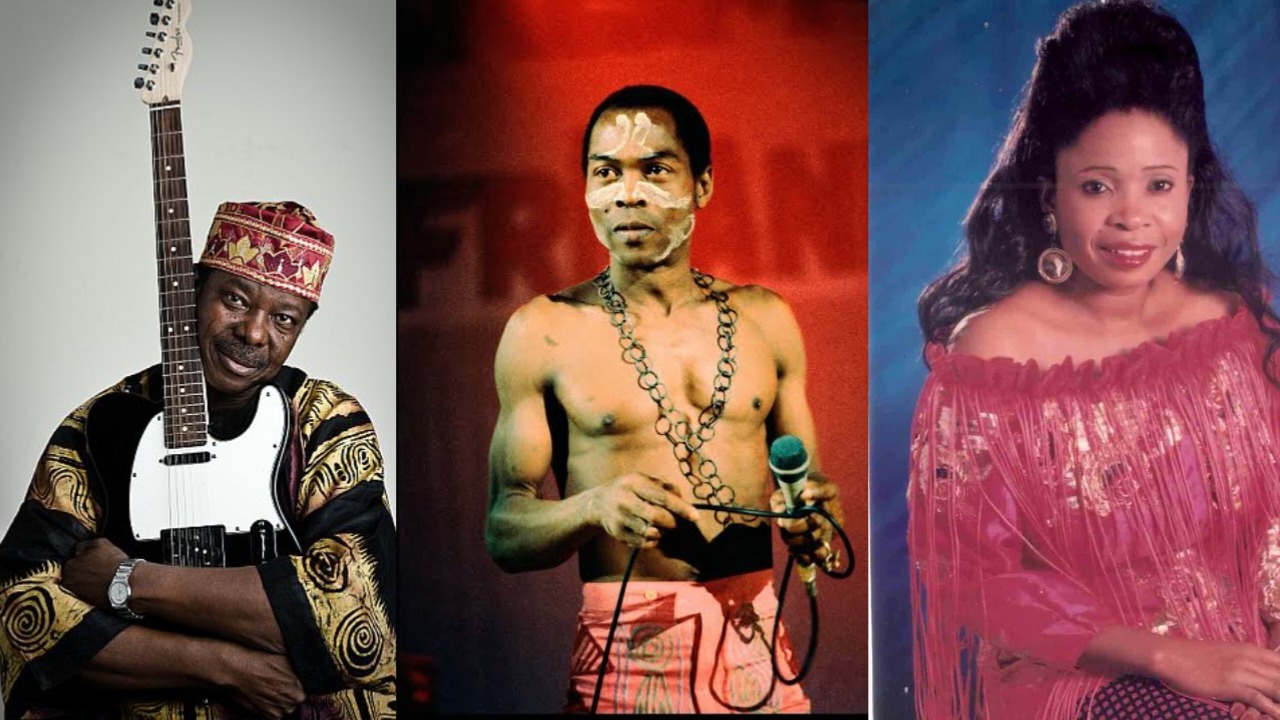
Nigeria’s musical history is not merely a chronology of hit songs, it is a living archive and testament of resistance, style, storytelling, and cultural evolution.
Nigerian artists both past and present are known for transforming rhythm into a language of identity, shared experiences and blending indigenous sounds with global influences to create genres that travel far beyond the continent.
From Afrobeat’s defiant brass to Juju’s intricate guitar lines, from Fuji’s street-rooted percussion to highlife’s melodic elegance, Nigerian music has always been layered with meaning.
Through music most artists have spoken against corruption, preserved folklore, inspired faith, showcase good morals and projected African creativity onto the global stage.
At the centre of this discourse of music stands legendary figures whose artistry transcended entertainment and even their lifetime.
They were not just music artists, they literally and figuratively were innovators, cultural custodians, and, in many cases, moral commentators who shaped a generation.
Their legacies continue to shape contemporary Afrobeats, gospel, reggae, and alternative sounds that dominate streaming charts today.
To understand Nigerian music is to understand these icons, what they stood for and what made them architects of global resonance.
The Legends of Nigeria’s Musical Legacy
Fela Kuti
No discussion of Nigerian musical greatness begins anywhere else but with Fela Aníkúlápó Kútì (1938–1997).
Known as Abàmì Ẹ̀dá (“The Strange One”) and widely regarded as the King of Afrobeat, Fela fused highlife, jazz, funk, and traditional Yoruba rhythms into a revolutionary genre.
More than a musician, he was a political dissenter who used his art to challenge military dictatorship, corruption, and social injustice.
His fearless activism made him both a global icon and a domestic target.
In January 2026, he was posthumously honored with the Grammy Lifetime Achievement Award, a testament to his enduring global influence.
King Sunny Ade
King Sunny Ade (KSA) is one of the earliest African pop musicians to achieve international acclaim and recognition.
A master of Juju music, his intricate guitar arrangements and synthesizer innovations expanded the genre’s sonic possibilities.
His work helped position Nigerian music within the global “world music” conversation of the 1980s.
Ebenezer Obey

Ebenezer Obey infused Juju with highlife sensibilities and philosophical lyricism, often centering his music on morality, spirituality, and social reflection.
His thoughtful compositions made him a cultural educator as much as an entertainer.
Sikiru Ayinde Barrister
In the world of Fuji music, Sikiru Ayinde Barrister definitely stands as an undisputed pioneer.
During the peak era of his musical career he formalised Fuji as a distinct genre, transforming Islamic devotional and street sounds into a mainstream force that continues to dominate southwestern Nigeria.
Onyeka Onwenu
Female voices have also shaped the nation’s soundscape profoundly, one of whom was Onyeka Onwenu, known as the “Elegant Stallion.”
She combined music, film, and activism in a career marked by grace and substance. Until her passing in July 2024, she remained a respected cultural figure.
Christy Essien-Igbokwe
Similarly, Christy Essien-Igbokwe, affectionately called “Nigeria’s Lady of Songs,” was instrumental in elevating female artistry within a male-dominated industry.
She was known for her the hit tracks "Seun Rere", "Tete Nu Na Ula", "Ife", "Hear the Call", and "Give Me a Chance".
She was the first female president of the Performing Musicians Association of Nigeria (PMAN) and the chairperson and managing director of Soul Train Entertainment.
Until her death in June 2011 she remained a notable figure in the early music space in Nigeria.
Majek Fashek
I'd definitely say that reggae found its Nigerian prophet in Majek Fashek also known as the rainmaker, whose spiritually infused lyrics and global hit “Send Down the Rain” established him as a distinctive voice in African reggae.
His 1988 album Prisoner of Conscience that included the single "Send Down the Rain", won six PMAN Music Awards.
His music blended mysticism with social commentary, earning him continental recognition, Make Fashek died in June 2020.
Sir Victor Uwaifo
Highlife’s elegance was embodied by Sir Victor Uwaifo, celebrated for his guitar mastery and inventive musicianship.
Victor Uwaifo was a writer, sculptor, and musical instrument inventor, university lecturer, music legend, and the first Honorable Commissioner for Arts, Culture and Tourism in Nigeria.
He was the winner of the first gold disc in Africa (Joromi) released in 1965 and seven other gold discs in Guitar Boy, Arabade, Ekassa series and Akwete music.
Mike Ejeagha
Mike Ejeagha, known as the “Gentleman” of highlife, preserved Igbo folklore through narrative-driven compositions.
His passing in June 2025 at age 95 marked the end of an era, though his song “Gwo Gwo Gwo Ngwo” experienced a resurgence in 2024, proving the timelessness of his storytelling.
Sade Adu
Sade Adu carved out a global career spanning over four decades beyond Nigeria’s borders.
Her blend of soul, jazz, and R&B redefined sophistication in contemporary music, demonstrating the transnational influence of Nigerian heritage.
Together, these artists did more than entertain; they institutionalised genres, expanded audiences, and embedded Nigerian sound within global consciousness.
A Legacy That Still Resonates
The story of Nigerian music is inseparable from the lives of its legendary icons. They were innovators who challenged political systems, refined indigenous genres, composed melodious sounds, broke international barriers, and preserved cultural narratives.
Today’s Afrobeats superstars stand on foundations laid by these pioneers. The global streaming dominance of Nigerian music did not emerge in isolation; it was built on decades of experimentation, courage, and artistic discipline.
From Fela’s defiance to King Sunny Ade’s global breakthrough, from Onyeka Onwenu’s elegance to Mike Ejeagha’s storytelling, the legacy is both diverse and interconnected.
These legends transformed music into movement, into memory, into identity one that has outlived them.
And as new generations remix old classics and rediscover forgotten gems, one truth remains clear: Nigeria’s musical greatness is not confined to or defined by the past, it is amplified by it.