Kemi Badenoch And Josephine Macleod: Nigerians Making Waves in UK Politics
Nigerians are rising in UK politics, from Kemi Badenoch’s national leadership to Josephine Macleod’s Scottish candidacy. Here’s what their emergence means for the diaspora and British democracy.

For decades, Nigerians in the United Kingdom built reputations in different fields from medicine, law, academia, finance, to technology.
They've become consultants in different sectors and have made a name for themselves in hospitals, are partners in law firms, founders of various tech hubs, and lecturers in leading universities.
Political leadership, however, often felt like a distant frontier, visible, but rarely accessible and two Nigerian women are making that look easy.

The rise of Kemi Badenoch to Leader of the Conservative and Unionist Party has marked a defining moment not only for British politics but for the Nigerian diaspora.
A British-Nigerian woman leading one of the UK’s oldest political parties is more than symbolic representation, it signals structural change.
It suggests that political leadership in Britain is no longer an exclusive circle but an evolving arena and Nigerians are participating in it.
Yet Badenoch’s ascent is not an isolated personality in this discourse.
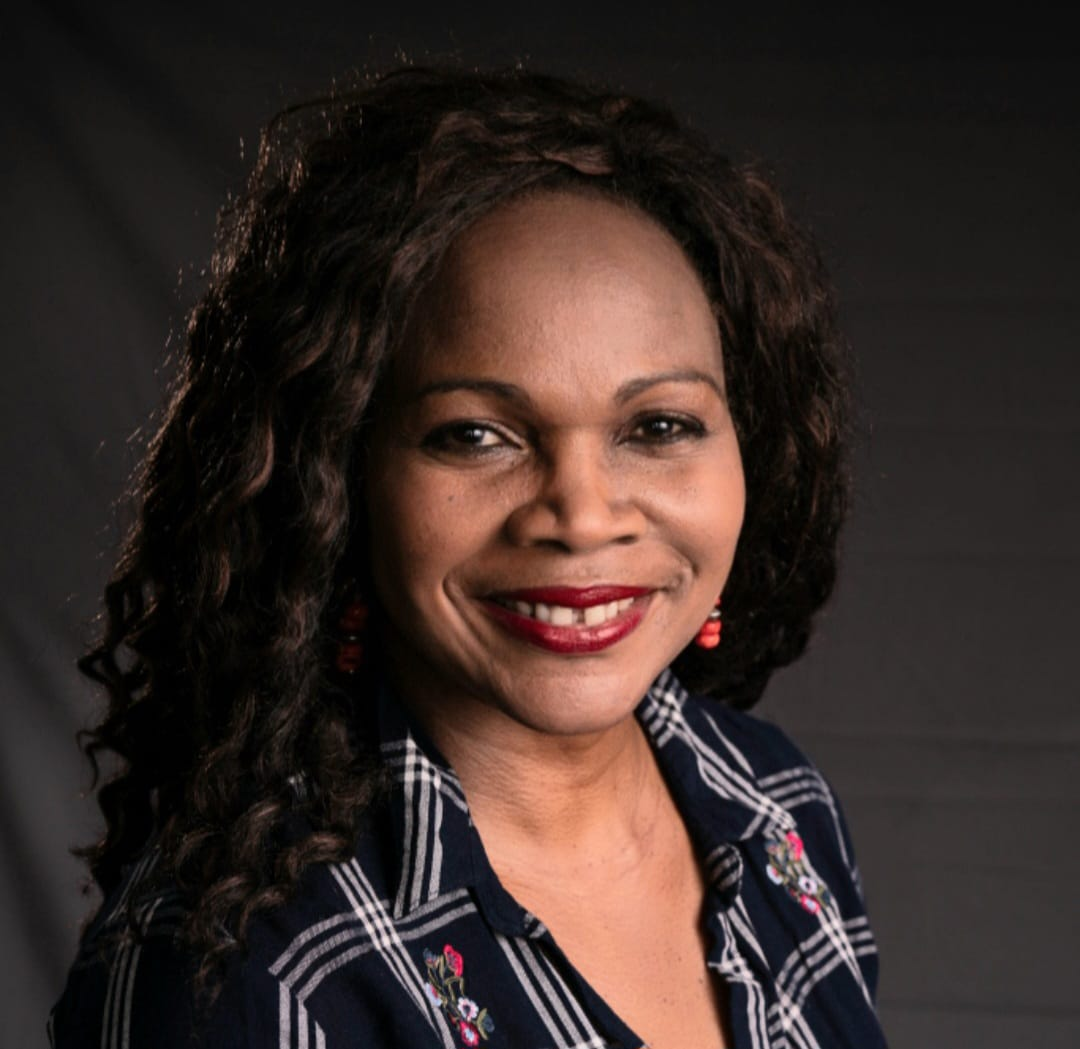
Across the UK, Nigerian voices are emerging in local and national politics and in Scotland, Josephine Macleod, also known as Josephine Oboh-Macleod, has stepped forward as a Scottish Conservative and Unionist Party candidate for Glasgow Easterhouse and Springburn.
Her candidacy reflects a broader pattern: Nigerians abroad are no longer only participating economically; they are seeking to shape policy directly.
This moment reflects a generational pivot and is that the diasporan community is not content with integration alone, it also seeks influence and representation.
Policy, Enterprise, and the Scottish Frontline

Josephine Macleod’s political focus is grounded in economic revival. In constituencies like Easterhouse and Springburn, small businesses face rising operational costs, high business rates, and limited access to capital. For many entrepreneurs, survival, not expansion, is the daily objective.
In previously reported remarks, Macleod has emphasised that lowering business rates is not optional but essential.
Her position frames local businesses not as tax bases to be maximised, but as economic partners that require support to generate employment and community stability.
Diaspora Connect
Stay Connected to Home
From Lagos to London, Accra to Atlanta - We Cover It All.
Her proposals reportedly include reducing business rates to provide immediate relief, introducing tax incentives to encourage hiring and expansion, and improving access to affordable financing for small enterprises.
She has also highlighted the need to align workforce development, apprenticeships, universities, and vocational training, with industry needs.
This economic lens aligns with traditional Conservative market principles, but it also reflects a distinctly Nigerian ethos of entrepreneurship.
Nigerians, whether operating markets in Lagos or running shops in London, often operate within cultures that value resilience, risk-taking, and self-determination.
However, entering British politics as a candidate of colour, particularly in predominantly white constituencies, introduces layered challenges.


The UK’s political system, while increasingly diverse, remains shaped by historical demographics.
Candidates from ethnic minority backgrounds frequently encounter heightened scrutiny. Competence must be proven repeatedly. Identity can become both a strength and a burden.
For a British-Nigerian woman contesting in Scotland, these challenges intersect with gender, race, and partisan politics. Yet the willingness to compete itself signals confidence in belonging.
Meanwhile, at the national level, Badenoch’s leadership reflects a different dimension of diaspora engagement. Having previously served in ministerial roles including Secretary of State for Business and Trade, her political journey demonstrates that second-generation Nigerians are not only participating, they are ascending.
Together, these developments indicate that Nigerian political visibility in the UK is not episodic, it is expanding and they are showing what is possible.
Representation, Responsibility, and the Diaspora Effect
Representation does not automatically resolve policy challenges and outright inclusion. It does, however, reshape perception.
When Nigerians see figures like Badenoch leading at Westminster or candidates like Macleod campaigning in Glasgow, it alters the mental map of possibility. Young Nigerians in Abuja, Port Harcourt, Enugu, or anywhere in the world observe that global political systems are not impermeable.
The UK itself has undergone demographic transformation over the past decades. According to the UK Office for National Statistics, Nigerians represent one of the fastest-growing African diaspora communities in Britain.
Diaspora Connect
Stay Connected to Home
From Lagos to London, Accra to Atlanta - We Cover It All.
Educational attainment rates among British-Nigerians are notably high, and professional integration has been substantial.
Political participation, therefore, is a natural progression. Yet diaspora political engagement carries dual accountability.
Leaders must balance representing broad constituencies while navigating expectations from ethnic communities who see symbolic meaning in their success.
The burden of representation can be heavy, every policy stance scrutinised not just politically but culturally.
At the same time, integration into mainstream political structures signals maturity within diaspora communities. It demonstrates a shift from economic migration to civic participation.
If Josephine Macleod wins her election bid in Scotland, the real work will begin. Campaign promises about lowering business rates and supporting small enterprises will have to survive the realities of governance, budgets must balance, public services must be funded, and Scotland’s devolved political structure sets clear limits on what can be done and how fast it can be done. Governance is always more complex than rhetoric.
And if she does not win? Her candidacy still matters for her and those around her.
For Nigerians, especially those in the diaspora, visibility in spaces once considered inaccessible is not a small achievement.
It normalises our presence in decision-making rooms. It tells the next Nigerian student in Glasgow or London that political participation is not reserved for “other people.” It shifts perception.

The same principle applies to Kemi Badenoch. As leader of the Conservative and Unionist Party, she is not simply representing Nigerian heritage; she is accountable for national economic strategy, immigration debates, trade negotiations, and governance outcomes. Her performance will be measured by policy impact, not ancestry.
And that is an important distinction for Nigerians to understand, representation opens the door and competence keeps it open.
There is a broader lesson here for us as a people. Diaspora influence does not happen overnight. It moves in phases. First, we migrate and adapt. Then we contribute economically and professionally. Eventually, we step into leadership and begin shaping institutions from within.
Diaspora Connect
Stay Connected to Home
From Lagos to London, Accra to Atlanta - We Cover It All.
Nigerians in the UK are entering that third phase. Elections decide who holds office. But legacy is defined by who dared to contest, who shifted narratives, and who expanded what is possible.
From Westminster to Glasgow, Nigerians are no longer limited to professional excellence alone. They are entering ballot politics, shaping public discourse, and competing for power within established systems.
For Nigerians at home watching these developments, this is not just foreign political news. It is a reminder that global influence is not accidental. It is built, deliberately, strategically, and persistently.
This is not just participation, It is arrival and it signals a new wave for Nigerians in the UK.