How Samrawit Fikru Turned a Safety Problem into Ethiopia’s Ride-Hailing Giant
Samrawit Fikru built Ethiopia’s most popular ride-hailing platform, RIDE, using SMS before smartphones dominated. Read about her journey, impact, and what her innovation teaches about African tech.

Building a Platform Without the Internet
In 2014, when ride-hailing platforms were expanding across major global cities, Ethiopia presented a different reality. Internet penetration was limited and smartphone adoption was not widespread.
Mobile data was expensive and inconsistent in many parts of African cities, yet urban transportation challenges were real, unpredictable taxi fares, safety concerns, and the daily uncertainty of getting home late at night.
It was in this environment and condition that Samrawit Fikru built something audacious and phenomenal.
Instead of building an app like Uber that relied heavily on smartphones and internet connectivity, she built RIDE — a ride-hailing platform powered by SMS.
At the time, SMS technology was far more accessible than mobile internet. Most people had access to basic phones. What they did not have was reliable data and smartphones itself.
Samrawit saw what others overlooked: innovation stemmed from local realities and this means adapting to infrastructure realities.
The idea was born from personal frustration, working late nights in Addis Ababa, Samrawit often struggled to find a taxi home.
There was uncertainty about pricing, availability, and safety. That anxiety became the seed for a structured solution.
Through her company, Hybrid Designs PLC, she developed a system that allowed users to request rides through text messages. No app required or internet needed.
A centralized dispatch and verification structure connected riders and drivers, creating accountability in a market that had long operated informally.

The concept quickly gained traction in corporate circles, businesses in Addis Ababa adopted RIDE as a corporate transport solution, enabling them to monitor employee transportation, manage billing, and enhance safety protocols. What began as a personal solution scaled into urban infrastructure.
In 2017, as smartphone adoption increased, RIDE expanded. The platform introduced a mobile app version, complemented by a call center to ensure accessibility across user segments.
This hybrid model, SMS, app, and call support, allowed RIDE to grow inclusively rather than exclusively.
Today, RIDE operates with over 90,000 drivers, more than 5 million users, and over 500 corporate clients. It has evolved from a simple taxi-booking tool into a transportation backbone within Ethiopia’s urban economy.
And behind it all is a woman who chose contextual innovation over imitation.
Samrawit Fikru: The Engineer Behind the Infrastructure
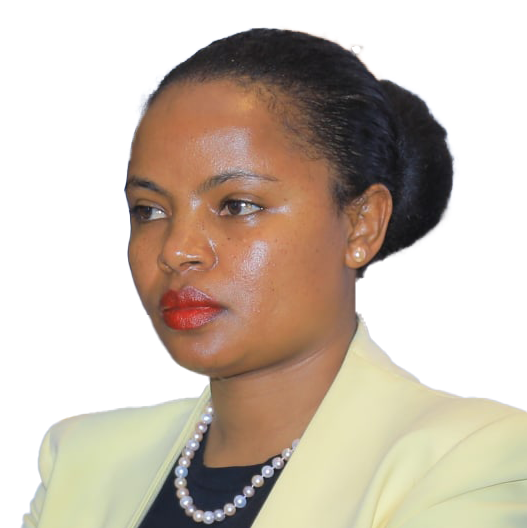
Samrawit Fikru is not simply a founder; she is a trained computer scientist who built her company on technical grounding.
Born in Asella, Ethiopia, she pursued software engineering early, earning a diploma from MicroLink Information Technology College in 2004.
She later completed a Bachelor of Science in Computer Science at the HiLCoE School of Computer Science and Technology in 2006, a notable path in a field where women remain underrepresented globally.

In 2014, she founded Hybrid Designs PLC, positioning it as a software development company capable of solving local technological gaps.
That same year, Hybrid Designs launched RIDE as an SMS-based ridesharing service.
Her motivation was both practical and deeply personal, which stemmed from the difficulty in securing safe transport after late nights at work highlighted structural inefficiencies in Addis Ababa’s taxi system.
But beyond inconvenience, safety was central. For many women, public transportation at odd hours carried significant risk.
RIDE was designed to reduce that vulnerability through traceability, structured pricing, and verified drivers.
The 2017 relaunch of RIDE as a mobile app marked a strategic pivot, not abandonment of the SMS system, but expansion.
By integrating digital and analog systems, Samrawit ensured the platform remained inclusive across income levels and device types.
Her innovation did not stop at transportation.
In 2022, she launched Sewasew, a streaming platform dedicated to Ethiopian music. The move signaled a broader ambition: building digital ecosystems tailored to local culture and consumption patterns.
Sewasew aims to create structured monetization for Ethiopian artists while preserving cultural content within domestic digital infrastructure.
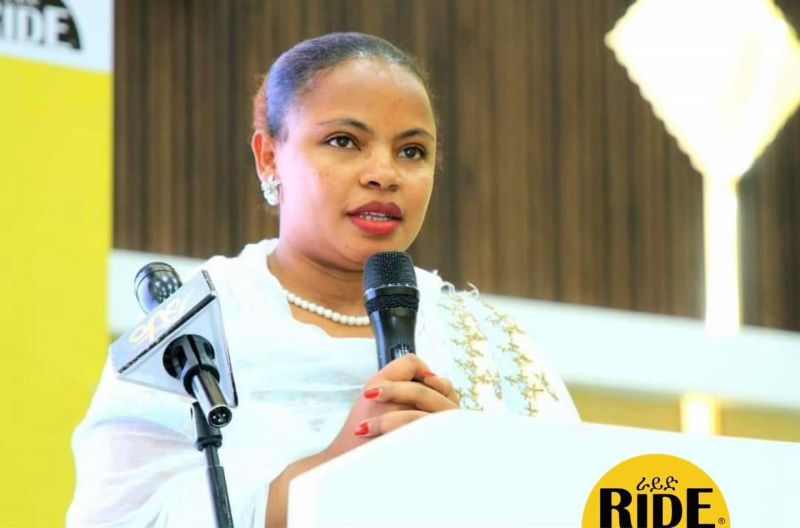
Her work has received international recognition. She was named among Rest of World’s 100 Global Tech Changemakers, acknowledging founders shaping technology beyond Silicon Valley’s spotlight.
In 2022, she was also included in the BBC’s 100 Women list, recognizing her impact as a tech entrepreneur and role model for young women.
These honors are significant not merely for prestige but for representation. In many African tech ecosystems, funding access, mentorship pipelines, and venture capital networks remain male-dominated. Samrawit’s success disrupts that narrative.
But perhaps her most compelling trait is strategic realism.
She did not attempt to build an Ethiopian clone of a Western product. She built a system adapted to Ethiopian conditions. Infrastructure first and scaling came second.
Contextual Innovation and the Lesson of Ride

The story of Samrawit Fikru and RIDE offers a critical lesson about innovation in emerging markets.
Technology is often framed as universal. Build an app, raise venture capital and scale globally.
But Samrawit’s model demonstrates that sustainable innovation begins with context.
When she launched RIDE in 2014, Ethiopia’s telecom environment was state-controlled, data penetration was low, and smartphone access was uneven.
An app-only solution would have excluded the majority of users, by choosing SMS, she built accessibility into the architecture.
This decision transformed RIDE from a tech novelty into public infrastructure.
It also reframes conversations about African tech ecosystems. Success is not always about copying global platforms; it is about solving local friction points.
Transportation uncertainty, safety gaps and corporate logistics inefficiencies. These were Ethiopian problems requiring Ethiopian solutions.
There is also a gender dimension worth acknowledging. Safety concerns that triggered RIDE’s creation were not abstract. They were lived experiences and sometimes innovation emerges most powerfully from vulnerability.
Samrawit’s journey also challenges the notion that African startups must immediately globalize to validate themselves.
RIDE became dominant by focusing deeply on Addis Ababa before expanding.
Today, with tens of thousands of drivers and millions of users, RIDE supports livelihoods, facilitates commerce, and integrates corporate systems.
It is no longer simply a ride-hailing service; it is economic infrastructure.
So what can we learn?
Innovation does not require perfect conditions, it requires clarity of problem.
Technology must serve people where they are, not where global trends assume they should be.
Representation matters, when young Ethiopian women see a computer scientist building national infrastructure, possibilities expand.
Samrawit Fikru did not wait for ideal connectivity or foreign acquisition. She built with what was available, adapted with it and scaled.
And in doing so, she demonstrated that sometimes the most powerful tech revolution begins with something as simple as a text message.