Redtech’s Continental Ambition: The ₦100 Trillion Fintech Play for Africa
Redtech plans to expand into 29 African markets and process ₦100 trillion annually. Here’s how the Nigerian fintech is scaling through enterprise integration, POS deployment, and potential acquisitions.

From ₦12 Trillion to ₦30 Trillion: A Fintech Scaling Fast
Redtech Ltd is making an ambitious play—The fintech plans to process ₦100 trillion annually over the next two years.
The Lagos-based payments company, backed by Heirs Holdings, processed ₦30 trillion in transactions in 2025, more than double the ₦12 trillion recorded in 2024. That growth trajectory signals more than momentum; it signals positioning and the company is not planning on slowing down.
Redtech has set a bold target: process ₦100 trillion annually within the next two years while expanding into 29 African markets by 2027.
To achieve this, mergers and acquisitions are reportedly under consideration as part of its growth strategy.

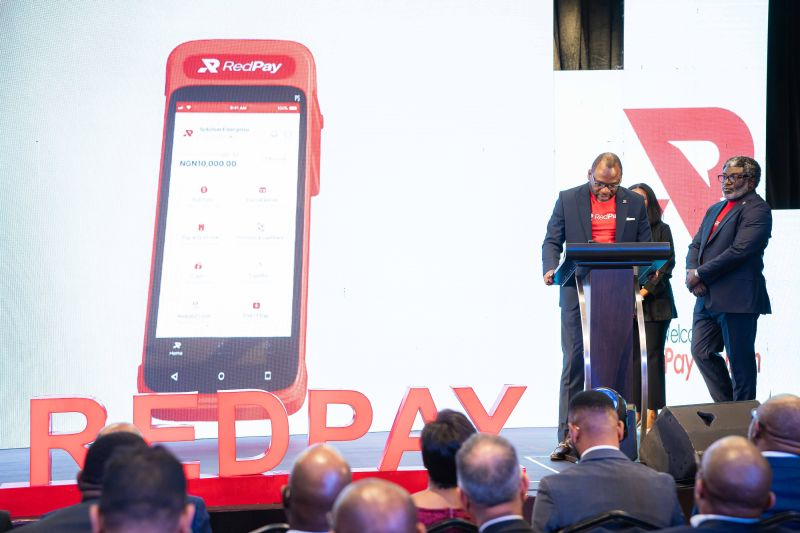
According to comments made by CEO Emmanuel Ojo in a published interview, acquisitions are not being ruled out.
They are, in his words, “on the table” as the company evaluates how best to scale across the continent.
For a payments company entering a market where POS penetration is nearing saturation and margins are tightening, scale must be deliberate.
Enterprise Rails, Agency Banking, and a 29-Country Strategy

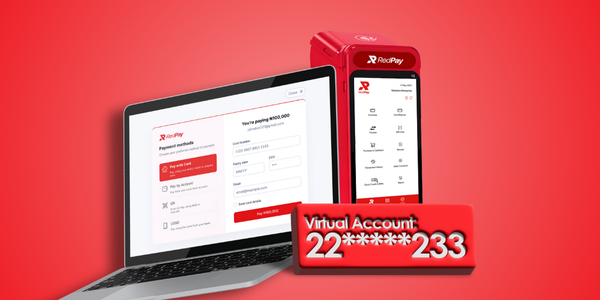
Redtech operates primarily through RedPay, its payments platform offering POS terminals, merchant collections, digital gateways, and other payment channels.
In its first full year, the company onboarded over 35,000 merchants and deployed tens of thousands of POS terminals nationwide.
But the Nigerian POS landscape is crowded and heavily marketed by different fintech platforms.
Agent banking margins have narrowed amid intensified competition and regulatory recalibration by the Central Bank of Nigeria (CBN).
With recapitalisation deadlines approaching in 2026, banks are under pressure to deepen deposit mobilisation and expand customer acquisition channels.
Redtech appears to be navigating both ends of the spectrum.
Rather than relying solely on high-volume, low-margin retail agents, the company has adopted a dual model.
It serves high-velocity, low-ticket merchants while simultaneously integrating with enterprise clients processing higher-value, lower-frequency transactions.
This enterprise tilt may be its differentiator. In reported remarks, Ojo indicated that Redtech’s deeper systems integration across financial institutions and large organisations enables the company to process significant transaction volumes with minimal downtime, a critical metric in high-stakes payment environments.

Agency banking, despite shrinking margins, remains strategically relevant. Agent networks function as alternative banking channels, particularly beyond traditional operating hours.
They facilitate account opening, cash-in/cash-out services, and deposit mobilisation, all essential in a market where financial inclusion gaps persist.
Nigeria remains one of Africa’s largest fintech markets, but its infrastructure remains uneven.
According to reports and data, financial inclusion in Nigeria has improved significantly over the past decade, yet millions remain underbanked.
Agent networks continue to serve as last-mile access points, especially in semi-urban and rural communities.
Redtech’s strategy seems to recognise this: scale horizontally across merchants while deepening vertically within institutions.

Its relationship with United Bank for Africa (UBA) reinforces this institutional play.
Redtech reportedly acts as a systems integrator and infrastructure provider, implementing mobile banking solutions for UBA in five West African countries.
As UBA expands across the continent, Redtech could benefit from embedded infrastructure partnerships.
Beyond Nigeria, Redtech has begun building mobile banking and payment infrastructure in Francophone West African markets, including Benin, Burkina Faso, Senegal, and Mali.
Regulatory licensing and strategic local partnerships will guide further expansion into West and Central Africa.
Continental expansion, however, requires capital. The company is reportedly considering raising up to $100 million in private funding over the next two years to support its scaling ambitions. A public listing is not currently under consideration.
If executed successfully, this capital injection would support its plan to deploy over 100,000 POS terminals while targeting ₦100 trillion in annual transaction processing volume.
Scale, Regulation, and the Risk of Continental Expansion
Ambition in African fintech must be balanced with regulatory navigation.
Each African market presents unique licensing requirements, currency controls, banking frameworks, and data protection laws.
Cross-border expansion is rarely linear and companies must secure permits, integrate with domestic banking systems, and also manage currency volatility risks.
Redtech’s strategy appears cautious in this regard. Regulatory clearance and local partnerships are reportedly key decision filters before entering any new market.
The company’s continental aspiration aligns with a broader trend: African fintech firms increasingly expanding beyond home markets rather than remaining domestically confined. Yet cross-border payments remain complex, fragmented, and heavily regulated.
If Redtech achieves its ₦100 trillion annual processing target, it would represent a significant scale not just in Nigeria, but across the continent.
That volume would position the company among Africa’s more substantial payments infrastructure players.
However, scale also introduces operational pressure. Infrastructure resilience, cybersecurity, liquidity management, and compliance frameworks must evolve in parallel with transaction growth.
The real test will not simply be processing volume, it will be sustainable integration.
Redtech’s expansion strategy suggests a hybrid growth model: organic merchant acquisition combined with potential mergers and acquisitions.
Acquisitions could accelerate regulatory entry, customer base expansion, and technology integration in new markets.
But M&A carries integration risk, cultural alignment, technology consolidation, and regulatory harmonisation are rarely seamless.
Still, the ambition is clear: Redtech is not positioning itself merely as a POS distributor, it is positioning itself as payments infrastructure.
And in Africa’s evolving digital economy, infrastructure often determines longevity.
Conclusion: Infrastructure Over Hype

Redtech’s growth trajectory reflects a broader shift within African fintech, from flashy consumer apps to embedded financial rails.
Doubling transaction volume year-on-year suggests strong merchant adoption and institutional trust. Targeting 29 markets signals continental intent and considering acquisitions indicates strategic flexibility.
But ambition alone does not guarantee dominance.
Execution across diverse regulatory environments, sustained institutional partnerships, capital discipline, and technological resilience will determine whether Redtech’s ₦100 trillion target becomes reality.
If the company succeeds, it will not just be another Nigerian fintech scaling outward.
It will represent a new phase in African payments, one driven by infrastructure, enterprise integration, and cross-border connectivity.
The next two years will reveal whether Redtech’s expansion is momentum or a milestone.