Ken Saro-Wiwa: The Irony of a Poet Who Spoke Truth to Power and Faced the Ultimate Cost
Ken Saro-Wiwa fought Shell and Nigeria’s regime for Ogoni rights. His execution made him a global symbol of justice. Read about his powerful legacy.
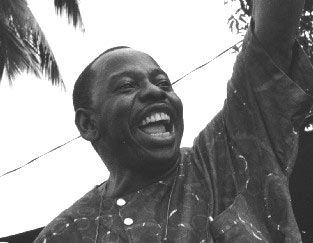
Picture a world where a man uses both the pen and the protest to challenge one of the biggest environmental injustices—and pays with his life. Ken Saro-Wiwa was not your average activist; he was a poet, writer, satirist, and television producer from Nigeria, with a rare gift: the ability to mix art with activism. His life reads like a gripping novel—filled with audacious courage, biting satire, and an unwavering commitment to his people and the environment.
Saro-Wiwa’s story is one of paradox. He was gentle with words but fierce in action. He spoke of peace, yet was branded an enemy of the state. He fought for the survival of his people, only to be condemned by the very government sworn to protect them.
His name today is a rallying cry across the globe for environmental justice and human rights—but in his homeland, it remains a reminder of both hope and betrayal.
From Ogoni Roots to National Spotlight
Kenule Beeson Saro-Wiwa was born on October 10, 1941, in Bori, a small town in Ogoniland, a lush, oil-rich region in the Niger Delta. The Ogoni people, numbering less than a million, lived in villages surrounded by fertile farmland, mangrove forests, and rivers teeming with fish. But hidden beneath this beauty lay crude oil—black gold—that would shape the fate of Saro-Wiwa and his people.

Photo Credit: DiasporaNews
A brilliant student, Saro-Wiwa attended Government College, Umuahia, an elite secondary school that also produced literary greats like Chinua Achebe. Later, he studied English at the University of Ibadan, where his love for literature blossomed.
Unlike many of his peers who pursued quiet academic careers, Saro-Wiwa embraced public life. By the late 1960s, he was already serving as an administrator during the Nigerian Civil War, and by the 1970s, he had become a lecturer, businessman, and writer.
But it was through television and literature that he reached the Nigerian masses. His sitcom, Basi & Company, ran for years on national TV and became one of the most beloved shows in Nigeria. Beneath its humour, the show critiqued greed, corruption, and the absurdities of modern Nigerian life—foreshadowing his later political activism.
The Birth of MOSOP: A Poet Becomes a Protester
By the late 1980s, oil extraction in Ogoniland—largely dominated by Royal Dutch Shell—had turned paradise into poison. Gas flares burned continuously, rivers were slick with oil, farmlands turned barren, and fish died in polluted waters. Despite generating billions of dollars for the Nigerian state, the Ogoni people received little benefit. Instead, they faced ecological devastation and poverty.
Saro-Wiwa saw this as nothing less than cultural genocide. In 1990, he co-founded the Movement for the Survival of the Ogoni People (MOSOP), a grassroots organization that demanded environmental and economic justice. MOSOP published the Ogoni Bill of Rights, calling for self-determination, fair revenue distribution, and environmental protection.
What made Saro-Wiwa stand out was his ability to turn complex issues into poetic and powerful rhetoric. His speeches and writings reframed oil not as wealth, but as a curse that robbed his people of life and dignity. “The Ogoni people,” he declared, “are a threatened minority, oppressed by multinational corporations and their own government.”
Unlike many activists, he used non-violent protest—marches, petitions, and international advocacy. In January 1993, MOSOP organized a massive rally where over 300,000 Ogonis—a third of the population—marched peacefully against Shell and the Nigerian government. It was one of the largest demonstrations in African history.

Photo Credit: Google
Collision with Power: When Words Became Dangerous
Saro-Wiwa’s rising influence terrified Nigeria’s military regime, led first by General Ibrahim Babangida and later by General Sani Abacha. Oil revenues were the government’s lifeline, and any disruption threatened the foundations of power. Shell, too, was deeply invested in keeping operations running smoothly in Ogoniland.
Tensions escalated in 1994 when four pro-government Ogoni chiefs were murdered during a violent clash. Though Saro-Wiwa denied involvement and was not even present, he and other MOSOP leaders were accused of inciting the killings. What followed was a show trial, condemned internationally for its lack of transparency and fairness. Amnesty International called it a “sham,” and even the trial’s presiding judge admitted to political pressure.
Despite global appeals for clemency, on November 10, 1995, Saro-Wiwa and eight MOSOP activists—collectively known as the Ogoni Nine—were executed by hanging. The world reacted with outrage: Nigeria was suspended from the Commonwealth, and Shell faced years of condemnation for its alleged complicity.

The Irony of a Poet’s Death
The execution of Ken Saro-Wiwa was a chilling irony. Here was a man who had wielded nothing but words—poetry, satire, speeches—yet was executed like a dangerous warlord. His death exposed not only the brutality of the Nigerian regime but also the moral bankruptcy of global corporations profiting from African resources at any cost.
Saro-Wiwa had once written:
“The writer cannot be a mere storyteller; he cannot be a mere teacher; he cannot merely x-ray society’s weaknesses, its ills, its perils. He must be actively involved in shaping its present and its future.”
These words were prophetic. His execution turned him into a martyr, immortalizing his belief that writers and artists could shape the destiny of nations.
Legacy: From Ogoniland to the World
Though his life was cut short, Ken Saro-Wiwa’s influence reverberated globally. His activism sparked a wave of environmental justice movements across Africa and beyond. The term “resource curse”—once academic—gained real, human stories through Ogoniland. His fight became a blueprint for communities resisting environmental exploitation, from the Amazon to the Arctic.
In 2009, Shell agreed to pay $15.5 million in an out-of-court settlement to the families of the Ogoni Nine, though the company denied wrongdoing. The case cemented Saro-Wiwa’s story as a landmark in holding corporations accountable for human rights abuses.
Today, universities, NGOs, and environmental groups around the world celebrate his work. Streets and awards bear his name. His writings—novels like Sozaboy and collections of essays like A Month and a Day: A Detention Diary—remain timeless reminders of the power of the pen.

Photo Credit: Goodreads
And in Ogoniland? The struggle continues. Oil spills still scar the land, and clean-up efforts have been slow. Yet the spirit of resistance he ignited remains alive.
Why Ken Saro-Wiwa Matters Today
In a world facing climate change, corporate exploitation, and rising authoritarianism, Saro-Wiwa’s story feels eerily current. He reminds us that environmental destruction is not just about nature—it’s about people, culture, and justice. He also embodies the uncomfortable truth that speaking truth to power can cost everything—yet silence costs even more.
His life raises enduring questions:
What is the price of justice in resource-rich but exploited communities?
How should corporations be held accountable when profit comes at the expense of human lives?
Can art and literature still move people to act in an age of digital activism and distraction?
For Nigeria, his death remains an open wound—a reminder that the nation’s wealth has too often come at the expense of its own people. For the world, his voice is a beacon, urging us not to separate poetry from protest, or art from activism.
Conclusion: The Man Who Made Words Dangerous
Ken Saro-Wiwa’s story is more than Nigerian history—it is a universal lesson. It tells us that poetry can be dangerous when it dares to reveal uncomfortable truths. It reminds us that activism can be costly, but silence is deadlier. And it shows us that one man’s courage, even in death, can light a fire that burns across generations.
The irony of Ken Saro-Wiwa’s life is that a poet who loved words ended up proving that words can be more powerful than bullets. His execution was meant to silence him—but instead, it amplified his voice. Today, every conversation about environmental justice carries an echo of Ogoniland, and every protest chant for human rights carries a whisper of his poetry.
Ken Saro-Wiwa spoke truth to power—and though power took his life, it could not kill his legacy.