Girls Are Learning to Lead, but Who Is Teaching Boys to Share the Power?
Girls are increasingly prepared for leadership, but boys also need gender education. Explore African research on positive masculinity and shared responsibility.
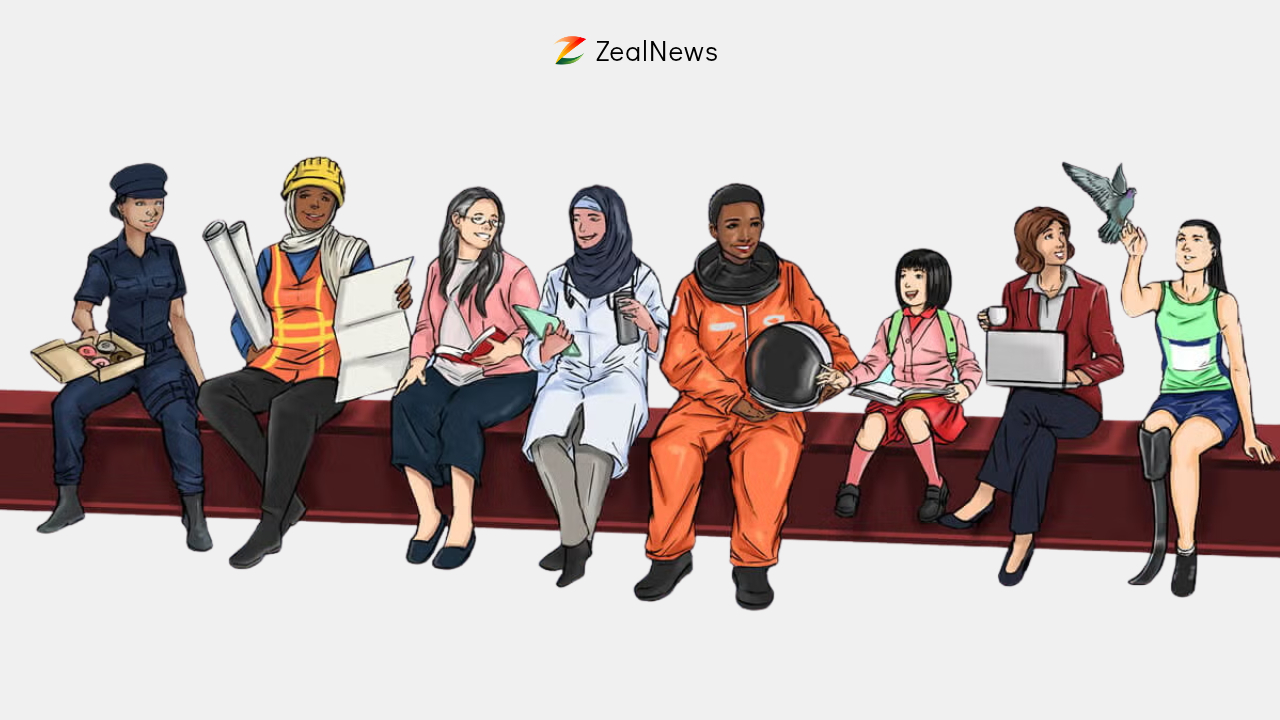
For generations, many African communities placed greater expectations on boys. They were often prioritised for education, inheritance, family leadership, and decision-making, while girls were expected to prepare for marriage, domestic responsibilities, and supporting others.
Although these traditions varied across communities, the imbalance helped shape who was encouraged to lead and who was expected to follow.
Today, efforts to correct that inequality have rightly expanded opportunities for girls through education, mentorship, leadership programmes and campaigns against discrimination.
But another question deserves attention: as girls are being prepared to occupy spaces historically dominated by men, are boys receiving enough guidance to understand and participate in that changing reality?
Gender refers to the roles, expectations and behaviours a society attaches to being a man or a woman, which are learned and can change. Gender inclusion means ensuring that people of every gender have fair access to education, opportunity, voice and decision-making, and are treated with equal respect.
It is not about one group gaining at another’s expense; it is about building a society where everyone can participate fully and contribute.
This is not an argument against girls' empowerment. It is a case for making gender inclusion a shared responsibility. A society cannot build equality by teaching girls to challenge restrictive expectations while leaving boys to inherit them unquestioned, or by teaching anyone to claim power without learning that power carries responsibility.
1. The missing half of gender education
Gender education should not stop at teaching girls confidence, independence, and leadership. Girls also need to learn that leadership carries accountability and respect for others, just as boys need to learn emotional intelligence, respect, accountability, communication, and the value of shared responsibility.
Without that foundation, a girl may grow up understanding that she deserves equal opportunities, while a boy of the same age continues to associate authority with masculinity, domestic work with women, and disagreement with disrespect. These attitudes are not inevitable, but they can be reinforced by families, schools, media and peer groups.
The OECD's 2024 analysis of social and emotional skills found that, among 15-year-olds across participating sites, 33 per cent of boys believed men make better political leaders than women, compared with 10 per cent of girls.
It also recommended that programmes challenging gender stereotypes involve boys and men, rather than focusing exclusively on women and girls.
2. What African research is revealing
This gap is not merely theoretical. A 2024 Equimundo report, Step by Step: Navigating Boyhood in Sub-Saharan Africa, identified boys aged 8–13 as an overlooked group in research and programming on gender and masculinities.
It argues that childhood and early adolescence are critical periods for shaping beliefs about identity, relationships, and gender roles. The report also warns against framing gender equality as a zero-sum game that pits girls against boys.
There are also examples of what targeted engagement can achieve. In South Africa, a 2021 study involving 549 Grade Five boys aged 10 to 12 across 10 primary schoolsevaluated the 12-session Hero Empathy Programme.
Social Insight
Navigate the Rhythms of African Communities
Bold Conversations. Real Impact. True Narratives.
Researchers found more egalitarian gender perceptions after the first intervention phase, while focus group discussions indicated that participants questioned stereotypes and expressed greater respect for girls. The improvement was not sustained at the same level after the second phase, highlighting the need for continued engagement rather than one-off lessons.
A 2024 multi-country qualitative study covering poor urban communities in Nigeria, the Democratic Republic of Congo and Rwanda also found that positive masculinity programmes helped participating boys and men develop more responsible sexual-health behaviours and better communication with partners. These findings suggest that engaging boys can contribute to healthier relationships, although they are not proof that every intervention produces the same results.

3. Preparing boys for a more equal society
The workplace is one place where this preparation matters. As more women enter leadership, boys should grow into men who can accept female authority, collaborate with women without resentment and recognise competence beyond gender.
The same lessons apply at home: sharing childcare, household responsibilities and decision-making should not be treated as a loss of masculinity.

Schools, parents, religious institutions and community organisations all have a role. Boys need safe spaces to discuss pressure, vulnerability, anger, responsibility and expectations of manhood.
They should also learn that equality does not mean competing with girls for recognition; it means respecting the same rights and opportunities.
Girls, in turn, should learn that empowerment is not superiority, and that equality means holding themselves to the same standards of fairness and respect they expect from boys.
Conclusion
Correcting the historical exclusion of girls remains necessary, but equality should not become another cycle of neglect. Boys deserve deliberate investment in their emotional and social development, not because girls should surrender opportunities, but because both genders must learn to live in a society built on mutual respect.
The goal is not to replace one imbalance with another. It is to raise girls who lead with confidence and accountability, and boys who can share power and accept women’s leadership, because leadership, dignity, and responsibility are not determined by gender.