Anthropic Is Building a Biology Lab. Why Is AI Moving Into Drug Science?
Anthropic is building a physical biology lab as AI companies race into drug science, targeting rare and “undruggable” diseases and faster medical breakthroughs.
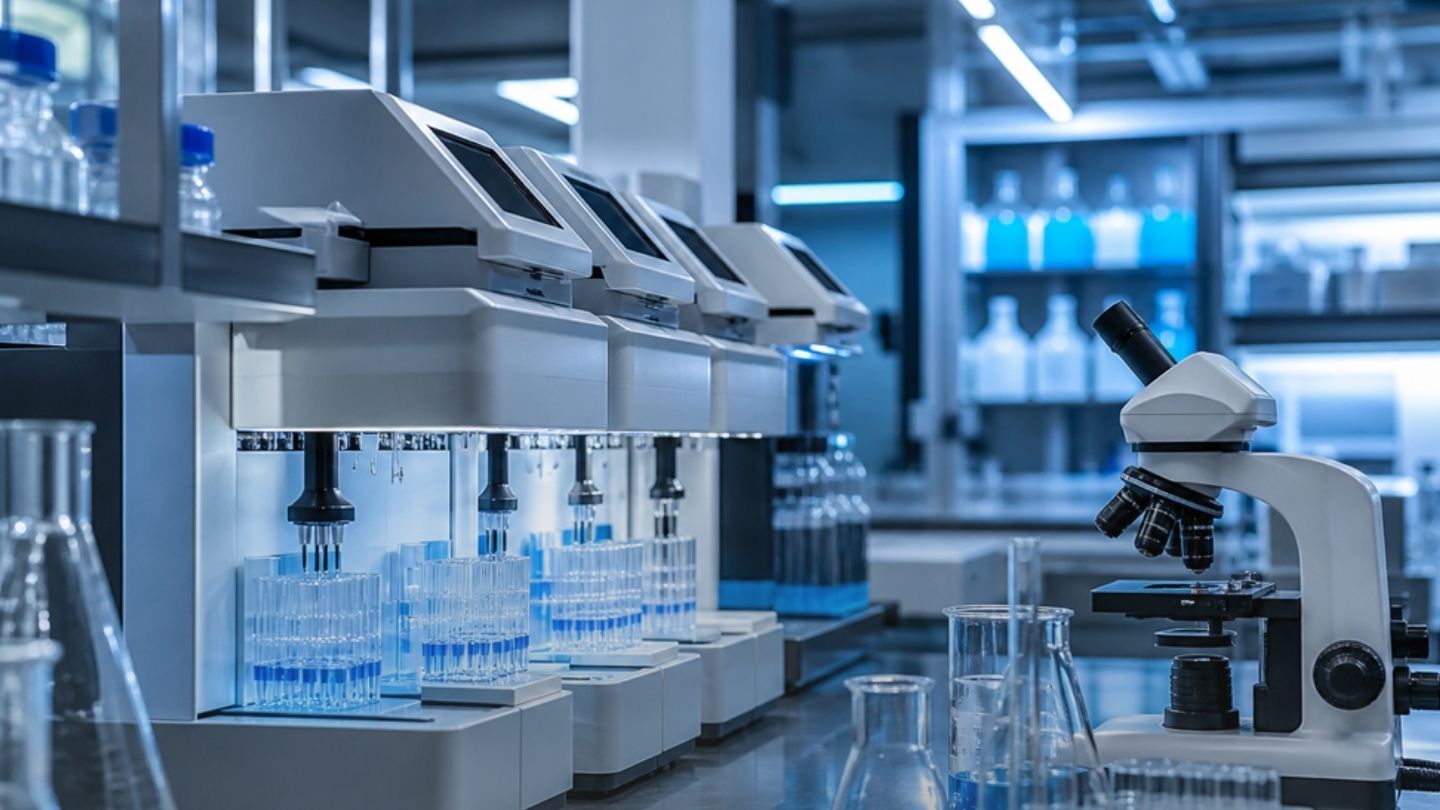
Anthropic has confirmed that it owns a physical wet lab where its scientists run real biology experiments located in the San Francisco Bay Area.
The company behind the Claude chatbot has now moved from its usual work of training large language models to now running assays with a quiet intention of stepping into biotech.
This comes after the warning from its CEO, Dario Amodei, about the dangers of AI to humanity. A move into biotech is a significant one and could be pointing to the world in the direction where the entire AI industry believes the next big prize is hiding.
What Anthropic's New Biology Lab Actually Does
Eric Kauderer-Abrams, Anthropic's head of life sciences, confirmed the lab's existence in an interview. He explained that the company believes the real test of biological progress still happens on a lab bench.
Anthropic has said its goal is to unlock treatments for rare diseases so uncommon or biologically complex that pharmaceutical companies rarely find them profitable enough to chase.
The company says the work goes beyond past pure computational prediction into hands-on experimentation.
A company spokesperson later clarified that the lab is "not for drug discovery specifically," without explaining what it actually is for.
However, it is clear that Anthropic has drawn a boundary around not running clinical trials or competing directly with pharmaceutical companies. It is instead positioning itself as a tool-builder for problems the industry has ignored.
Internal job listings have described a goal of speeding up progress in life sciences "by an order of magnitude."
Why AI Companies Are Suddenly Betting On Drug Science
Drug discovery has always been a slow and expensive process, often full of failures. It takes years to identify a promising moleculeand even after that hurdle, human trials can stretch on for a decade before a treatment reaches a pharmacy shelf.
This is the inefficiency large language models and machine learning are built to attack. AI systems can scan enormous chemical and genetic datasets, predict how molecules will behave, and flag combinations no human researcher would think to test.
This is why life sciences has quietly become one of Anthropic's biggest investment areas by headcount and resources. It also explains why the company launched its Model Hardware Standard in August.
This framework lets AI systems operate physical lab equipment directly. The automation of lab work is the natural next step after automating analysis, and whoever builds the tools that let AI run experiments without constant human supervision controls a serious competitive advantage.
There is also a personal angle to this push. Dario Amodei has spoken about losing his father to a disease shortly before a cure became available, a loss he has cited as part of what motivates the company's biology ambitions.
The Undruggable Disease Problem AI Wants To Solve

For decades, certain conditions have been labeled "undruggable" — this means the biological targets involved are too complex, too unstable, or too poorly understood for existing drug development methods to address.
Kauderer-Abrams has argued that AI could fast-track progress on exactly these conditions and essentially treat undruggable diseases as a data and pattern-recognition problem.
That exactly is where AI's real advantage lies. Human researchers are limited by time, funding cycles, and the sheer volume of biological data available.
AI models don't get tired, and they can hold far more variables in mind at once. If even a fraction of the "undruggable" backlog becomes treatable through AI-assisted discovery, the impact on public health could be enormous.
Anthropic vs Isomorphic Labs: The Race Nobody Will Admit They're In
Anthropic isn't alone here, and it isn't even first. Isomorphic Labs has been chasing the same goal for years and has raised billions of dollars doing it. The leadership of the Alphabet-backed drug discovery company built on DeepMind's protein-folding research, has publicly pushed back against any suggestion that AI safety concerns should slow down drug discovery work.
It insisted their models are locked down internally and that progress continues regardless of what other AI labs decide.
Anthropic is also supplying its tools to established pharmaceutical giants, including Roche's Genentech, Bristol Myers Squibb, and Novo Nordisk, effectively hedging its bets by embedding itself into the existing industry while building its own independent research capacity.
Meanwhile, OpenAI has moved into life sciences reasoning tools of its own.
None of these companies has come out to name this “a race”, but the pattern is unmistakable: there are massive funding rounds, aggressive hiring, and a rush to be the company whose AI first delivers a genuine medical breakthrough.
What This Means For The Future of Medicine
Nobody knows yet how much of this will actually work. Anthropic hasn't disclosed which diseases it is targeting or how far along its research is. Also, turning a promising molecule into an approved drug still requires the same lengthy, heavily regulated human trial process AI hasn't touched.
Kauderer-Abrams himself admitted the company is in "the very early innings."
What is clear is that AI companies now see biology as too valuable a frontier to leave to traditional pharmaceutical timelines.
Whether that urgency produces real cures or simply more hype will depend on what comes out of labs like Anthropic's in the next few years.