All You Need to Know About Palm Wine in African Culture
Palm wine is central to Igbo weddings, Ghanaian libations and Cameroonian royal courts. Learn how this African drink is tapped, fermented, and served.
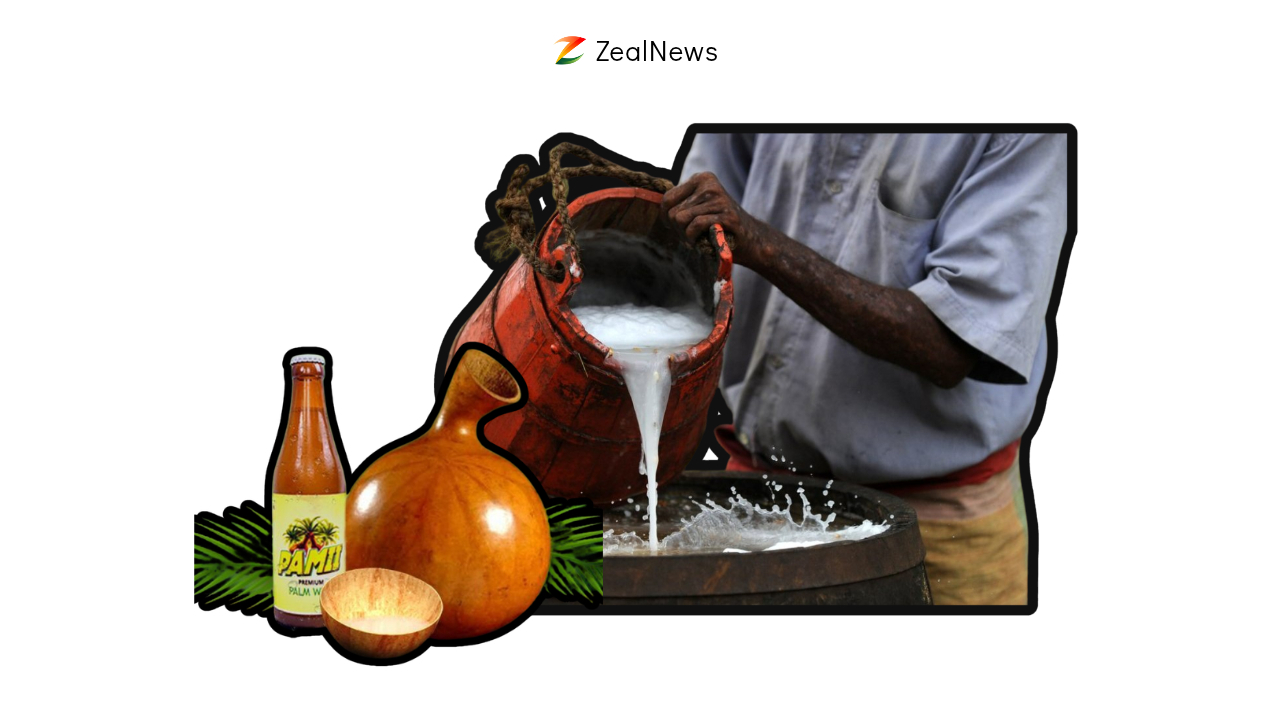
In many African communities, some drinks are served for refreshment, while others carry meanings that go beyond the cup. Palm wine belongs to the latter.
At an Igbo traditional wedding in southeastern Nigeria, for instance, the Igba Nkwu ceremony reaches a memorable moment when the bride, holding a cup of palm wine, searches for her groom among the guests.
When she finds him and offers him the drink, she publicly confirms her choice to marry him. Without this symbolic exchange, the ceremony would lose one of its most recognisable moments.
Across West and Central Africa, palm wine similarly appears at marriages, funerals, festivals, family gatherings and traditional rites.
In Ghana, it is served during marriage negotiations and used in libation ceremonies. Among the Grassfields communities of Cameroon, specially decorated palm wine vessels were reserved for chiefs, reflecting the drink's connection to royal authority and ancestral traditions.
Its importance is not simply that people enjoy drinking it; it is also what sharing it represents.
From the Palm Tree to the Drinking Cup
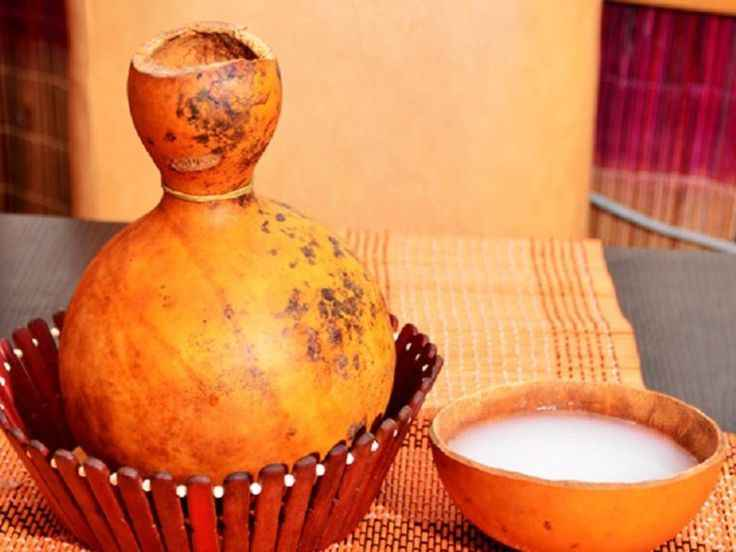
Palm wine is a naturally fermented beverage obtained from the sugary sap of palm trees. The most commonly tapped varieties in West Africa include the oil palm (Elaeis guineensis) and raffia palm (Raphia species).
Depending on the country, it is known by different names: nkwu in Igbo or emu in Yoruba in Nigeria, nsafufuo in Ghana, and matango in Cameroon.
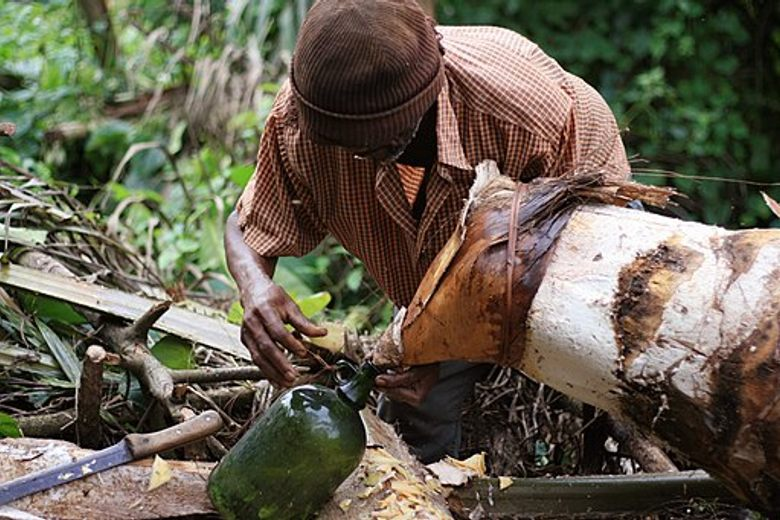
Its production begins with the tapper, who climbs the palm tree and makes a careful cut or opening to access the sap. Depending on the palm species and local technique, sap may be collected from the tree's flowering stalk or through other tapping methods.
A container is positioned to collect the liquid as it flows, often with the tapper returning to gather it in the morning and evening.

The collected sap is naturally sweet and milky-white. However, the process does not end with tapping. Microorganisms, particularly naturally occurring yeasts and bacteria, begin fermenting its sugars almost immediately.
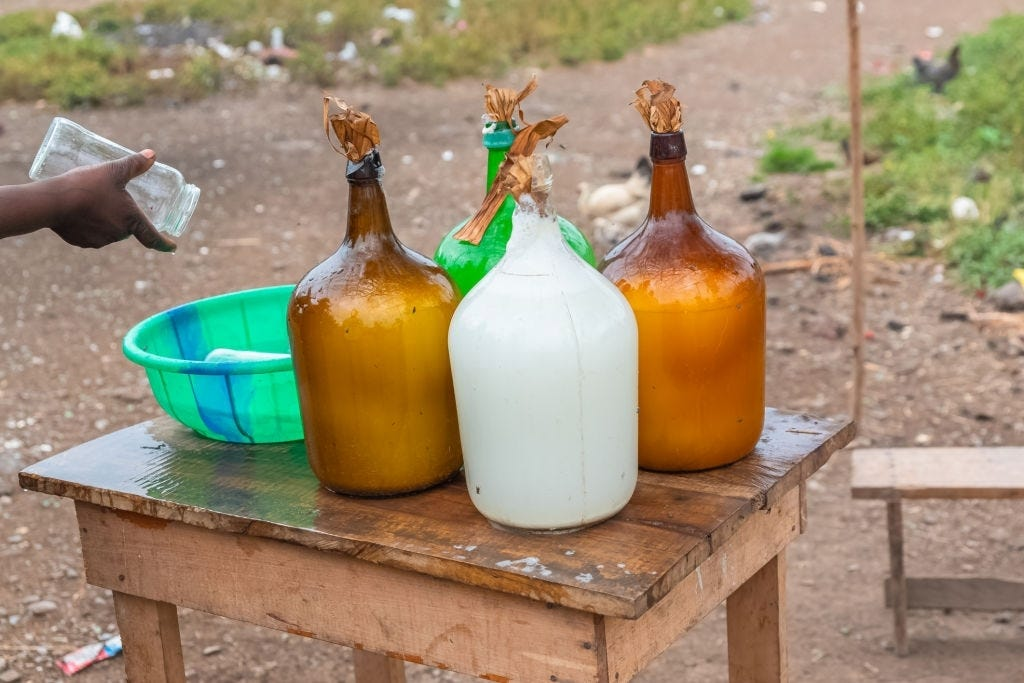
As fermentation progresses, some sugars are converted into alcohol and organic acids, changing the drink's sweetness, aroma, and taste. Freshly collected palm wine is generally sweeter and less alcoholic, while wine left to ferment becomes more acidic and alcoholic (fresh palm wine is often cited at about 3–6% alcohol, rising to around 9%). This is why timing matters to both producers and consumers.
More Than a Drink: The Cultural History
For the Igbo, palm wine is deeply associated with marriage, hospitality, and community relationships. During Igba Nkwu, the cup traditionally comes from the bride's father or an elder, and once the groom drinks, the couple goes to her father for his blessing.
Palm wine also features in family negotiations, festivals, and funerals, where its presentation and sharing can communicate respect, friendship, and social connection.
Culture
Read Between the Lines of African Society
Your Gateway to Africa's Untold Cultural Narratives.
The tradition is not exclusive to Nigeria. In Ghana, palm wine, known as nsafufuo in Akan, is served during traditional marriage ceremonies, naming celebrations, and funerals. It is also used for libation, through which elders make symbolic offerings and invoke ancestral blessings.
In Cameroon's Grassfields kingdoms, beaded ceremonial vessels were used to store and serve palm wine at court, while its ritual consumption reinforced spiritual and political authority. These practices demonstrate how one drink can carry different meanings across communities.
Nutrition, Livelihoods and the Challenges Ahead
Palm wine contains sugars, amino acids, minerals, and vitamins, including some B vitamins.Research has also examined its microorganisms and potential nutritional properties.
However, these findings should not be interpreted as proof that drinking palm wine prevents or treats diseases. Its nutritional composition varies, fermentation increases its alcohol content, and excessive alcohol consumption carries established health risks.
Poor handling and contamination during tapping, collection, or storage can also compromise safety.

Beyond its cultural value, palm wine supports livelihoods. Tappers, collectors, traders, transporters, and local drinking establishments participate in its supply chain. Yet the occupation faces challenges, including dangerous tree-climbing conditions, declining palm populations, and fewer young people learning the trade.
Reports from tapping communities, including a 2026 Ghana News Agency feature, also highlight the occupational risks faced by tappers and the difficulty of preserving quality as fermentation continues.
Palm wine is therefore more than a traditional beverage. It connects agriculture to livelihoods, everyday social life to ancestral practices, and individual celebrations to collective identity.
Preserving its place in African culture also means recognising the people, skills and knowledge that bring it from the palm tree to the gathering.