Can One Good Politician Really Save Nigeria?
Nigeria’s problems are bigger than any one president. Loyalty, institutions, and shared responsibility decide whether governance works.
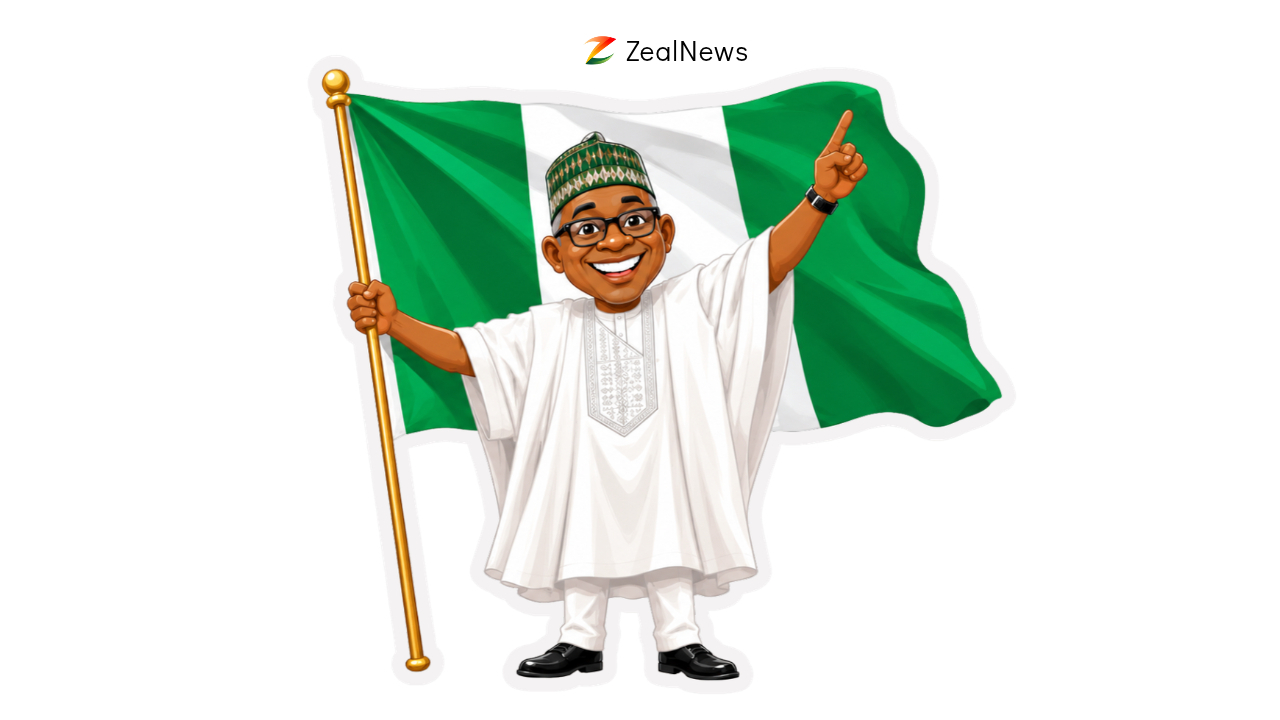
A note before you read: “Politician A, B and C” and the scenarios described below are purely illustrative. Any resemblance to a real individual is coincidental.
Nigeria’s political temperature is rising. The presidential, Senate, House of Representatives, and governorship elections are just months away, and a federal high court has already nullified one leading presidential candidacy. [Read more on Atiku’s candidacy here.]
As in every election season, many Nigerians look for a national saviour. Politician A is presented as the answer to years of frustration. When A disappoints, attention shifts to Politician B, whose supporters promise change. If B falls short, Politician C is waiting in that queue. We keep changing the lead actor and calling it a new production.
Wanting better leaders is reasonable. Public officials should be judged on competence, integrity, decisions, and results. But expecting one individual to rescue a country is comforting in the way fairy tales are: it gives a complicated problem one villain and one hero. Governance is not a superhero film.
A president cannot personally repair every road, secure every community, supervise every school, and make every public office work. A plan that depends on one person’s extraordinary virtue is a plan waiting to disappoint.
This is not to say these responsibilities fall outside the president’s jurisdiction. It is to say that the reality must be viewed through how the system actually works.
When Preference Replaces Political Judgment
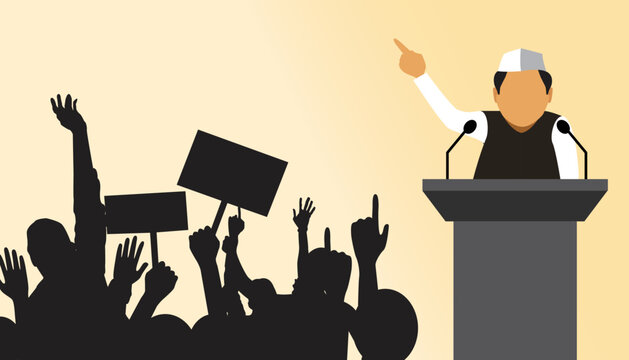
One familiar mistake is assuming that because Politician A is bad, Politician B must be good. A’s poor record does not prove B’s competence. Being different from someone who failed is not the same as being capable.
Yet political debate becomes an audition in which B’s strongest qualification is not being A. Supporters become defence lawyers, critics become prosecutors, and facts are welcome only when they confirm an existing verdict.
Politics is more than an emotional relationship with a candidate or party. Admiration, anger and loyalty are not policy analysis. Politics involves budgets, legislation, administration, constitutional limits and oversight. A speech is not a budget, a promise is not a completed project, and online popularity is not evidence of competence.
A Country Is Not One Person
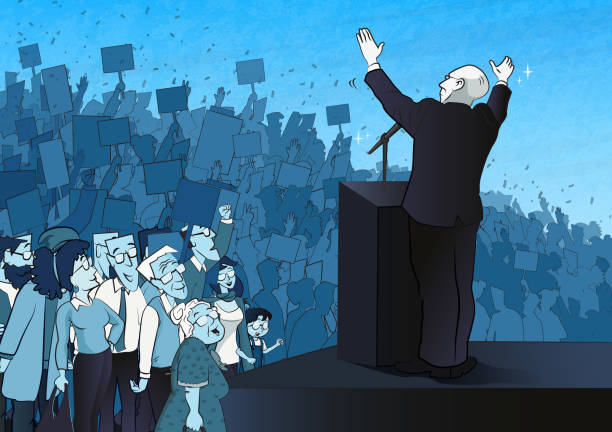
Nigeria in this context is bigger than Politician A, B, or C.
The presidency is one part of a massive constitutional system. The National Assembly, made up of 109 senators and 360 House of Representatives members, makes federal laws and oversees the executive.
Governors lead state governments, while state Houses of Assembly legislate and scrutinise state affairs. Courts interpret the law. Local governments, ministries, agencies and commissions complete the structure, each with its own assigned responsibilities.
Now consider how blame travels. A failure at the local level, and the presidency is blamed. A problem in a state, and the presidency is blamed. A neglected constituency, and the presidency is blamed. Citizens forget the officeholders who are actually answerable.
Take local government funds, for instance.
After the Supreme Court’s 2024 ruling on local government autonomy, the push has been for allocations from the Federation Account to reach councils and wards directly. That places chairmen closer to the custody and execution of funds meant for local projects such as primary health centres, public schools, drainage and market stalls.
Yet when those projects fail, the anger still travels to the presidency. A chairman who cannot explain where the money went should face questions from councillors, from the residents who see the results, and from the bodies charged with oversight.
Then there is the Federal Roads Maintenance Agency, FERMA. This body exists to maintain federal roads that need repair rather than fresh construction, such as patching potholes and clearing drainage.
Yet many Nigerians have never heard of it.When a federal road deteriorates, the president takes the blame, while the agency responsible for maintenance, its funding, and its performance escape questions.

Many roads in question are not even federal. This is because state roads fall to state governments and local roads to councils, so the first question should be: whose road is this, and what is the authority in charge doing about it?
The pattern is the same in both cases. The blame goes to the most familiar face, and the office doing the actual work stays invisible. An official nobody can name is an official nobody has to answer to.
The same applies to lawmakers. A senator or House member is elected to make laws, oversee the executive, and represent a constituency, yet few voters check how their representative votes, whether they attend sessions or what they do with constituency projects. When citizens ask nothing of them, it is easy for them to offer nothing.

There should be real civic education, because these bodies carry distinct responsibilities and are not decorative roles in the president’s office. When a road is abandoned, a school is under-equipped, or a hospital fails, scrutiny should not stop just at the presidency.
Ask which level is responsible, what the relevant ministry, agency, governor, legislator, or council did, and whether allocated money was properly spent. Start with simple questions. Who is my local government chairman? Who represents my constituency? Do I know my state assembly member’s name?
This does not mean every institution has equal power or that blame should be diluted. Presidents and state governors wield substantial executive authority and must answer for their administrations. Legislators cannot escape scrutiny because they do not execute projects. Each office should be assessed against its duties.
Replacing one personality while leaving weak oversight, opaque spending, patronage, and ineffective services untouched is unlikely to produce lasting change.
Good leaders matter, but strong institutions make performance less dependent on whoever holds office. They set standards, check abuses, and preserve continuity beyond elections.
The harder civic question is not who will save Nigeria, but what must work, who is responsible, and how failure will be corrected. As citizens, we should:
Examine candidates’ records and plans.
Follow our representatives after election day.
Demand explanations and results.
Refuse to excuse misconduct from our preferred camp.
Stop treating an opponent’s failure as proof of our candidate’s virtue.
Nigeria need not abandon hope in political leadership. It must abandon the idea that hope is a governing structure. No alphabet replaces institutions, accountability and civic pressure.
As the country prepares for its next general election, we need hard conversations that demand real answers and honest reflection. The saviour narrative asks citizens to wait. Building a country requires them to keep watching after the campaign posters come down.