Did You Know There Are Places on Earth That No Country Claims? (One Is in Africa)
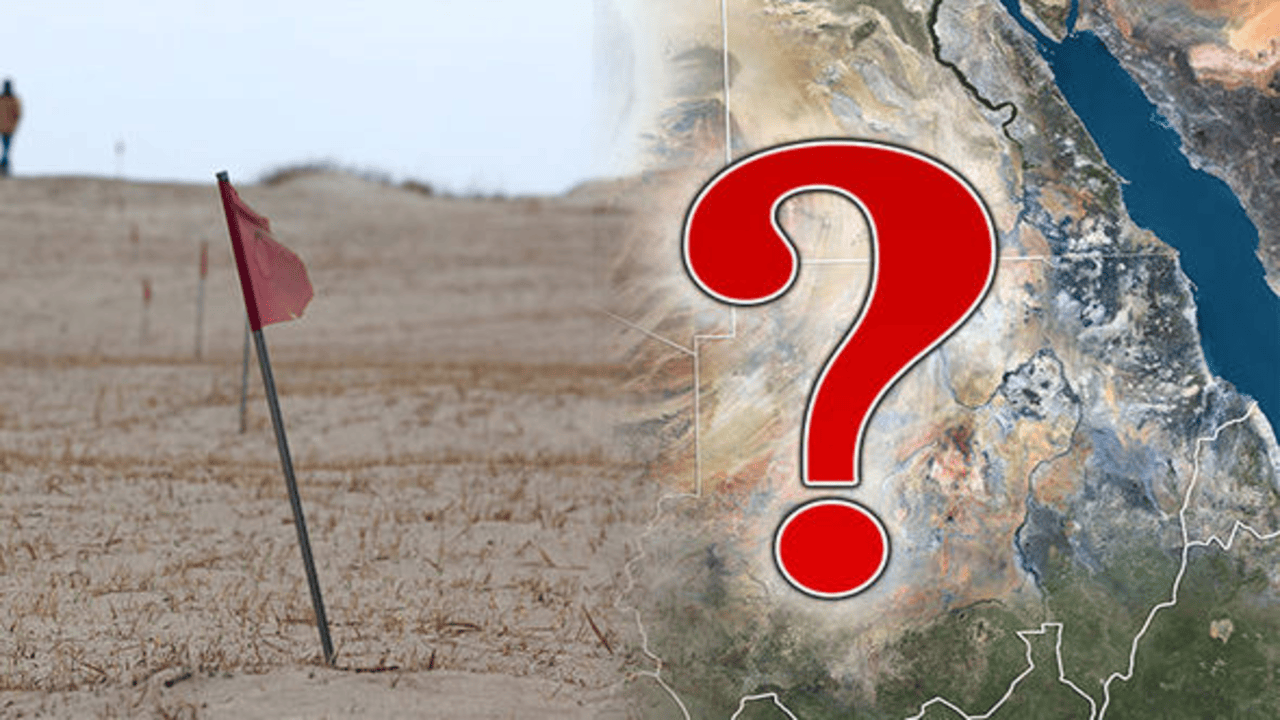
In a world where almost every corner has been mapped and divided among nations, a few territories remain outside any country's formal claims, including a vast desert in Africa
Almost every piece of land on Earth belongs to a recognised country.
National borders stretch across deserts, forests, mountains and islands, leaving very little territory outside the reach of governments.
Yet a few unusual places remain outside formal national territorial claims.
Some owe their status to old border disagreements, while others are in remote regions where competing national interests have been frozen by international agreements.
There is even a small piece of European territory that inspired an attempt to establish an entirely new country.
Let’s see three fascinating places unclaimed on planet Earth.
1. Bir Tawil: The African Territory Neither Egypt nor Sudan Claims
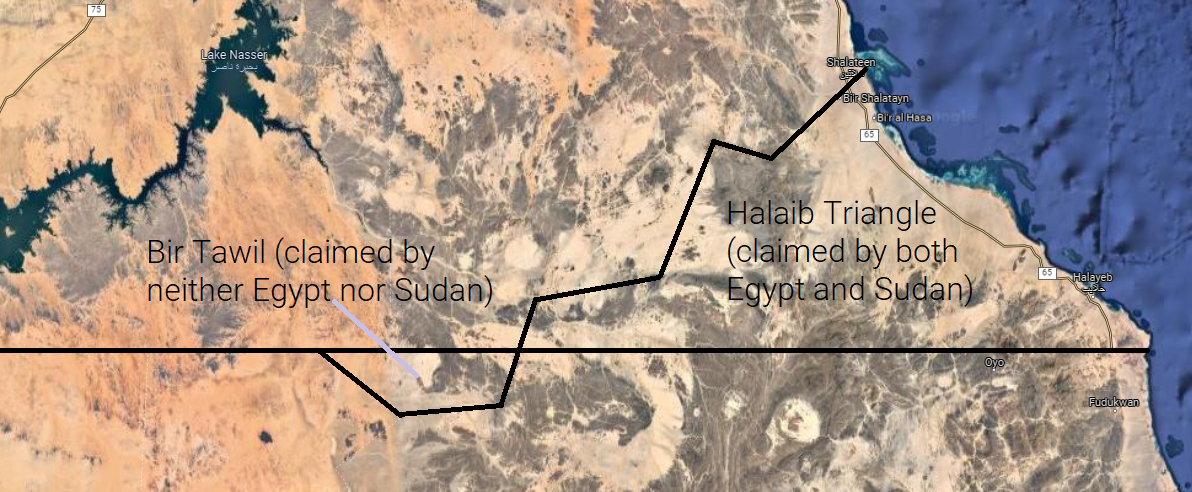
Between Egypt and Sudan lies Bir Tawil, an approximately 2,060-square-kilometre stretch of arid land that neither country claims as its own.
Its unusual status dates back to a disagreement over boundaries established during British colonial rule.
In 1899, Britain established a political boundary between Egypt and Sudan along the 22nd parallel.
Three years later, in 1902, a different administrative boundary was drawn to account for the movement and settlement patterns of communities living around the region. The two lines placed Bir Tawil and the nearby Hala'ib Triangle under different administrations.
Following independence, Egypt maintained that the 1899 boundary was the correct international border, while Sudan insisted that the 1902 administrative boundary should determine its territorial rights.
The disagreement produced an unusual situation.
Under Egypt's preferred boundary, Bir Tawil falls within Sudanese territory.
Under Sudan's preferred boundary, it falls within Egypt.
Neither country wants to recognise the boundary that would strengthen the other's position over the much more strategically valuable Hala'ib Triangle, which both countries claim.
Consequently, neither government has asserted sovereignty over Bir Tawil.
The region is largely barren desert, with little infrastructure and harsh conditions that make permanent settlement difficult.

However, it is not without human history. Members of the Ababda community have longstanding connections to the wider region, and researchers have examined their traditional presence and interests in Bir Tawil.
Its unusual status has also attracted individuals who have travelled there to plant flags and declare their own kingdoms.
One notable example was an American man who announced the creation of a kingdom in the territory in 2014. Such declarations, however, have not established internationally recognised sovereignty.
2. Marie Byrd Land: Antarctica's Vast Unclaimed Territory
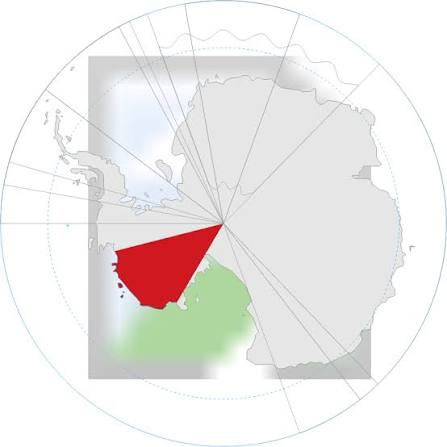
While Bir Tawil is notable for its position between two African countries, Marie Byrd Land is remarkable for its sheer size.
Located in West Antarctica, Marie Byrd Land covers approximately 1.6 million square kilometres, making it the largest commonly identified unclaimed territorial area on Earth.
Seven countries have territorial claims in Antarctica: Argentina, Australia, Chile, France, New Zealand, Norway and the United Kingdom.
Marie Byrd Land, however, is the major sector of Antarctica that has never been formally claimed by a country.
Its status is also shaped by the Antarctic Treaty, signed in 1959 and which entered into force in 1961. The agreement established a framework for peaceful international cooperation and scientific research on the continent.
3. Gornja Siga: The European Territory Behind a Self-Declared Country
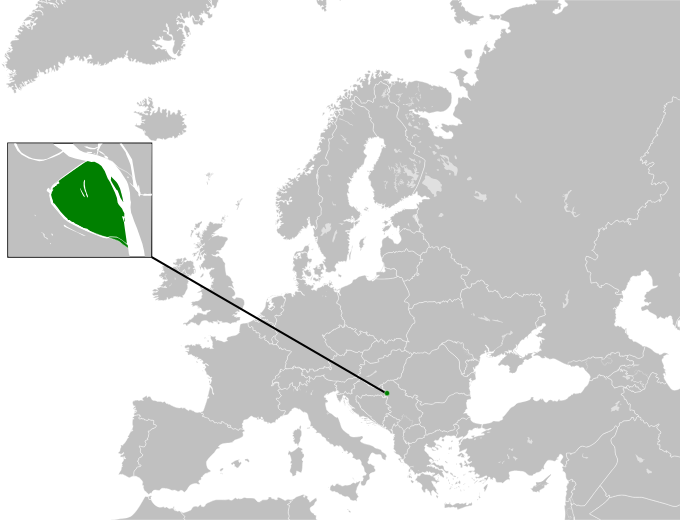
Along the Danube River, between Croatia and Serbia, lies Gornja Siga, a roughly seven-square-kilometre stretch of land that became associated with one of Europe's most unusual attempts to establish a new country.
Its status is connected to a long-running disagreement between Croatia and Serbia over their shared border.
The two countries favour different boundary lines along parts of the Danube, creating a situation in which certain parcels of land fall on different sides depending on which country's interpretation is used.
In 2015, Czech politician Vít Jedličkadeclared the establishment of the Free Republic of Liberland on Gornja Siga, arguing that the territory was not claimed by either country.
He subsequently announced plans for a new state, complete with a flag, constitution and citizenship programme.
The declaration attracted international attention, with thousands of people expressing interest in the proposed micronation.
However, Liberland has not received international recognition as a sovereign country.
Croatia has also rejected the claim and restricted access to the area.
In a 2025 ruling, an administrative court in Osijek stated that Gornja Siga was not terra nullius, or nobody's land, and that Croatian authorities exercised control over the territory.
The court also noted that the Croatia–Serbia border disagreement remained unresolved.
Consequently, Gornja Siga is more accurately described as a disputed border territory than an unquestionably unclaimed piece of land.
Does Unclaimed Land Mean Anyone Can Own It?
Not exactly.
The existence of territory without a recognised national claim does not automatically make it available for private ownership or the creation of a sovereign country.
Bir Tawil, for instance, has attracted individuals who have declared themselves kings or announced the creation of new kingdoms, but none has established internationally recognised sovereignty.
In a world where almost every corner has been mapped and divided among nations, these places remain unusual reminders that the territorial boundaries of the modern world are not quite as straightforward as they might appear.