Local Government Autonomy In Nigeria, Two Years After the Supreme Court Ruling: What Actually Changed?
Two years after Nigeria's Supreme Court ordered financial autonomy for local governments, ₦10.48 trillion has been allocated to councils. But how much control has actually reached them?
Two years ago, Nigeria's local governments appeared to win something they had been denied for decades: the legal right to control their own money.
For the people who depend on local councils for roads, primary healthcare, sanitation and other basic services, the Supreme Court's July 11, 2024 judgment was supposed to mean that the money allocated to their councils would finally follow the councils themselves.
Yet two years later, the more uncomfortable question is no longer what the Supreme Court said. It is what actually changed after it said it?
What the Supreme Court Actually Decided
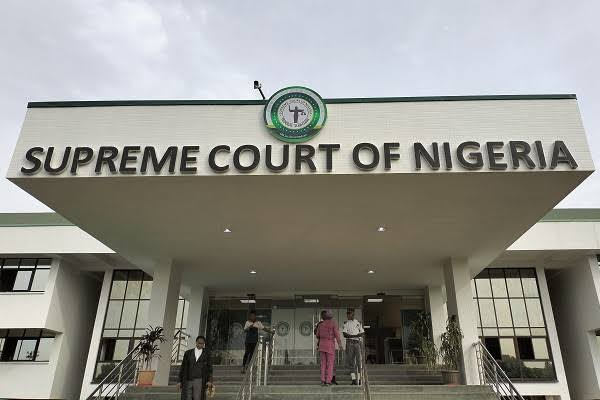
In Attorney-General of the Federation v. Attorney-General of Abia State & 35 Others, the Supreme Court ordered that allocations standing to the credit of the 774 local government areas be paid directly to them.
The court also held that state governments had no constitutional authority to retain or spend money allocated to local governments and ruled that the use of unelected caretaker committees to administer councils was unconstitutional.
It was a significant judgment because Nigeria's local governments have long operated within a system in which state governments wielded substantial influence over council finances.
The ruling therefore appeared to settle a question that had remained politically convenient for years: local government money was meant for local governments, so local governments should control it.
But a judgment can settle a legal argument without automatically settling the political reality.
The Money Moved. Did the Power Move?
The numbers make the contradiction difficult to ignore. Between the July 2024 and June 2026 FAAC meetings, local government councils were allocated approximately ₦10.48 trillion, according to an analysis of FAAC records using data from the National Bureau of Statistics and the Office of the Accountant-General of the Federation.
Allocations rose from about ₦4.496 trillion in the first year after the ruling to ₦5.984 trillion in the second, a 33.1 percent increase.
On paper, that sounds like progress. In practice, however, the increase in money available to local governments does not necessarily mean an equivalent increase in their financial independence.
A May 2026 analysis by The PUNCH found that ₦1.46 trillion meant for local government councils was processed through the existing FAAC structure in the first quarter of 2026, amid continuing delays in implementing direct payments.
Another analysis found that ₦2.514 trillion in local-government allocations between January and May 2026 was paid through the State Joint Local Government Account.
This is the central problem. A local government can be allocated money without necessarily having meaningful control over that money.
If the funds still pass through structures in which state governments exercise significant influence, then the question of autonomy has merely moved from the courtroom to the accounting system.
There are exceptions. Jigawa, for instance, has been cited as a state where local government officials say councils receive allocations directly into independent accounts without state deductions, suggesting that implementation is possible when political and administrative conditions allow it.
That makes the wider failure even harder to explain away as a technical impossibility.
What Does a Supreme Court Judgment Mean Without Consequences?
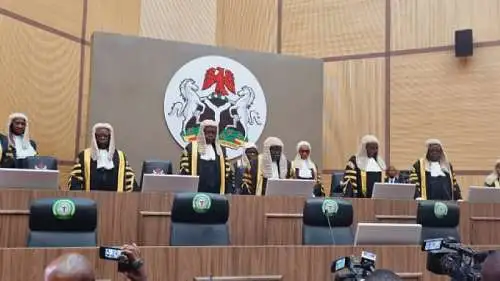
The National Union of Local Government Employees has repeatedly raised concerns about the slow implementation of the judgment. In May 2026, NULGE president Aliyu Haruna-Kankara said there had been no concrete step by the Federal Government to fully operationalise the decision, arguing that the country remained largely where it was before the ruling.
That should worry more than local-government employees.

The issue is no longer simply whether governors are "defying" the Supreme Court. That claim requires nuance because implementation has varied across states, and some states have taken steps toward direct access to council funds.
The more serious question is whether Nigeria has built an enforcement system capable of turning a judicial declaration into an administrative reality.
Because if a Supreme Court judgment requires years of political negotiation before its central consequences are felt, what exactly separates a binding judgment from a policy recommendation?
This matters beyond local governments. The judiciary derives much of its authority from the expectation that its decisions will be obeyed and enforced.
When implementation becomes prolonged, inconsistent or dependent on political willingness, the damage extends beyond the particular case.
A Judgment Cannot Become a Suggestion
The Supreme Court did its part in 2024: it made a constitutional determination and issued an order. Two years later, the evidence suggests that the difficult part has been converting that order into a nationwide administrative reality.
That distinction is important because local-government autonomy was never supposed to be about giving council chairmen a new title or producing another constitutional reform headline.
It was about who controls the money and, ultimately, who answers to the people when that money is spent.
Nigeria has now allocated more than ₦10 trillion to local governments since the judgment. The next question should therefore not be how much money was shared, but how much control actually reached the councils that were supposed to receive it.
A Supreme Court judgment cannot become a suggestion simply because implementing it is politically inconvenient.
If Nigeria wants its courts to command authority, then court orders must eventually become more than words on paper. Otherwise, two years after a landmark ruling, the country may discover that the most important thing that changed was the date.