SHE100: She Built the Room Northern Nigerian Women Were Missing—The Story Of Fauziyya Tukur
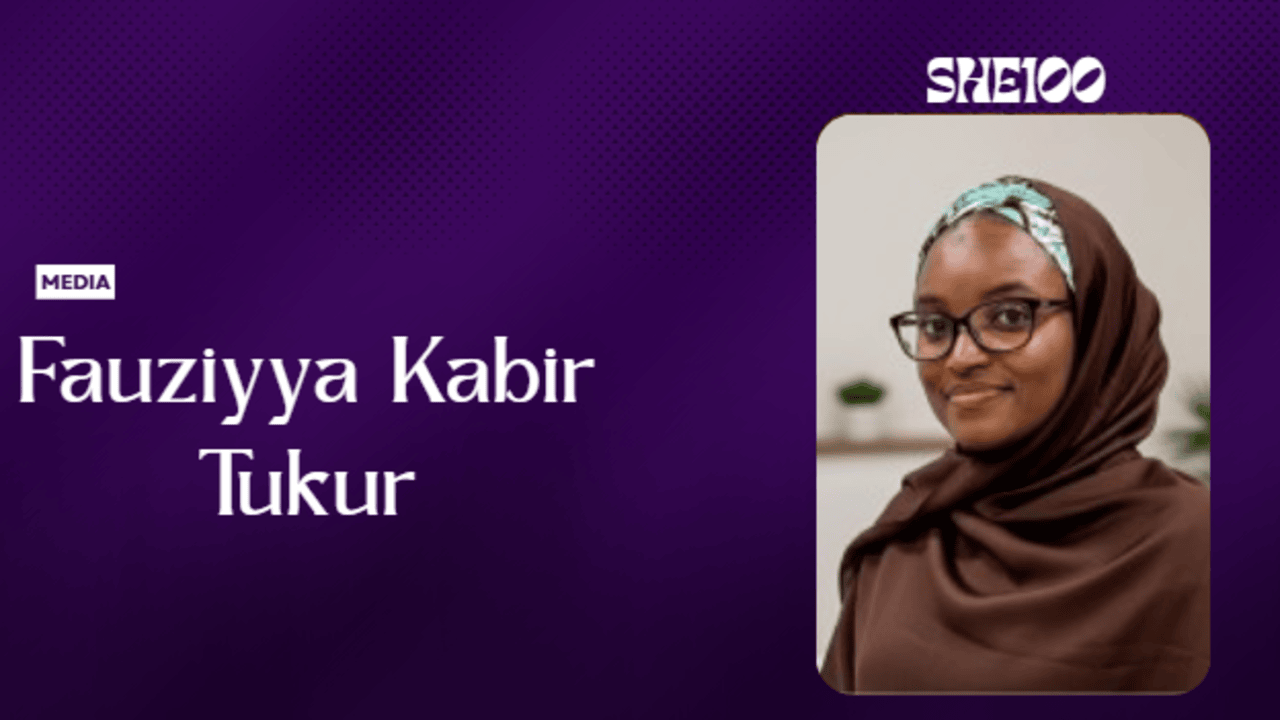
She won an African Fact-Checking Award at the BBC, trained at Stanford on AI, and fellowshipped at the World Press Institute. Then she came home and built what northern Nigeria's women had never had — a Hausa-language newsroom, staffed entirely by women, dedicated entirely to their stories. This is Fauziyya Tukur and the making of Mata Media.
There is a story that northern Nigerian media has been telling for decades and there is a story it has never told.
The one it has never told fully belongs to the women. The mothers in Kano navigating inflation without a safety net. The girls in Sokoto whose education ends before it begins. The survivors in Kaduna whose trauma is never named because the language for naming it, in Hausa, in public, simply does not exist yet.
Fauziyya Tukur spent five years at the BBC learning how to find those stories. Then she left to build the platform that would finally tell them.
In December 2025, she co-founded Mata Media, Nigeria's first Hausa-language media organisation dedicated exclusively to women's stories, staffed entirely by women, and built on a single, non-negotiable conviction: that the women of northern Nigeria deserve journalism that speaks to them, in their language, about their lives, by people who understand both.
The gap she is filling is not a small one. It is structural, cultural, and decades old. And the woman filling it is one of the most technically accomplished journalists Nigeria has produced, a disinformation investigator, a Stanford-trained AI specialist, a World Press Institute fellow, and an African Fact-Checking Award winner.
Mata Media is not a passion project. It is the culmination of a career built, deliberately and at great cost, to make exactly this possible.
Five Years at the BBC and the Lies She Learned to Expose
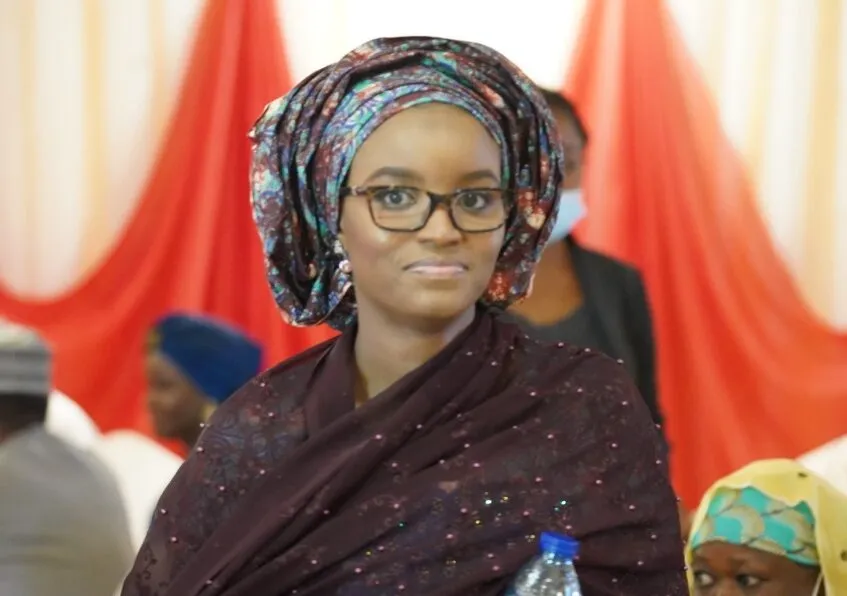
Fauziyya Kabir Tukur built her reputation as a journalist at the BBC Hausa Service, where she spent five years as a multimedia journalist, producing and presenting the BBC Hausa flagship morning show, creating digital videos, hosting live programmes, and serving as a lead writer for the BBC Hausa Digital Team.
She was also the project coordinator for Hikayata, the BBC Hausa Service's annual writing contest for women, a role that placed her at the intersection of journalism and women's empowerment long before Mata Media existed.
Her work deepened into disinformation investigation, a field that was becoming one of the most consequential in African journalism as elections, elections, and social unrest generated tidal waves of false information online.
She became a Senior Journalist on the BBC's Global Disinformation Team, using Open-Source Intelligence to verify sources, trace the origins of viral falsehoods, and hold both governments and political actors to account through evidence-based reporting.
In 2023, she was selected as a journalism fellow at the World Press Institute at St. Thomas University in Minnesota, one of nine journalists from different countries chosen for an intensive nine-week programme immersing them in American democracy, press freedom, and media innovation.
While on the fellowship, she appeared on the World Affairs Forum alongside CBS's Ray Suarez to discuss disinformation in Nigeria.
She also attended courses on Artificial Intelligence at Stanford University's Institute for Human-Centered AI in San Francisco and the NYU Media Lab, a combination that made her one of the most technically equipped journalists in the Nigerian media space.
In October 2024, she and colleagues Chiagozie Nwonwu and Olaronke Alo won the Fact Check of the Year by a Working Journalist award at the African Fact-Checking Awards ceremony in Ghana, for their BBC investigation examining a claim that Nigerian President Bola Tinubu had forged his university degree.
The investigation found no evidence to support the allegation and faced immediate backlash from both government and opposition, including petitions to the BBC and coordinated attacks on social media. She stood by the work. That is the kind of journalist she is.
Mata Media: Nigeria's First Hausa Women's Newsroom
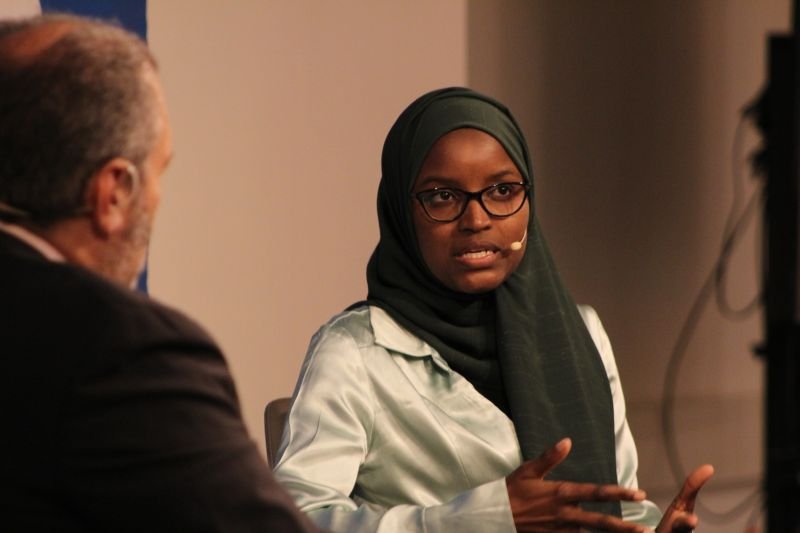
In December 2025, Fauziyya Tukur stepped back from her BBC career and co-founded Mata Media alongside editor Hafsat Bahara. Mata, the Hausa word for women, is not just a name.
It was a declaration of intent and issue that needed to be addressed. The organisation exists to fill a gap that had been visible for years but addressed by no one: the near-total absence of Hausa-language journalism centred on the lives, concerns, and stories of women in northern Nigeria.
The goal of founding Mata Media was to create a safe space for women to share their experiences, perspectives, and ideas, and to inspire a new generation of women leaders."
The platform covers news, investigations, features, human-interest stories, profiles, and in-depth analysis, all produced in Hausa, all centred on women, all staffed by women. It is Nigeria's first organisation of its kind.

The significance of producing in Hausa cannot be overstated. English-language women's media, however excellent, does not reach the woman in Zaria who left school at thirteen.
It does not speak to the widow in Bauchi managing a household without income support. It does not find the girl in Kebbi who needs to understand her reproductive rights but has no framework in her daily language for the conversation.
Mata Media was built precisely for her and the millions of women like her across the north whose stories have been invisible not because they were unimportant, but because no one had built the infrastructure to tell them.
A Pipeline, Not Just a Platform
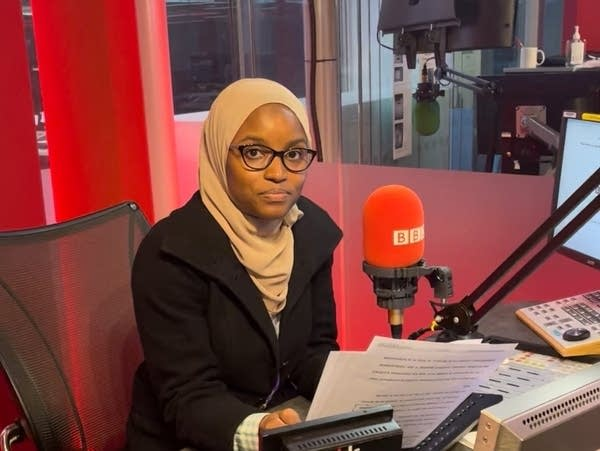
From the beginning, Fauziyya has spoken about Mata Media as more than a media outlet.
It is also designed to function as a talent development hub, identifying, training, and mentoring young female journalists from across northern Nigeria who have the instinct for the work but lack the infrastructure, the skills, or the connections to break into a media landscape that has historically not made room for them.
She also holds an MSc in Media and Communications from the London School of Economics, one of the world's leading institutions for media studies, adding rigorous academic training to a career already built on years of frontline practice.
She is a certified social innovator, a journalism fellow across multiple programmes, and has taught in the Programme for African Leadership, bringing the next generation of African journalists into the same standards of rigour that have defined her own career.
Fauziyya Tukur could have stayed at the BBC. The career was established, the platform was global, the impact was documented.
She chose instead to come home, not because the BBC was not enough, but because northern Nigerian women deserved something the BBC was never going to build for them. Something in their language. About their lives. By people who knew both.
Mata Media is three months old. The gap it is filling is thirty years deep. Fauziyya Tukur is just getting started.