OpenAI's Legal Bomb: Apple Faces Lawsuit Threat, Rekindling Partner Burnout Fears
OpenAI is exploring legal action against Apple, citing frustration over the ChatGPT integration failing to meet expected subscriber growth and prominence. This dispute highlights Apple's historical pattern of challenging partnerships and controlling its ecosystem, affecting companies from Google to Spotify.
OpenAI is so frustrated with Apple over a ChatGPT integration that failed to deliver the subscribers and prominence it expected that the company is now actively exploring legal action against the iPhone maker, Bloomberg News reported Thursday, citing people familiar with the matter.
According to Bloomberg News, OpenAI has engaged an outside law firm to evaluate its options, which could include issuing a formal breach-of-contract notice.
Any legal proceedings would likely commence after OpenAI's ongoing trial with Elon Musk concludes.
The partnership, initially announced at Apple's Worldwide Developers Conference in June 2024, aimed to weave ChatGPT into Apple's operating systems, offering it as an option within Siri and as part of the iPhone’s Visual Intelligence feature.
This integration was expected by OpenAI and industry observers to potentially generate billions in new subscriptions and secure prime positioning across Apple's expansive mobile ecosystem.
However, Bloomberg reports that OpenAI has become increasingly aggravated, claiming the integration is obscure, its features are difficult to locate, and the revenue generated is significantly below projections.
One OpenAI executive noted, "They basically said, 'OpenAI needs to take a leap of faith and trust us.' It didn’t work out well.”
Apple, conversely, harbors its own set of grievances. Concerns reportedly include OpenAI's privacy standards and irritation over OpenAI’s push into hardware, an initiative spearheaded by former Apple executives, including ex-design chief Jony Ive.
This situation underscores Apple's consistent history as a challenging partner for major software companies.
While the iPhone offers an attractive platform for growth, it remains fully under Apple's stringent control.
Throughout its history, Apple has frequently distanced itself from partners who become too comfortable or competitive.
Notable examples include Google Maps, which was a flagship feature of the original iPhone but was controversially removed in 2012 and replaced by Apple's own, initially inferior, Apple Maps.
This move sparked significant tech industry backlash and prompted a rare public apology from then-CEO Tim Cook.
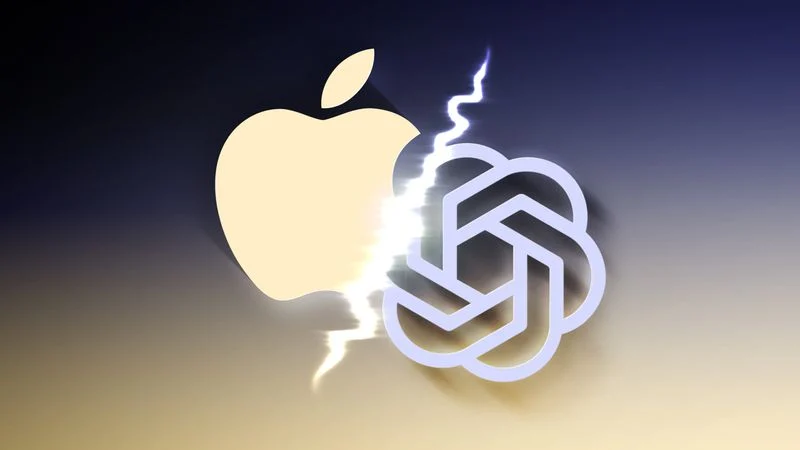
The friction between Apple and Google escalated due to the launch of Google's Android phone a year after the iPhone's 2007 debut, intensifying after Google's then-CEO Eric Schmidt left Apple's board in 2009.
Adobe also experienced Apple's uncompromising stance when Steve Jobs famously refused to support Flash on the iPhone and iPad, publishing an open letter in 2010 that effectively curtailed Flash's mobile prospects.
Similarly, Spotify has long accused Apple of leveraging its App Store control to disadvantage rival music streaming services following the launch of Apple Music in 2015, a claim validated by the European Commission, which fined Apple nearly €1.8 billion in March 2024.
Despite these historical rifts, commercial interests can sometimes prevail.
For instance, Google has become Apple's AI infrastructure partner, signing a multiyear deal in January to power the next generation of Apple Intelligence with its Gemini models, a partnership reportedly costing Apple around $1 billion annually.
OpenAI itself has navigated its share of strained relationships recently, beyond Apple. Elon Musk's lawsuit, accusing OpenAI of abandoning its nonprofit mission, is currently in trial.

The company has also reportedly managed tensions with Microsoft, its largest backer and infrastructure partner, as it seeks greater independence ahead of its potential IPO.