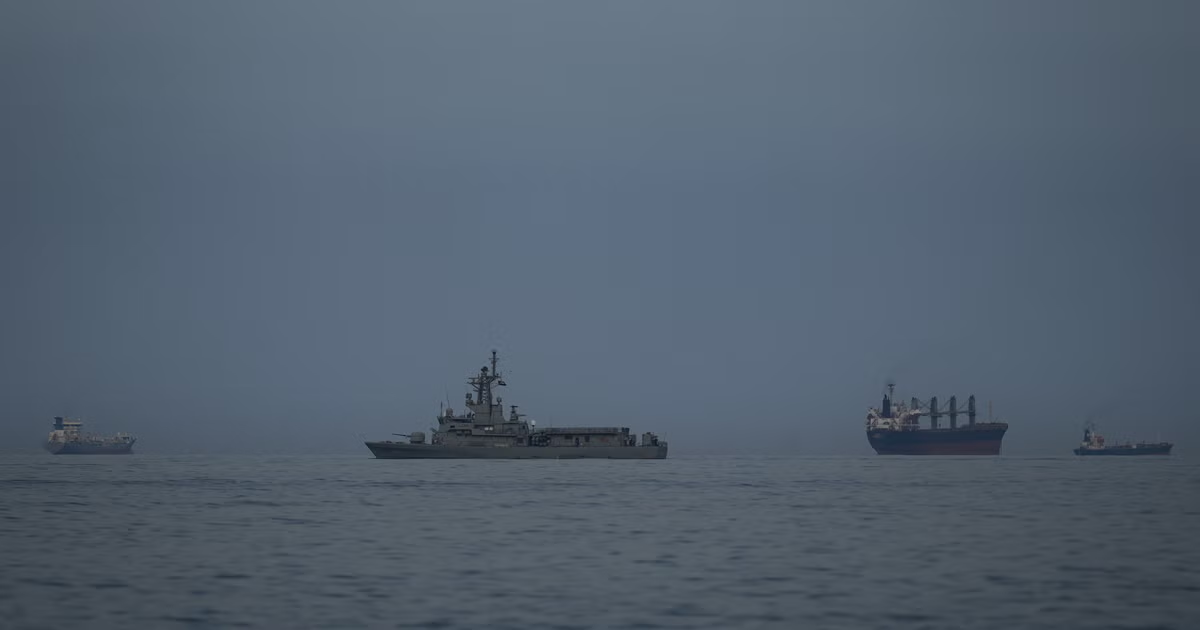
Global Flashpoint: Strait of Hormuz Heats Up with US Warship Threats and UK Minesweeper Deployment

Published 6 hours ago5 minute read
Pelumi Ilesanmi
Pelumi Ilesanmi
Global Flashpoint: Strait of Hormuz Heats Up with US Warship Threats and UK Minesweeper Deployment

The Middle East is grappling with an escalating crisis, with the Strait of Hormuz emerging as a critical flashpoint that has triggered significant global economic repercussions. This vital waterway, through which approximately 20% of the world's oil supply normally passes, has experienced severe disruption, causing oil prices to surge from around $65 to over $100 a barrel. Economists are now predicting higher inflation and lower growth this year as a direct consequence of the conflict. The war was initially triggered by joint US and Israeli airstrikes on February 28, which resulted in the death of Iran's former Ayatollah Ali Khamenei. This act prompted retaliatory Iranian counterattacks on US Army and Naval bases, alongside continued Israeli bombardment of Tehran, leading to at least 13 American casualties.

The strategic importance and inherent dangers of the Strait of Hormuz are underscored by stark warnings from US Navy officials. They caution that deploying American warships to the troubled waterway could transform it into a deadly 'kill box' due to the high risk of catastrophic Iranian drone and missile strikes. Despite these grave concerns, US President Donald Trump has publicly called upon international allies, including China, France, Japan, South Korea, and the UK, to deploy their ships to the Strait. Trump frames this as an essential 'team effort' to secure the passage and dismantle what he describes as an 'artificial constraint' imposed by Iran on global shipping.

In response to this escalating situation and Trump's demands, the UK government is meticulously drawing up plans, prioritizing the dispatch of minesweeping drones to the Strait of Hormuz. This approach is favored over sending warships, as Whitehall officials harbor significant concerns that complying with Trump's request for ships could dramatically escalate the already volatile situation. Energy Secretary Ed Miliband affirmed the UK's commitment to finding a swift resolution, stating that various contributions, including mine-hunting drones, are being actively considered in concert with allies to facilitate the reopening of the strait. He emphasized that 'any options that can help to get the strait reopened are being looked at'.

The UK's cautious stance on deploying warships is also influenced by the current state of the Royal Navy. Officials express scepticism about sending ships given the depleted state of the navy. For instance, HMS Dragon, a Type 45 destroyer, departed Portsmouth for Cyprus last week, and its redeployment to the Middle East would involve a significant delay in reaching the Strait. Furthermore, a critical oversight has come to light: Britain's last minesweeping ship in the region, HMS Middleton, departed Bahrain for maintenance mere days before the war began. This move is now at the center of a government row, raising questions about the UK's preparedness for the conflict. Conversely, officials are more optimistic about the efficacy of minesweeping drones, which can safely detonate mines by mimicking ship movements. There are also plans to deploy Octopus counter-drones, which, though originally intended for Ukraine, could be redirected to the Gulf.

The government's defence spending decisions have come under severe scrutiny, particularly from the opposition Conservatives. Kemi Badenoch, the opposition leader, has criticized ministers for delaying the promised increase in defence spending to 2.5% of gross domestic product by 2027. Internal Ministry of Defence (MoD) figures seen by The Guardian reveal that spending on ground-based missile defence plummeted from £158 million in 2021-22 to £49.4 million in 2023-24, while investment in counter-drone systems fell from £22.4 million in 2021 to £18.1 million in 2023. Additionally, the number of mine-hunting ships was cut from 16 when the Tories took office to seven. An MoD spokesperson, however, maintained that defence spending had increased under the current government, highlighting investments in new technologies like the Dragonfire laser, which is slated for Type 45 destroyers in 2027.

Internationally, other nations are also proceeding with caution regarding Trump's demand. Takayuki Kobayashi, a senior politician in Japan’s ruling Liberal Democratic party, stated that the request was 'something we should judge cautiously'. Similarly, South Korea's foreign ministry issued a statement confirming it was 'exploring various measures from multiple angles to protect our citizens and secure the safety of energy transport routes'. Domestically, UK Prime Minister Keir Starmer, whose relationship with Trump has been strained by previous disagreements, discussed the situation in the Middle East and the Strait's closure with Trump in a phone call. Starmer concurrently plans to announce tens of millions of pounds in support for Britons affected by higher energy prices, emphasizing that de-escalating the Middle East crisis is the quickest way to reduce the cost of living.

The broader conflict continues to escalate, with Israel's defense force warning that the war could persist for another six weeks. IDF Spokesman Brig. Gen. Effie Defrin outlined plans for 'at least three more weeks of war in Iran', with 'deeper plans' for the subsequent three weeks, underscoring that the IDF operates to achieve its goals rather than adhering to a strict timetable. Adding a layer of intense geopolitical uncertainty is the enigmatic situation surrounding Iran's new Supreme Leader, Mojtaba Khamenei, who succeeded his assassinated father. Reports from Kuwaiti media and other sources suggest Mojtaba was severely injured in an airstrike, necessitating emergency leg surgery in Moscow – an operation reportedly 'personally offered by Putin'. There is considerable speculation, including from some observers and Trump, that he is in a coma, potentially unaware of the ongoing war or his new leadership role, further compounding the volatility and unpredictability of the Iranian regime amidst the escalating regional conflict.

Recommended Articles

Loading...

You may also like...