Netflix Shocks Subscribers: 'All-Time' Horror Thriller Franchise Vanishes From Streaming
Steven Spielberg's Jaws, a cornerstone of horror thrillers, is departing Netflix, highlighting its enduring legacy as a masterclass in cinematic restraint and suspense-building. The film's unique approach to tension, contrasting sharply with its sequels and modern creature features, exemplifies how withholding information can be more impactful than constant revelation.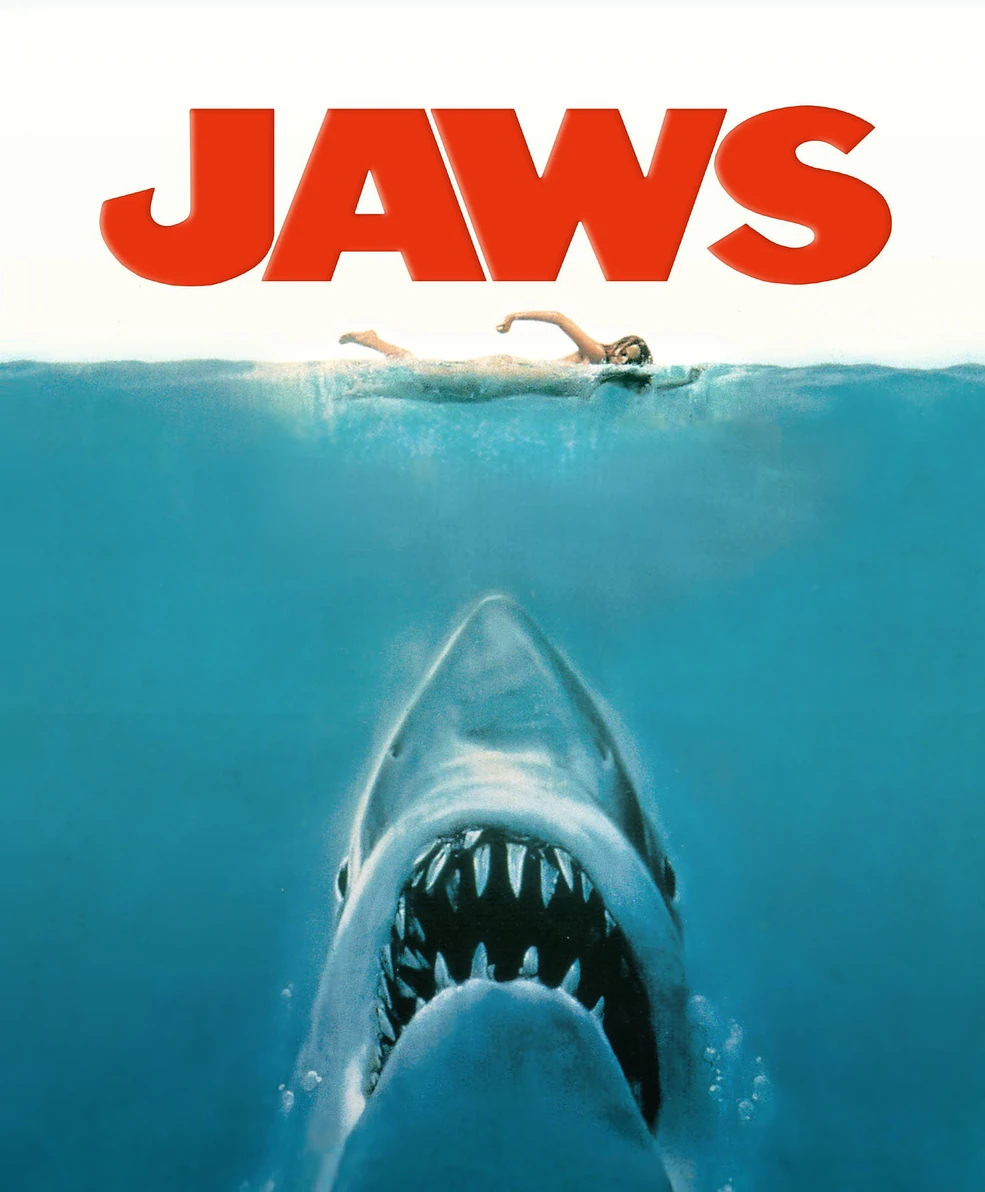
The iconic film Jaws, renowned for redefining the creature feature genre, is set to depart Netflix on May 1st, marking more than just a routine content turnover.
This departure underscores the film's lasting influence as not only one of the most impactful horror thrillers ever made but also a prime example of how artistic restraint can be masterfully employed on screen to generate profound suspense.
A common misconception about Jaws is that its effectiveness stems from the shark itself. However, director Steven Spielberg meticulously crafted the film around what the audience doesn't see.

The tension is built by carefully controlling the release of information and allowing viewers to sit with prolonged uncertainty. The initial attack hints at the threat without fully revealing it, and the narrative consistently escalates by suggesting danger rather than constantly confirming it.
This deliberate delay in showing the shark serves as the very structure that makes the ultimate payoff so impactful, distinguishing it from most creature features that treat the reveal as the primary reward.
This approach ensures Jaws remains a deliberate and effective thriller, proving that tension is born from meticulously managed audience expectations, not merely scale or volume.
This directorial control extends beyond just the creature's reveal; the film's utilization of space is equally crucial. The vast, unbounded ocean creates an environment where safety vanishes the moment characters leave the land.
The third act masterfully strips away all extraneous elements, focusing intensely on three men confronting a single, escalating threat. Every scene propels the narrative forward without distraction, and the characters themselves lend significant weight to this structure.
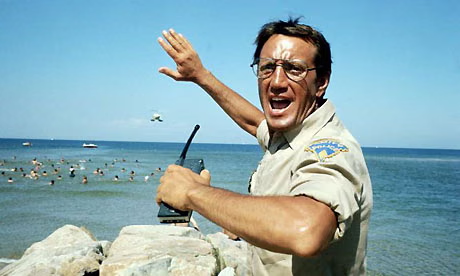
Chief Brody, portrayed by Roy Scheider, is depicted as less than fully capable, rendering each of his decisions reactive and uncertain.
Quint's, played by Robert Shaw, haunting obsession adds a layer of grim inevitability, while Hooper's, played by Richard Dreyfuss, expertise never quite translates into complete control.

Each character's perspective reinforces the core tension which is a shared vulnerability in the face of an insurmountable challenge.
The difficulty in maintaining this delicate balance became evident with the film's sequels. After Jaws' monumental success, Jaws 2 attempted to revisit the original's structure with a recurring threat in Amity.
While it contained moments of effective tension, the sequel hastened to show the shark, altering the dynamics of suspense. This shift made it feel more immediate but less cohesive than its predecessor.
By the time Jaws 3-D arrived, the focus had entirely shifted to spectacle, with the shark becoming a constant presence, often presented to exploit its 3D gimmick.
When the creature becomes the centerpiece rather than the carefully earned payoff, the profound tension that defined the original film simply has no room to develop.
This trajectory mirrors a broader pattern within the creature feature genre. Many films attempt to escalate by increasing scale, volume, or reliance on visual effects, yet they rarely manage to replicate the precise balance that made Jaws so effective.
Advances in technology have made it easier than ever to depict anything imaginable, but this has paradoxically made it harder for filmmakers to resist the urge to reveal too much, too soon.
Jaws continues to stand out because it maintains unwavering discipline from start to finish, understanding precisely what to show, when to show it, and how long to withhold information.
This unparalleled level of control allows the film to retain its power and relevance decades after its release, even as the genre around it continually evolves.

Therefore, losing Jaws from Netflix is not merely the removal of another catalog title. It signifies the departure of a cinematic blueprint, a clear demonstration of how a blockbuster can achieve unparalleled effectiveness through restraint rather than excess.
It serves as a potent reminder of how rare such an approach has become in contemporary filmmaking. When Jaws leaves Netflix, it takes with it not just one of the most influential creature features ever made, but one of the clearest, most instructive examples of how suspense is truly supposed to work.
This makes the timing critical: for anyone wishing to revisit this masterpiece, the window is closing, because once it's gone, Netflix might be the one needing a bigger boat.