Amazon's Q1 Soars: Cloud Computing Demands Drive Massive Profits and Capital Spending Surge
Amazon exceeded first-quarter earnings expectations, largely propelled by a significant 28% growth in its AWS cloud business, fueled by the booming AI industry. Despite substantial capital investments in AI infrastructure impacting short-term free cash flow, CEO Andy Jassy remains optimistic about long-term returns and Amazon's strategic AI partnerships.
Amazon reported robust financial results for its fiscal first quarter, surpassing Wall Street’s earnings expectations.
This strong performance was primarily driven by the significant growth in its cloud computing unit, Amazon Web Services (AWS), which continues to benefit from the ongoing boom in artificial intelligence (AI).
Overall, Amazon’s net sales increased by 17% year-over-year, reaching $181.5 billion, up from $155.7 billion in the year-ago quarter.
The company posted earnings of $30.3 billion, or $2.78 per share, a substantial increase from $17.1 billion, or $1.59 per share, in the comparable period last year. North America sales rose 12%, while international sales saw a 19% increase.
AWS emerged as a standout performer, with its net sales climbing 28% year-over-year to $37.6 billion. This marks the fastest growth rate for AWS in 15 quarters, a notable acceleration from the 24% growth in the fourth quarter and 20% in the third quarter.
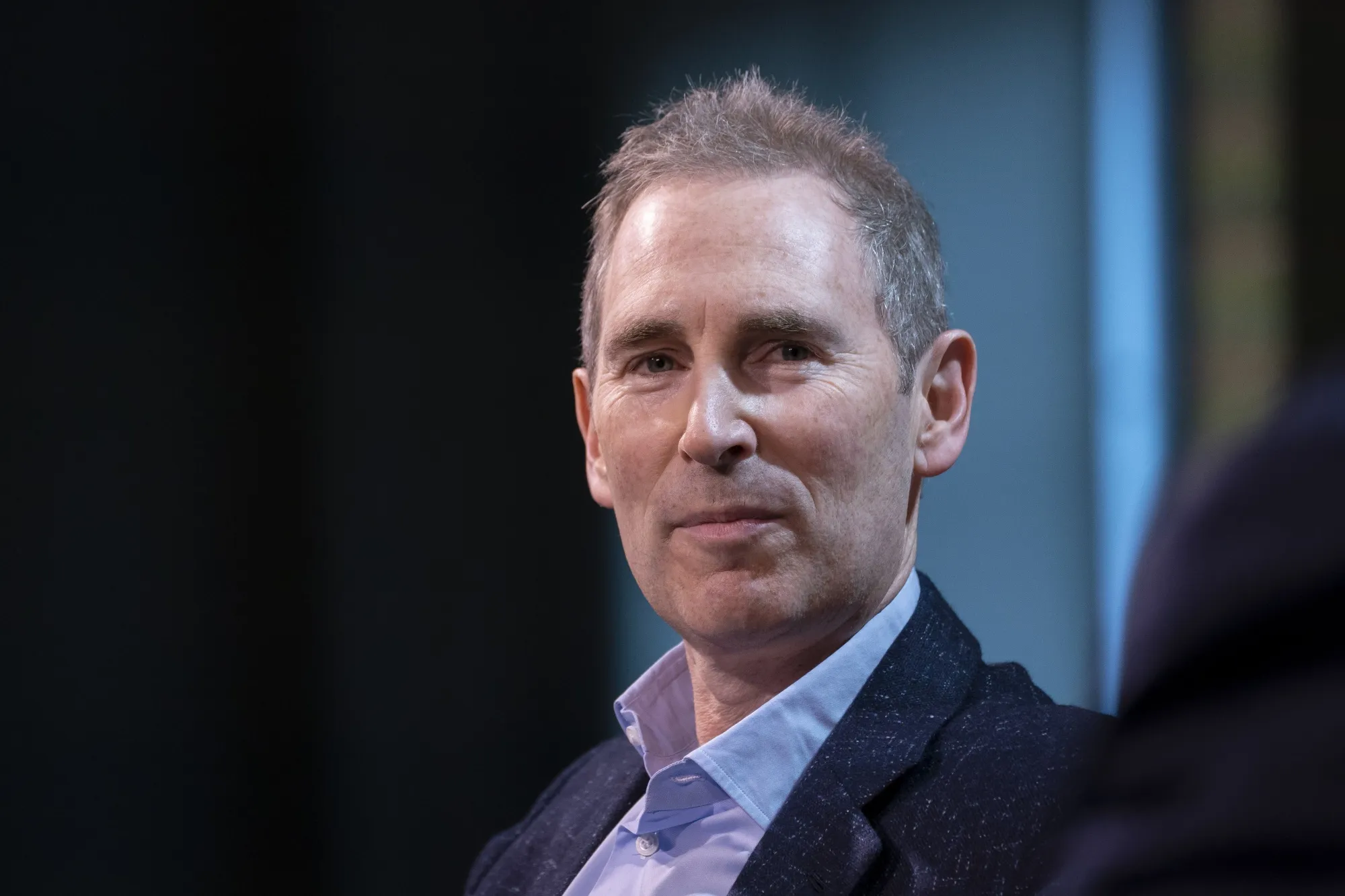
Amazon president and CEO Andy Jassy attributed AWS’s success to its crucial role in providing computational power to the AI industry.
Jassy highlighted the unprecedented speed of AI’s growth, noting that AWS’s AI revenue run rate is now over $15 billion, which is nearly 260 times larger than AWS’s total revenue run rate three years after its initial launch.
He emphasized Amazon’s leadership in the AI space, stating that companies are increasingly choosing AWS for their AI needs.
Despite the impressive revenue growth, Amazon is also making substantial capital investments to build out the infrastructure supporting its cloud services and AI initiatives.
Jassy confirmed that capital expenditure growth would continue in the near term, explaining that AWS must invest in land, power, buildings, chips, servers, and networking gear in advance of monetization.
The company plans an expenditure of $200 billion for the year in AI, robotics, semiconductors, and satellites, a 60% increase from the $128 billion spent last year.
Jassy defended these investments as a short-term cash burn necessary for a long-term payoff, citing assets like data centers with over 30 years of useful life and chips/servers lasting five to six years.
These significant capital expenditures have, however, impacted Amazon’s free cash flow. The company reported a decrease in free cash flow to $1.2 billion for the trailing twelve months, a 95% drop from the $25.9 billion in the year-ago period.
This decline was primarily driven by a $59.3 billion year-over-year increase in purchases of property and equipment, largely related to AI investments.
Jassy acknowledged that in times of very high growth where capex outpaces revenue growth, free cash flow is challenged in the early years. Nevertheless, he expressed optimism for future downstream revenue and free cash flow, drawing parallels to previous AWS growth cycles.
Amazon has also been forging strategic partnerships in the AI domain, further solidifying its position. The company announced a major expansion of its partnership with OpenAI, coinciding with OpenAI’s move to loosen ties with Microsoft.
Additionally, Anthropic committed over $100 billion to Amazon’s AWS cloud platform for the next decade to train and run its Claude chatbot, securing up to 5 gigawatts of Amazon’s Trainium chips.
Meta, which owns Instagram, WhatsApp, and Facebook, also signed an agreement to power agentic AI on AWS’s Graviton chips.
Beyond its cloud and AI endeavors, Amazon’s e-commerce operations continue to evolve.

The company has focused on speeding up order delivery times through robotics, AI technology, and more efficient warehousing, a strategy that helped Amazon surpass Walmart as the nation’s largest company by revenue in February.
Amazon’s ultra-fast service, Amazon Now, offers deliveries of thousands of items in 30 minutes or less. Initially available in parts of India, Mexico, and the UAE, and tested in the U.S. and UK, the service has now expanded to Tokyo and eight major cities in Brazil, reaching tens of millions of customers across nine countries with plans for further global expansion.
However, the e-commerce giant faces some challenges, including higher tariff costs due to foreign trade policies and rising shipping costs influenced by global oil and fuel prices.
To mitigate these, Amazon imposed a 3.5% fuel and logistics surcharge on some third-party sellers using its fulfillment services, effective April 17.
Looking ahead, Amazon provided a bullish outlook for the current quarter, expecting net sales to be in the range of $194 billion to $199 billion, representing a 16% to 19% increase from the year-ago quarter, surpassing analysts’ estimates.