Ethiopia vs. the World: Why Ethiopia Is Still in 2017
Ethiopia still lives in 2017 and celebrates 13 months in a year. Discover how and why this ancient African nation refused the Gregorian calendar—and what that says about culture, time, and identity.
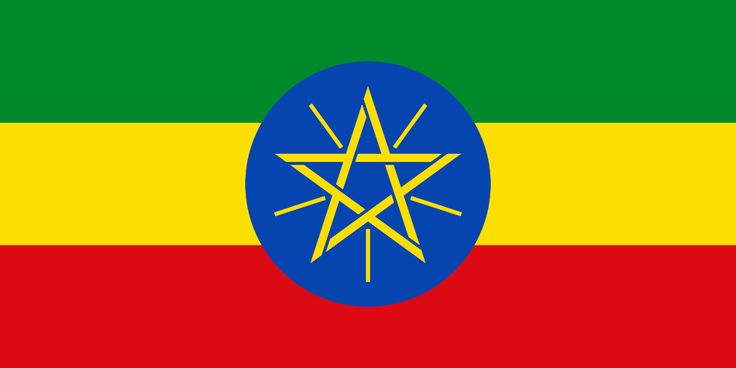
In an era where time zones are coordinated to the atomic second and smartphones deliver global updates in milliseconds, one African country has calmly and defiantly chosen its own pace.
Welcome to Ethiopia—the country where it’s not just a different time of day. It’s a different year altogether.
As the rest of the world clocks into 2025, Ethiopia is still living in 2017. Literally. Its calendar is seven to eight years behind the Gregorian standard used across most of the globe. It also has 13 months, celebrates New Year in September, and tells time in a 12-hour cycle that begins at sunrise.
This isn't a glitch in the Matrix. It's history, culture, religion, mathematics, and identity—bundled into one of the world’s most fascinating time systems.
Let’s journey through the past and future simultaneously.
The Calendar That Time Forgot (or Preserved)
First, the basics.
Ethiopia uses a system known as the Ethiopian calendar, also referred to as the Ge’ez calendar, named after the ancient liturgical language of the Ethiopian Orthodox Church.
Unlike the Gregorian calendar introduced by Pope Gregory XIII in 1582 and adopted by most of the world, the Ethiopian calendar harks back to a more ancient rhythm of time, deeply rooted in religious interpretation and African historical continuity.
Here’s what makes it unique:
13 months instead of 12
Each of the first 12 months has exactly 30 days
A 13th month called Pagumē has 5 or 6 days, depending on the leap year
It’s currently 2017, not 2025
The New Year starts on Meskerem 1, around September 11
Time is counted in a 12-hour cycle starting at dawn and dusk.
Confused yet? Good. Time, after all, is a social construct—and Ethiopia rewrote it.

The Birth of Two Calendars: Why the Years Don’t Match

The most mind-bending part of the Ethiopian calendar is the year count. The country is approximately seven to eight years “behind” the Gregorian calendar. But why?
It comes down to how the birth of Jesus Christ was calculated.
The Gregorian calendar (used globally today) is based on the calculations of a Scythian monk named Dionysius Exiguus, who estimated Jesus’s birth around 1 AD.
The Ethiopian Orthodox Church, however, based its calendar on the work of Egyptian monk Annianus of Alexandria, who placed Jesus’s birth around 7 to 8 years earlier, in 7 or 8 BC.
As a result, the Ethiopian calendar began counting from this alternate date, making it 2017 in Ethiopia when it’s 2025 in most of the world.
Far from being behind, Ethiopia is simply on its own timeline—rooted in its own theological and historical logic.
13 Months of Sunshine: The Pride of Pagumē
In Ethiopia, locals often say their country enjoys "13 months of sunshine"—a poetic nod to the extra month that sets them apart.
The year is divided as follows:
12 months of 30 days each (from Meskerem to Nehase)
A 13th month, Pagumē, which lasts 5 days in regular years and 6 days in leap years
Pagumē functions as a “gap month” to reset the calendar in alignment with the solar cycle. While other calendars struggle with February's 28/29-day confusion, Ethiopia’s system is mathematically neater and consistent.
Pagumē is also spiritually symbolic—used to commemorate saints and martyrs who didn't fit into the regular annual cycle. In a way, it’s a month for the forgotten, the rebels, and the in-betweeners.
Time Begins at Dawn: Literally
Ethiopia doesn’t just track dates differently—it tells time differently, too.
The Ethiopian day starts at sunrise, not midnight. Since sunrise in Ethiopia generally occurs around 6 AM and sunset around 6 PM (due to its equatorial location), the country runs on a 12-hour day cycle that resets twice every 24 hours.
So, what most of the world calls 7 AM, Ethiopians call 1 o’clock in the morning. And what’s 7 PM to you is 1 o’clock in the evening to them.
This makes perfect sense in an agricultural society where the day is tied to sunlight, not artificial clocks. It's a functional system—and an elegant one.
A Nation Untouched by Colonization, Untouched by Time Pressure
Ethiopia's unique timekeeping isn't just religious or mathematical. It’s also political—a proud symbol of independence.
Unlike nearly every other African nation, Ethiopia was never colonized (save for a brief Italian occupation between 1936 and 1941, which Ethiopians still view as an invasion, not colonization). It retained its language, script, monarchy, and—crucially—its calendar.
While colonizers imposed European systems of governance, language, time, and religion across the continent, Ethiopia held firm.
Refusing the Gregorian calendar is a subtle, daily act of cultural resistance.
It's Ethiopia saying:
“We will measure time our way.”
Faith in Time: Religion at the Heart of the Calendar
You cannot understand the Ethiopian calendar without understanding the Ethiopian Orthodox Tewahedo Church.
This ancient church—one of the first Christian institutions in the world—has profoundly shaped Ethiopia’s identity. Its liturgical calendar, packed with fasting periods, saint days, and celebrations, operates entirely on the Ethiopian system.
Christmas (Genna) is celebrated on January 7 (like in some Orthodox countries)
Timket (Epiphany) happens on January 19
Fasika (Easter) follows its own cycle, separate from Western calculations
Every religious holiday aligns with a uniquely Ethiopian understanding of time. Church clocks, fasts, sermons, and calendars are all synchronized to this alternate rhythm. For the faithful, switching to Gregorian dates would mean losing spiritual synchrony.
Does It Cause Confusion? Absolutely.
For all its charm, the Ethiopian calendar system can create real-world headaches—especially in global business and technology.
Imagine the confusion:
Booking a flight online and receiving a ticket dated 2008 (Ethiopian calendar), even though it’s 2016 or 2025 in the global system
Software systems requiring calendar converters
Signing contracts or certificates that need both Ethiopian and Gregorian date formats
Some government agencies and international companies operate on dual calendars—writing both Ethiopian and Gregorian dates side-by-side.
Smartphones and computers in Ethiopia often offer both calendar options as well.
It's not chaos—but it does require constant translation across time.
Tourism in the Past: A Marketing Advantage?
Ethiopia has cleverly leaned into its unique calendar for tourism branding.
“13 Months of Sunshine” isn't just a catchphrase—it’s a campaign. The country uses its time difference as a curiosity and selling point to attract tourists interested in culture, history, and the surreal sensation of traveling back in time.
Festivals like Enkutatash (New Year) in September and Timket in January draw thousands of visitors eager to experience time on Ethiopian terms.
There’s something appealing—especially in today’s high-speed world—about a country that says:
“Slow down. We're not in a rush.”
Ethiopia in Global Tech and Science: Does Time Hold It Back?
Surprisingly, Ethiopia’s alternate calendar hasn’t significantly hindered its technological or scientific development. The country has embraced modernity while preserving tradition—maintaining its calendar alongside innovation in fintech, telecoms, and public health.
For example:
Ethio Telecom, the national telecommunications provider, integrates Ethiopian dates into its billing systems.
Tech entrepreneurs in Addis Ababa use date conversion APIs when building global apps for local users.
The Ethiopian Space Science Society calculates launches and celestial events using both calendars, showing time is a tool—not a cage.
Where necessary, dual systems are adopted. But the Ge’ez calendar remains the heart of local life.
Is Ethiopia the Only One?
Ethiopia isn’t entirely alone. Several countries and cultures still use alternative calendars for religious and civil life:
Iran and Afghanistan use the Solar Hijri calendar
Israel uses both the Hebrew calendar and the Gregorian one
Saudi Arabia uses the Islamic Hijri calendar for religious purposes
India blends Gregorian and regional calendars like the Hindu Vikram Samvat
But none of these countries have built an entire national identity around resisting the global calendar standard quite like Ethiopia.
A Living Example That Time Is Cultural
The Ethiopian calendar is more than a measurement system—it’s a worldview, a time capsule, and a national narrative all in one.
It challenges the idea that there is only one correct way to count time. It forces us to ask:
Who decides what year it is?
Why do we assume our system is the standard?
What does it mean when a country defines time for itself?
For Ethiopia, the calendar is not outdated—it’s timeless.
It’s not “behind.” It’s beside the rest of the world—an alternate present, rooted in an ancient past, walking calmly toward the future.

The Country That Reminds Us Time Isn’t Universal
In the Ethiopian highlands, farmers rise with the sun at 1 o’clock in the morning.
In Addis Ababa, churches ring in the New Year on September 11.
To walk through Ethiopia is to walk through time—on your own terms.
In a world obsessed with speed and standardization, Ethiopia is a profound reminder that not everyone agreed to the same calendar—and that’s not a problem.
It’s a beautiful refusal.