Amidah Lateef Unveils Shocking Truth About Nigerian University Hostel Crisis!
Many university students are forced to live off-campus due to limited hostel spaces, facing daily commutes, financial burdens, and varying living conditions. While challenging, off-campus life can also foster discipline and personal growth, though its impact on academics differs greatly among individuals.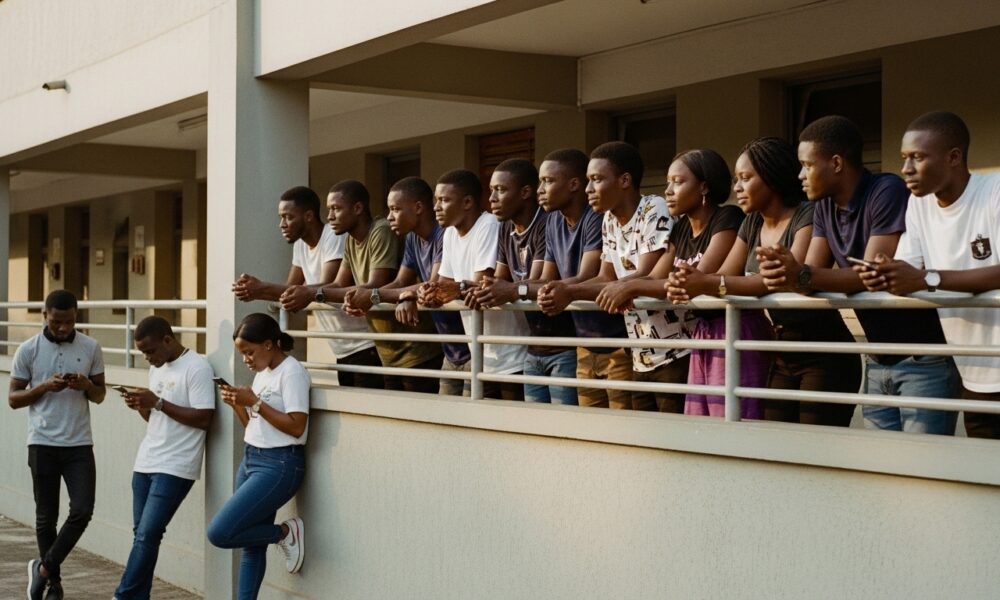
The landscape of university education for many students across various institutions is increasingly defined by the necessity of off-campus living. This trend is not primarily a choice but a consequence of a widening disparity between growing student populations and the static or slow-growing availability of on-campus hostel accommodation. Students like Michael Awolowo, a 300-level Public Administration student at Osun State University, exemplify this reality, starting his day at 6:15 a.m. to commute, a routine he describes as born out of necessity, not desire. Similarly, Amina Yusuf, a 200-level Sociology student at the same university, recounts her desire for the 'hostel life experience' only to be compelled off-campus due to a lack of space, underscoring a common narrative where universities admit more students without commensurate expansion in housing infrastructure.
Living off-campus presents a unique set of daily challenges, primarily centered around transportation and its associated financial and temporal costs. Unlike their on-campus counterparts who enjoy walkable access to lectures, off-campus students are reliant on public transport or long treks. Michael Awolowo’s experience of leaving home by 5:30 a.m. for an 8 a.m. lecture, often battling traffic, highlights the arduous commute. This not only consumes significant portions of their day but also places a considerable financial burden on students. Transport costs can severely impact student finances, with some students even missing classes when funds are insufficient, directly affecting their academic attendance and performance.
Beyond transportation, the financial strain of off-campus living extends to rent and daily sustenance. While hostel fees might appear cheaper, Joseph, a final-year Accounting student, points out that 'feeding alone can be expensive' when living off-campus. Rent itself is a major hurdle, with Sadiq Musa, a 400-level Nutrition and Dietetics student, acknowledging it as a 'big problem' that often necessitates shared accommodation to manage costs. This financial pressure is particularly acute for students from low-income families, for whom off-campus living can become a source of significant stress, especially when parental support is inconsistent or limited.
The physical living conditions and social environment off-campus also bring their own set of difficulties. Students often contend with landlords, neighbors, and sometimes subpar facilities, such as intermittent electricity or water supply, as Amina Yusuf experienced. However, this independent living can also foster significant personal growth. Grace, a 300-level Education student, highlights how the experience has taught her valuable money management skills, enabling her to plan her finances, understand spending limits, and cultivate saving habits. Some parents also prefer off-campus arrangements for their children, often to ensure they remain close to family members or reside in safer neighborhoods.
While many are pushed off-campus by circumstance, a segment of the student population voluntarily chooses to leave university hostels after experiencing on-campus life. Reasons for this decision often stem from a desire for more conducive living and study environments. Joseph Babalola, who moved out of his Lead City University hostel after his first year, cites overcrowding – 'We were meant to be four, but we were six' – and constant distractions from music, visitors, and phone conversations as his motivation for seeking a quieter place to focus. Similarly, Grace Olamide found the stringent rules of campus hostels, including curfews and visitor restrictions, to be uncomfortable, despite their security rationale, opting for the greater freedom off-campus provides.
The impact of off-campus living on academic performance is varied and highly individualized, with discipline emerging as a crucial factor. Joseph Babalola found that off-campus living provided him with the 'peace to study' and 'less distraction,' positively influencing his academic focus. In contrast, Michael Awolowo admits that the demanding commute often leaves him 'very tired' after school, affecting his study time, although he makes efforts to adjust. Regardless of individual experiences, a consensus among students, like Sadiq Musa, is that self-discipline is paramount. The freedom inherent in off-campus life, while offering advantages, also presents numerous opportunities for distraction, making personal accountability the key determinant of academic success and overall well-being.