Africa’s Own Titanic Story: The Forgotten Tragedy of MV Bukoba
In 1996, the MV Bukoba sank in Lake Victoria, killing nearly 1,000 people. Learn why this devastating African ferry disaster remains largely forgotten.
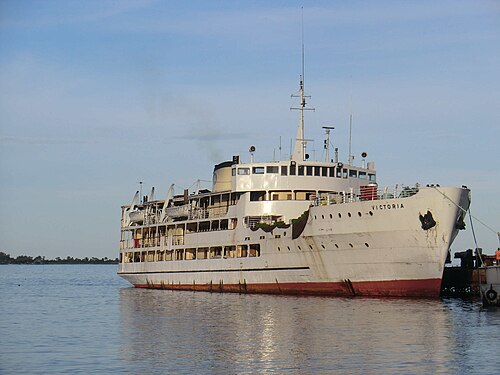
Why does the world remember the Titanic, but not Bukoba?
On the morning of May 21, 1996, the MV Bukoba, a passenger ferry crossing Lake Victoria from Bukoba to Mwanza, capsized just 30 kilometers from its destination. The ship was carrying teachers, students, traders, and civil servants, many returning home after the school term or heading to work.
In minutes, the vessel rolled and disappeared beneath the lake, killing nearly 1,000 people. With no distress call, no evacuation plan, and no coordinated rescue, it became one of the worst maritime disasters in African history, though the world barely took notice. As Britannica notes, it is one of the deadliest events ever to occur on Lake Victoria.
Why Did the MV Bukoba Sink?
The MV Bukoba was a steel-hulled ferry operated by the Tanzania Railways Corporation, built in 1979 and intended to carry 430 passengers. However, on the day it sank, the vessel was reportedly loaded with more than 1,000 people and heavy cargo.
An official government investigation later cited multiple failings: severe overloading, improper cargo storage, and a lack of functioning life-saving equipment. Crew members were unprepared, and as ReliefWeb’s 1996 disaster report confirms, no emergency procedures were followed. Many survivors later reported that there were no life jackets, and no alarm was raised as the ferry began to tilt.
The situation was made worse by the Tanzanian government’s delayed response, with limited rescue boats and equipment. According to the BBC, many survivors were rescued not by officials, but by local fishermen hours after the ferry had disappeared.
The Forgotten Aftermath
The official death toll was recorded at 894, but many believe the number exceeded 1,200. Fewer than 150 passengers survived.
As decomposition set in rapidly, most bodies were buried in mass graves near Mwanza, many unidentified. Among the victims were dozens of civil servants from the Ministry of Education, leaving entire communities without teachers. Despite this loss, no senior officials resigned, and government compensation was slow, insufficient, or nonexistent.
As Africanews reported on the 20th anniversary, the tragedy was marked with only a local ceremony—no national monument, no day of remembrance.

Bukoba vs. Titanic: Two Disasters, Two Memories
History
Rewind the Stories that Made Africa, Africa
A Journey Through Time, Narrated with Insight.
When comparing the two disasters, the Titanic sank in the North Atlantic Ocean in 1912, while the MV Bukoba tragedy occurred on Lake Victoria in Tanzania in 1996. The Titanic’s death toll was about 1,500 people, whereas MV Bukoba claimed between 894 and 1,200 lives.
The causes were very different: the Titanic struck an iceberg, but MV Bukoba sank due to overloading and negligence. Rescue efforts for the Titanic were coordinated, though slow, but for MV Bukoba, the response was delayed and under-equipped.
Globally, the Titanic disaster received widespread media coverage and inspired numerous museums and films. In contrast, the MV Bukoba sinking was met with minimal media attention and has only local graves as memorials.
While the Titanic has a full museum, MV Bukoba has none. It’s not that the lives lost were any less valuable—it’s that African tragedies are often ignored by global media and history books alike.
Not the Only One: Africa’s Hidden Ferry Disasters

The MV Bukoba was not the first—or last—of its kind. In 2002, MV Le Joola capsized off the coast of Senegal, killing an estimated 1,863 people, far surpassing even the Titanic. The ship, like Bukoba, was grossly overloaded.
In 2018, Tanzania faced yet another heartbreak when MV Nyerere capsized on Lake Victoria, killing more than 200 passengers. In 2020, Uganda's Bugoma boat accident claimed 33 lives during a party cruise.
In nearly every case, the patterns are the same:
Poor regulation
Outdated vessels
Overloading
No safety training
Delayed or no rescue
The Fight to Remember
History
Rewind the Stories that Made Africa, Africa
A Journey Through Time, Narrated with Insight.
Almost three decades later, MV Bukoba remains largely forgotten by the international community. Victims’ families and survivors continue to demand a formal national memorial, proper compensation, and stricter maritime safety laws.
“We never got justice,” said one survivor. “They said it was God’s will. But the truth is, it was preventable.”
Today, no national holiday marks the tragedy. No monuments stand in major cities. And yet, the people who boarded that ferry deserve more than silence—they deserve to be remembered.
Conclusion
The story of MV Bukoba is not just a Tanzanian tragedy—it is a continental one. It asks why some lives are mourned in history books and blockbuster movies, while others are buried in quiet graves with no nameplate.
Africa remembers. The world must, too.