The Womb Was Never Yours: How Misogyny Shaped Gynaecology, And the Women Who Paid the Price
Gynecology was built on the bodies of enslaved Black women, without their consent, without pain relief, without mercy. Here's the history they didn't teach you.
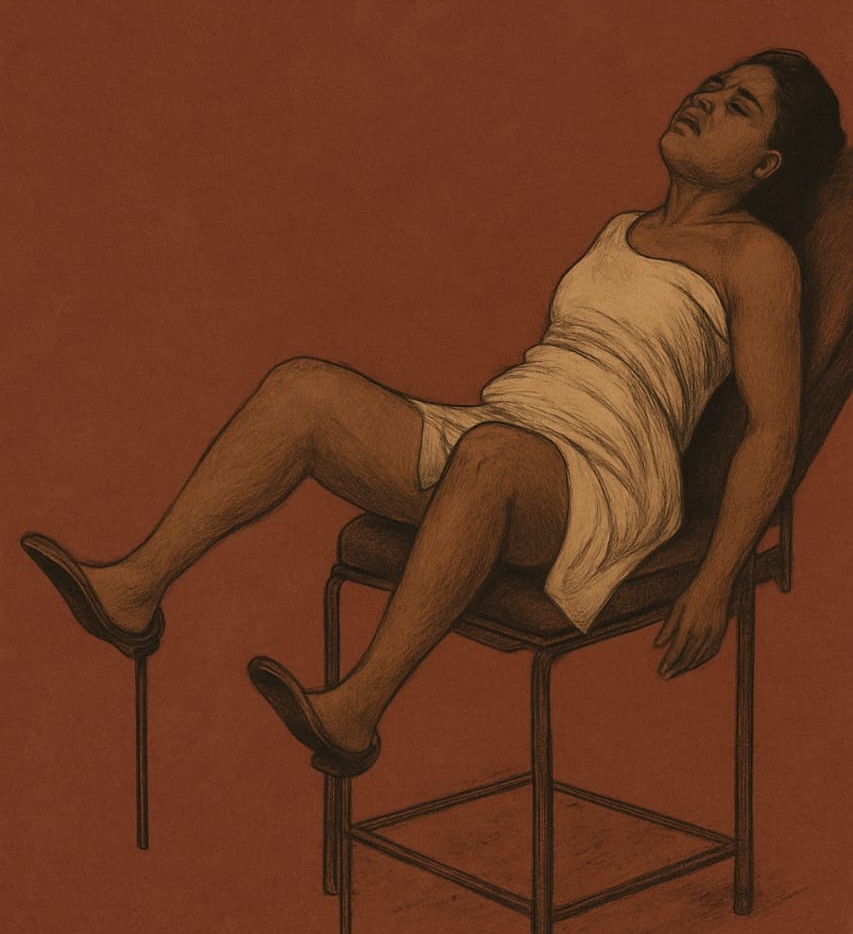
Imagine being 17.
You’ve just survived childbirth. Well, Barely. Because you’re in agony, incontinent, bleeding constantly from an injury no one around you knows how to treat. You don’t speak unless spoken to. You don’t own your body. You don’t even own your name.
And then a man with silver tools comes.
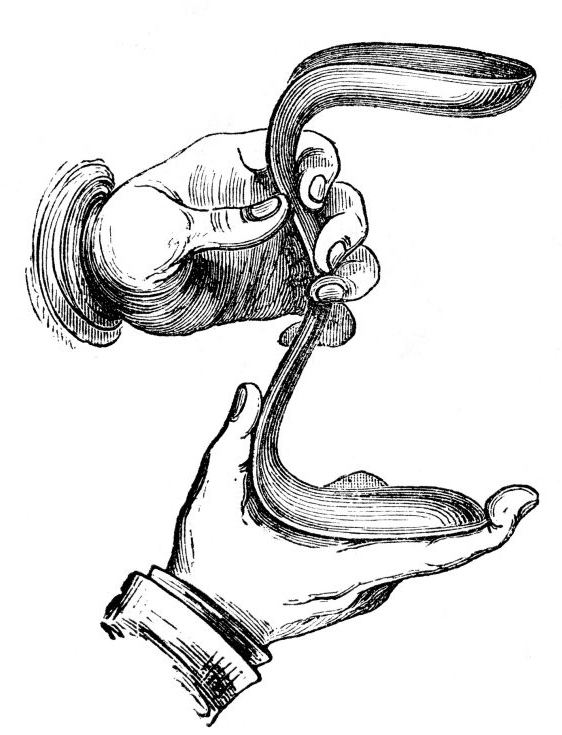
He says he wants to help. But help comes in the form of knives, stitches, and bare hands, pressed inside of you over 30 times, without anesthesia, without comfort, without your consent.
Just in case you don’t understand what that means, picture being cut open, sewn back together, and cut again…without a single drop of pain relief.
No numbing, and no mercy. Only the sound of your own screams echoes in a room that refuses to listen.
You scream.
You beg.
No one listens.
Because you are an enslaved Black girl in 1840s Alabama, and your pain isn’t seen as pain. It’s seen as progress.
Her name was Anarcha Westcott.
She was not a patient. She was a practice subject. And she became the first of many women whose bodies would become battlegrounds in the making of modern gynaecology.

The Father of a Field and the Silence of His Subjects
The man behind those silver tools was Dr J. Marion Sims, long celebrated in medical history as the “father of modern gynecology.” His statue stood for decades in Central Park, New York, while the women he experimented on, Anarcha, Lucy, Betsey, were buried in anonymity, both literally and figuratively.
Sims developed a surgical procedure to repair obstetric fistulas, a condition caused by traumatic childbirth. His innovation would go on to help women globally. But at what cost?
Between 1845 and 1849, Sims performed dozens of experimental operations on Anarcha and other enslaved women. He did so without anesthesia, despite ether being in use at the time. Why? Because he believed that Black women didn’t feel pain the same way white women did, a racist pseudoscience that still echoes in medical institutions today.
These women could not say no.
They were property.
Their bodies were not their own.
And Sims’ surgical fame was carved from their suffering.
Built on Misogyny, Wrapped in Medicine
Social Insight
Navigate the Rhythms of African Communities
Bold Conversations. Real Impact. True Narratives.
The brutal irony is this: gynecology is a field meant to care for women, their wombs, their pain, and their ability to create life. And yet, it was founded in an era when women were rarely listened to, barely believed, and often brutalised in the name of research.
For centuries, women’s bodies were treated as mysteries to be solved by men in coats. Their pain was minimised, their consent disregarded. The word “hysteria”, used to diagnose women with everything from PMS to ambition, comes from the Greek hystera, meaning womb.
Medical records from the 1800s to the early 1900s are riddled with cases where women were institutionalised, “treated,” or even sterilised without reason or request, just for daring to speak up or cry out.
Even childbirth, a profoundly natural process, was removed from the domain of midwives, women who had guided generations through labour, and handed over to male physicians. The moment hospitals took over births, control shifted. What had been a communal rite became a clinical event.
Why People Say Gynecology Is Rooted in Misogyny

Yes, that saying holds truth. It speaks to a long history of control, exclusion, and exploitation of women’s bodies in the field of gynecology. While modern gynaecology has saved countless lives and improved reproductive health, its foundations are undeniably steeped in misogyny, racism, and medical violence.
Let’s break it down.
1. It Was Built Without Women's Consent
Many early “advancements” in gynecology were made by experimenting on women without anesthesia or consent.
J. Marion Sims, as previously mentioned, developed techniques for repairing vaginal fistulas by experimenting on enslaved Black womenin the 1840s, without pain relief, based on the racist belief that Black women didn’t feel pain the same way.
He performed dozens of surgeries on women like Anarcha, Lucy, and Betsey, whose names are now being reclaimed by activists and historians.
2. Women Were Long Excluded From Shaping the Field
For centuries, women weren’t allowed to become doctors, yet their bodies were studied, cut open, and written about exclusively by men.
Even midwives, who had long cared for women, were sidelined or persecuted as medicine became formalised and male-dominated.
3. The “Hysteria” Diagnosis
The term “hysteria” comes from the Greek word hystera (womb) and was used for centuries to pathologise normal female behaviour — anxiety, sexual desire, mood changes.
Women were institutionalised, operated on, and even given forced orgasms with early vibrators to “cure” this so-called disorder.
4. Reproductive Control and Sterilisation
Throughout the 20th century, women — especially poor, Black, Indigenous, and disabled women — were coerced or forcibly sterilised in the name of population control.
In places like the United States, South Africa, and parts of Latin America, eugenics-influenced policies were applied through gynaecology and reproductive care.
Is It Still Misogynistic Today?
While gynaecology has evolved, many issues persist:
Pain in procedures like IUD insertions or endometrial biopsies is often dismissed or under-treated.
Conditions like endometriosis, fibroids, or PCOS are often ignored or misdiagnosed for years.
Many women feel violated, silenced, or humiliated during pelvic exams, childbirth, or surgical consultations.
Black women still face disproportionately high maternal mortality rates, partially due to systemic racism within gynaecology and obstetrics.
This is not simply poor care. It’s a continuation of a historical pattern — one that places control and authority over compassion and consent.
The Way Forward
But all is not lost. In fact, a new generation of care is emerging — led by those who’ve had enough.
Trauma-informed care and patient-led consent practices are becoming standard in progressive institutions.
More female, queer, and BIPOC gynaecologists are reclaiming the field and reshaping how care is delivered.
There’s a rising demand for respectful birth practices, alternative birthing positions, and better education about reproductive autonomy.
Social Insight
Navigate the Rhythms of African Communities
Bold Conversations. Real Impact. True Narratives.
And most importantly, there’s a rising refusal to let this history remain untold.
Final Thought: The Womb Belongs to You
Saying gynaecology is rooted in misogyny isn’t about rejecting all of modern medicine.
It’s about telling the truth.
It’s about acknowledging the pain, honouring the names of the women who were silenced, and building a future where care means more than just treatment; it means dignity, trust, and truth.
They weren’t voiceless.
They were silenced.
Now, we speak for them, and for every woman who has ever been made to feel like her pain was too loud, her fear too inconvenient, or her body not her own.
Because the womb was never theirs to claim.
It was always yours.