The Man Who Survived Two Atomic Bombs: Tsutomu Yamaguchi
Tsutomu Yamaguchi survived both atomic bombings in Hiroshima and Nagasaki. His story is a powerful reminder of war, survival, and peace.
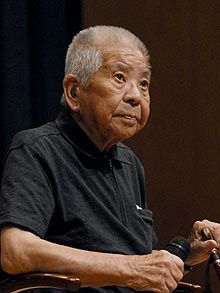
In the long, often surreal annals of human history, few stories sound more improbable—and more profoundly tragic—than that of Tsutomu Yamaguchi. Born in 1916 in Nagasaki, Japan, Yamaguchi is widely recognized as the only officially documented person to have survived both atomic bombings during World War II: the one that obliterated Hiroshima on August 6, 1945, and the second that devastated his hometown, Nagasaki, just three days later on August 9. His story is not just one of miraculous survival, but of unimaginable endurance, quiet advocacy, and the enduring cost of war.
The Man Before the Bomb
Tsutomu Yamaguchi was an engineer working for Mitsubishi Heavy Industries, a major Japanese company heavily involved in the war effort. In early August 1945, Yamaguchi was on a three-month-long business trip to Hiroshima, helping to design oil tankers. At the time, the city was a thriving urban center with minimal damage from the war, making it one of the few remaining targets for a potentially decisive strike.
Yamaguchi, like many of his peers, had no idea what was coming. While Japan was already weakened and reeling from intense firebombings in Tokyo and other cities, the sheer scale and singular destruction of an atomic bomb were beyond comprehension. That would change forever on August 6, 1945.
Ground Zero: Hiroshima
On the morning of August 6, Yamaguchi was on his way to the Mitsubishi shipyard when he noticed a B-29 bomber soaring high above the city. The plane, Enola Gay, dropped the uranium-based atomic bomb known as “Little Boy”. Yamaguchi recalled seeing a flash of blinding light before being hurled into the air by the blast wave.
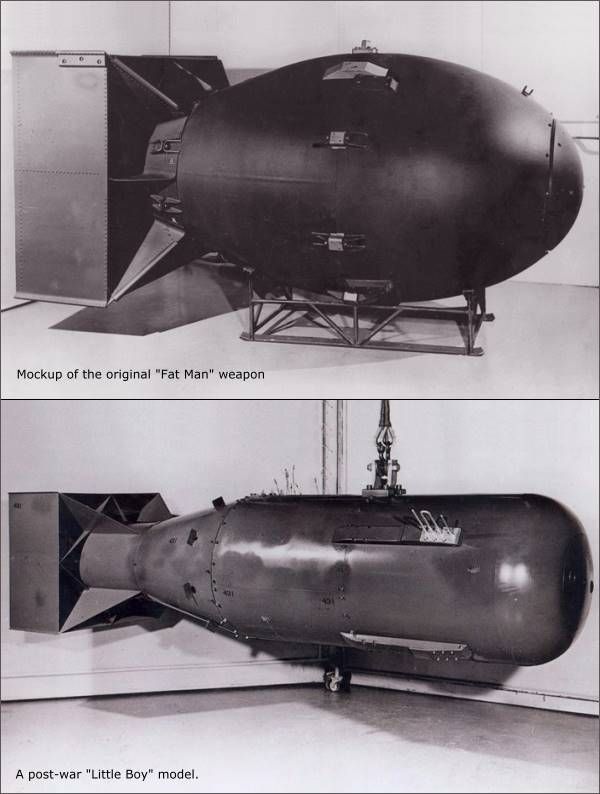
Photo Credit: Pinterest
He was about 3 kilometres from the epicentre—close enough to sustain severe injuries. His face and forearms were badly burned, his eardrums ruptured, and he wandered through the devastated city in a daze, witnessing horrors that defied reason: entire neighbourhoods flattened, bodies charred, and the stunned silence of a city in shock.
Despite his injuries, Yamaguchi managed to find shelter for the night and, incredibly, began making his way back to Nagasaki the next day—still bandaged, dehydrated, and traumatized. No one in Hiroshima fully understood what kind of bomb had hit the city. Yamaguchi, in pain and confusion, assumed it had been a new type of incendiary device. Little did he know he had just become one of the first people to survive an atomic bomb.
Back to Nagasaki — and Into Hell Again
On August 8, Yamaguchi arrived back in Nagasaki, barely alive but thankful to be home. He reported for duty at Mitsubishi’s Nagasaki office the next morning, hoping to explain to his superiors what had happened in Hiroshima. In a meeting that seems almost impossible to believe, Yamaguchi was in the middle of recounting the destruction he had witnessed when, at 11:02 AM on August 9, a second flash of white light filled the sky.
This time, the bomb—called “Fat Man,”a plutonium-based device—was dropped by the U.S. B-29 bomber Bockscar. Yamaguchi’s office was once again about 3 kilometres from ground zero, and once again, he survived. The building crumbled around him, glass and debris flew through the air, and a new wave of searing heat and pressure washed over everything in its path.
Yamaguchi’s bandages were incinerated. He suffered more burns, deeper radiation exposure, and even more psychological trauma. He stumbled back home to find that his wife and infant son had survived—their reinforced home had shielded them from the worst of the blast. Yamaguchi’s wife had left the house to search for burn ointment just moments before the bomb fell and had survived only because she’d jumped into a tunnel.
The Days After — Radiation, Recovery, and Reflection
History
Rewind the Stories that Made Africa, Africa
A Journey Through Time, Narrated with Insight.
The days following the second bombing were harrowing. Yamaguchi’s wounds became infected, his hair fell out in clumps, and he battled high fever and vomiting—classic symptoms of acute radiation sickness. Doctors did what they could with limited resources, but many survivors were beyond help. Yamaguchi watched friends and neighbours die in agony, the memory etched into his mind forever.
He spent the next several months recovering and trying to rebuild some semblance of a normal life. Incredibly, despite suffering from compounded trauma and chronic health problems related to the double exposure to radiation, Yamaguchi went on to live a long life.
Recognition and Advocacy
For decades, Yamaguchi lived quietly. Japan, still dealing with the devastation of war, offered little space for the voices of hibakusha—atomic bomb survivors. Many faced social stigma, health complications, and bureaucratic hurdles when seeking aid or compensation.
It wasn’t until 1957 that the Japanese government officially recognized Yamaguchi as a hibakusha. But he was only acknowledged as a survivor of the Nagasaki bomb. It took more than 50 years—and a dogged campaign by journalists and historians—for the Japanese government to recognize in 2009 that Yamaguchi had, in fact, experienced both bombings.

That made him the only officially certified double survivor, or "nijū hibakusha" (double-explosion-affected person). According to the Hiroshima and Nagasaki Peace Memorial museums, as many as 165 individuals experienced both bombings, but Yamaguchi remains the best-documented case.
A Voice Against Nuclear Weapons
In his later years, Yamaguchi became a vocal advocate for nuclear disarmament. He gave interviews, wrote memoirs, and travelled to speak out about his experience. In 2006, just four years before his death, he addressed the United Nations in a video presentation, imploring the world to learn from the horror he had lived through:
“The reason that I hate the atomic bomb is because of what it does to the dignity of human beings.”
Despite everything, Yamaguchi never expressed bitterness. Instead, he focused on the importance of empathy, peace, and global cooperation. He believed that his survival came with a responsibility: to tell the world what he had seen, and to ensure it would never happen again.
Legacy and Cultural Memory
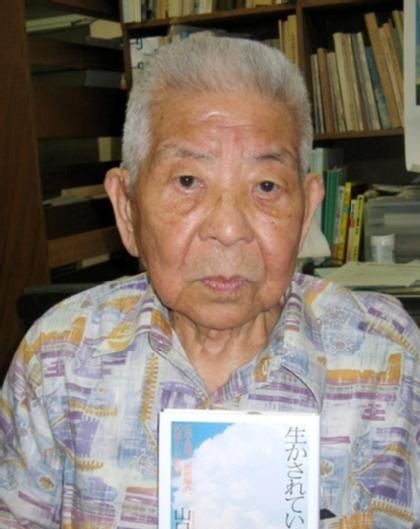
Photo Credit: Pinterest
Tsutomu Yamaguchi died on January 4, 2010, at the age of 93, from stomach cancer—a condition many hibakusha eventually developed due to prolonged radiation exposure. His life, once known to only a few historians, has since become the subject of books, documentaries, and academic studies.
His story has also sparked philosophical and ethical questions. Was it fate, coincidence, or simply tragic mathematics that placed one man in the crosshairs of history not once, but twice? What does his life teach us about resilience, randomness, and the human cost of technological warfare?
Today, Yamaguchi is honoured in peace museums in both cities, his story standing as a testament not only to survival, but to the long-lasting scars—both visible and invisible—that nuclear war inflicts. He is remembered not for the bombs, but for what he made of them: a call to never repeat the mistakes of the past.
History
Rewind the Stories that Made Africa, Africa
A Journey Through Time, Narrated with Insight.
Final Thoughts
Tsutomu Yamaguchi’s journey defies belief but is grounded in cold, hard reality. His story offers no comfort, only lessons—lessons in endurance, in bearing witness, and in the urgency of peace. In a world that still harbours thousands of nuclear weapons, his life is not just a historical footnote. It is a warning. A plea. And above all, a human face in the flash of unspeakable destruction.