The Future of Nigerian Youth Finance — A Generation Building on Borrowed Time
Nigeria's Gen Z is building financial futures inside a system that keeps moving the floor. Part 3 of the Zeal Insights Series examines what youth finance in Nigeria really looks like beyond the numbers. Lets move beyond data to ask what the financial future of Nigeria's Gen Z really looks like and what it will take to build it.
This is Part 3 of the Zeal Insights Series examining the 2025 PiggyVest Savings Report. Part 1 explored how 74% of Gen Z Nigerians depend on a single income and earn below ₦100,000. Read it here
Part 2 revealed that only 6% of Nigerians feel financially secure as savings collapse and emergency funds disappear.Read it here
There is a particular kind of exhaustion that does not show on a person's face. It lives in the decisions they stop making, the savings plan abandoned three months in, the side hustle quietly shelved, the business idea that never left the notes app.
It is the exhaustion of trying to build financial stability inside a system that keeps moving the floor.
That exhaustion has a generation attached to it and the 2025 PiggyVest Savings Report names it clearly.
Nigeria's Gen Z, those between 18 and 28, are entering adulthood during one of the most economically punishing periods in the country's recent history.
They are the most income-dependent generation surveyed, the least likely to have emergency savings, and the most likely to earn below ₦100,000 or report no stable income at all.
As this series has established the premises of these articles across two instalments, these are not isolated statistics.
They are symptoms of something structural, something that predates any single economic policy and will outlast any single administration.
The question Part 3 asks is harder: what does the financial future of this generation actually look like?
Ambition Without Architecture

One of the more revealing tensions inside the PiggyVest report is between what young Nigerians want and what the economy makes possible.
Despite the income constraints documented in Parts 1 and 2, Nigerian youth are not disengaged from financial ambition. Many are saving, even if imperfectly, even if occasionally, with clear goals in mind.
The younger generation is resiliently building emergency funds, starting businesses, covering rent, investing in education. The intent is present and it cannot be denied.
What is missing is the architecture to support it and the system to actually scale without hurdles in the financial system.
The report notes that financial satisfaction is not primarily a function of income level. It is a function of stability, predictability, and the ability to withstand a shock without losing everything gained.
But stability requires a floor, a basic assurance that income will not evaporate, that rent will not double overnight, that a medical emergency will not erase months of discipline in a single afternoon.
For most young Nigerians, that floor does not exist, nearly three in ten respondents across the entire survey report entering each month with no confidence that their earnings will cover basic expenses.
For Gen Z, that proportion is almost certainly higher. They carry the lightest obligations of any generation, fewer dependants, fewer properties, fewer debts and still cannot build a buffer.
This is the paradox at the heart of Nigerian youth finance. The generation with the least financial baggage is the one with the least financial security.
The Informal Economy as a Survival Architecture
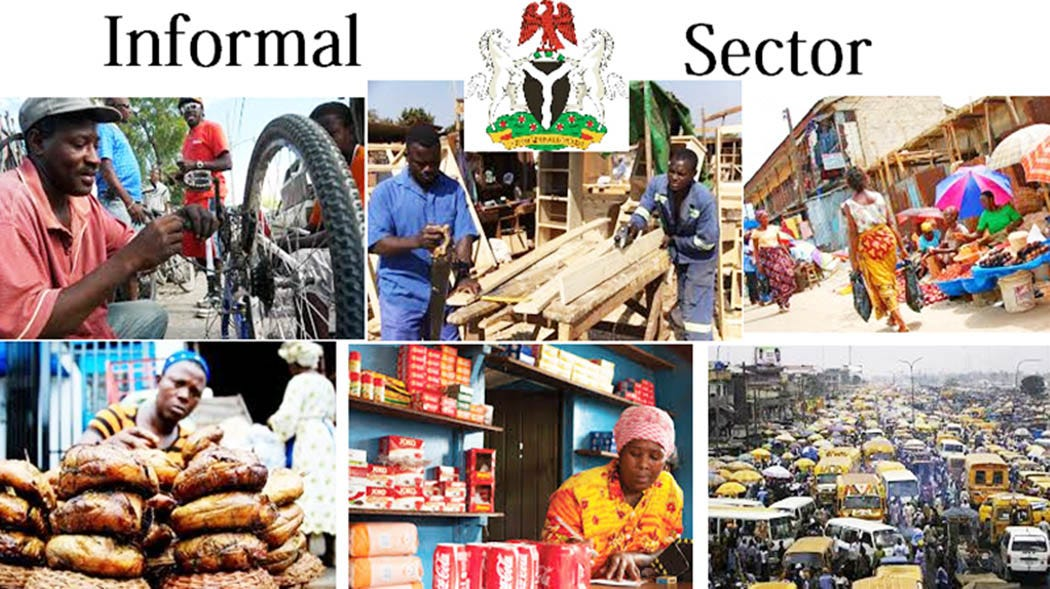

What fills the gap where formal financial structures fail is, as it has always been in Nigeria, community. The PiggyVest report captures this quietly in its debt data.
When Nigerians borrow, they borrow first from friends and family, not banks, not loan apps. Social networks are functioning as the financial safety net that institutions have not yet become.
For young Nigerians, this informal architecture is both a lifeline and a ceiling. It provides immediate relief but rarely provides scale.
You can just borrow enough to survive on a regular Tuesday.
You cannot borrow enough to build a business, buy land, or absorb a year of economic turbulence. And increasingly, the friends and family being leaned on are themselves under strain.
According to the Piggyvest report, PiggyVest COO Odun Eweniyi identifies the systemic lever most likely to change this.
Financial literacy embedded into education from an early age, she argues, combined with accessible tools, lower transaction costs for low-income earners, and macroeconomic conditions that reward saving rather than punish it.
The tools exist, the conditions that would make using them viable for the majority of young Nigerians are still catching up.
What Comes After Surviving

There is something that is so persistent in the data that is easy to miss if you read it only as a catalogue of systemic failure or economic instability.
Nigerians, young Nigerians especially, are still saving, still planning, still building. Slowly. In small amounts, under pressure that would break a less resilient population.
The 2025 PiggyVest Savings Report does not offer easy optimism. It is too honest for that. But it does offer a quiet argument: that the infrastructure of financial wellbeing, habit, consistency, community, exists inside Nigeria's youth even when the formal economy has not shown up for them.
The future of Nigerian youth finance is not written yet. But it will be shaped by whether the systems around that generation rise to meet what the generation is already doing on its own.
That is not a small thing. It might, in fact, be everything.