SHE100: She Did Not Wait for Permission to Change — The Story Of Damilola Odufuwa
It started at a party and within seven months she had co-founded the Feminist Coalition. Within ten, it had become the logistical backbone of Nigeria's biggest protest movement. Damilola Odufuwa is a tech executive, media leader, and activist who has never once waited for Nigeria to be ready for her. This is her story.
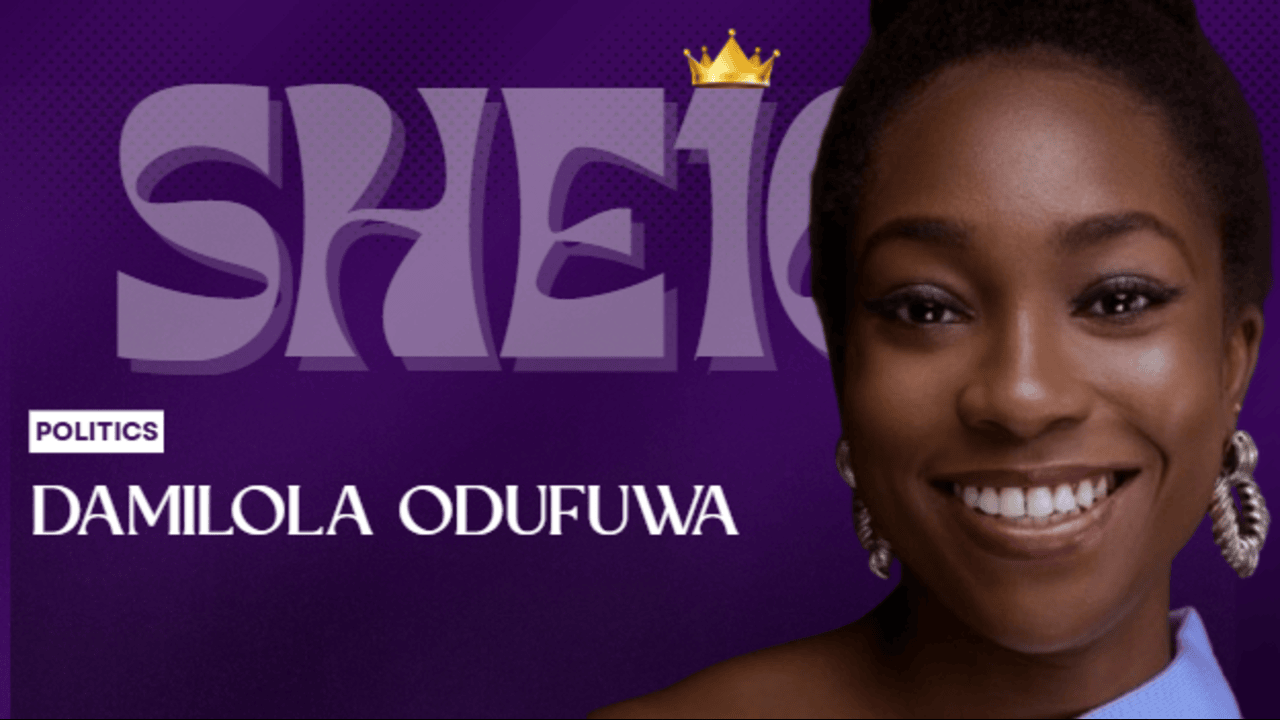
Well the story you're about to read all started at a party. And it started in December 2019, during Wine and Whine — a women-only event series that Damilola Odufuwa had co-founded, which hosted over two hundred young Nigerian women in Lagos.
According to a post on Medium, somewhere in the middle of that evening, a friend pulled her aside and said something that would alter the trajectory of her life: "This could be something more."
A few days later, Damilola called Odunayo Eweniyi and within seven months, the Feminist Coalition existed. Within ten months, it had helped change the course of Nigeria's most significant mass protest in a generation.
That is the speed at which Damilola Odufuwa moves, from conversation to organisation, from idea to action, from Lagos to the Bloomberg 50 and the TIME Next 100, all within the span of a year that broke the world and remade it.
But to understand why she moves at that speed, and why it matters, you have to understand the woman behind the momentum, the economist, the editor, the tech executive, the activist, and the quietly unstoppable force who has decided that Nigeria's women will not wait any longer.
From Canterbury to CNN: Building a Career Across Borders
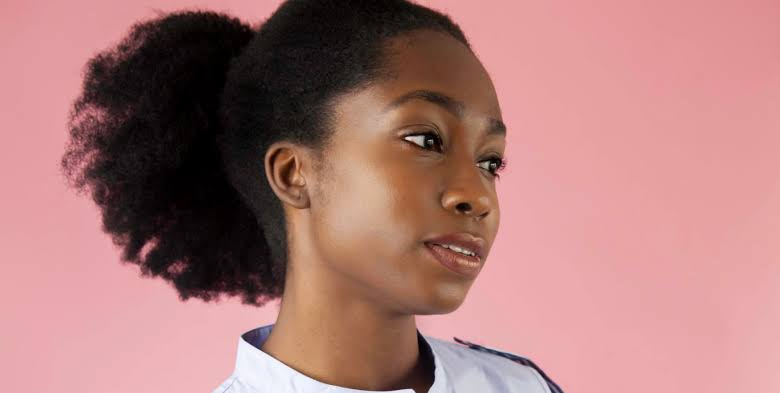
Born in 1991 and raised in Lagos, Damilola Odufuwa grew up in a household that took education and social justice seriously, two values that would eventually converge in everything she built.
She studied at the University of Kent in Canterbury, England, graduating in 2012 with a BSc in Financial Economics. She went on to get a MSc in International Finance and Economics from the same university in 2013.
She returned to Nigeria and built a media career that moved fast and covered enormous ground. She worked at MTV Shuga, the health-focused drama series that tackled HIV, consent, and youth culture across Africa.
She has freelanced for National Geographic. She served as social producer for CNN Africa. She was Editor-in-Chief of ZUMI between 2018 and 2019. She served as Chief Editor at both Konbini and Zikoko, two of the most influential digital media platforms targeting young Nigerians and Africans respectively through activism.
She has also worked with Universal Music Group, at every stop, she was doing the same thing: telling African stories, amplifying African voices, and asking what it would mean to build media that truly served the people it claimed to represent.
The conviction that every African story deserves to be told and told well, has been the through-line of her career from its first chapter to its most recent one.
The Coalition, the Crisis, and the Year That Changed Everything

By early 2020, COVID-19 had arrived and with it, a sharp escalation in gender-based violence across Nigeria and the world.
In June 2020, all Nigerian states declared a state of emergency over rape and GBV. For Damilola and Odunayo Eweniyi, the moment came for them to do something worthwhile.
In July 2020, they co-founded the Feminist Coalition, approaching twelve other women they knew to be exceptional leaders who shared the vision of a Nigeria where equality for all people was a reality in law and in daily life.
The coalition was built on three pillars: women's rights and safety, financial equality for women, and political and legislative power for women.
It was not just a hashtag campaign. It was a structured organisation with founding members, a clear mandate, and a determination to sustain momentum beyond individual outrage cycles.
During the October 2020 EndSARS period, the nationwide uprising against the brutality of the Special Anti-Robbery Squad.
The Feminist Coalition mobilised 600 lawyers to provide free legal aid to protesters who had been arrested, raised funds via cryptocurrency to circumvent blocked accounts, coordinated medical teams, and became one of the most effective logistical backbones of the protests.
The world took notice. British Vogue named her one of 12 Women Leaders That Changed The World in 2020. TIME included her in its Next 100 list in 2021.

The Future Awards Africa gave her the Prize for Leading Conversations in 2020. Bloomberg named her to its Bloomberg 50, a list of people who changed global business, that same year.
She received the recognition without slowing down. Recognition, for Damilola Odufuwa, has never been a destination. It has been a signal to keep going.
Tech, Backdrop, and Building the Future She Wants to See
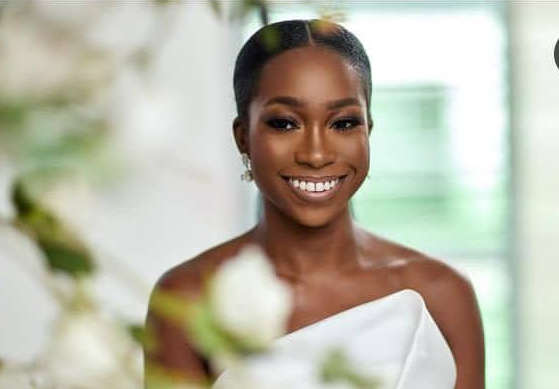
Alongside her activism, Damilola has built a parallel career in technology and entrepreneurship.
She co-founded Backdrop — an app that allows users to find and share places around the world — with Odunayo Eweniyi in 2020, serving as its CEO.
She is the Global Head of Product Communications at Binance Africa, leading the cryptocurrency giant's public relations efforts across the continent.
She also co-founded Wine and Whine Nigeria — the women-only events platform that sparked the conversation that eventually became the Feminist Coalition, and which continues to create safe spaces for Nigerian women to discuss sexual abuse, financial literacy, and more.
The coalition itself has continued its work beyond the headline moment of EndSARS. It has engaged with the political process, pushed for women's representation in governance, and worked to embed gender equality into legislative conversations that would otherwise ignore it.
Damilola Odufuwa is in her thirties and has already built more than most people build in a lifetime, a media career that spanned continents and platforms, a tech company, a coalition that mobilised a nation, and a movement that is far from finished.
She did all of it without waiting for the system to invite her in. She built her own door, walked through it, and left it open behind her.
That is what it looks like when a woman decides not to wait for permission.