Revolutionary Leap: Bitcoin Achieves First Quantum-Safe Transaction, No Hard Fork Needed!
The Starknet Foundation has successfully executed the first post-quantum resistant Bitcoin transaction on the mainnet, offering a crucial solution to protect Bitcoin from future quantum attacks. This innovative method, developed by Avihu Levy, secures funds without requiring any soft or hard forks to the Bitcoin protocol. It introduces a novel "signature grinding" technique and hash authorization to prevent fraudulent transfers, even if private keys are compromised by quantum computers.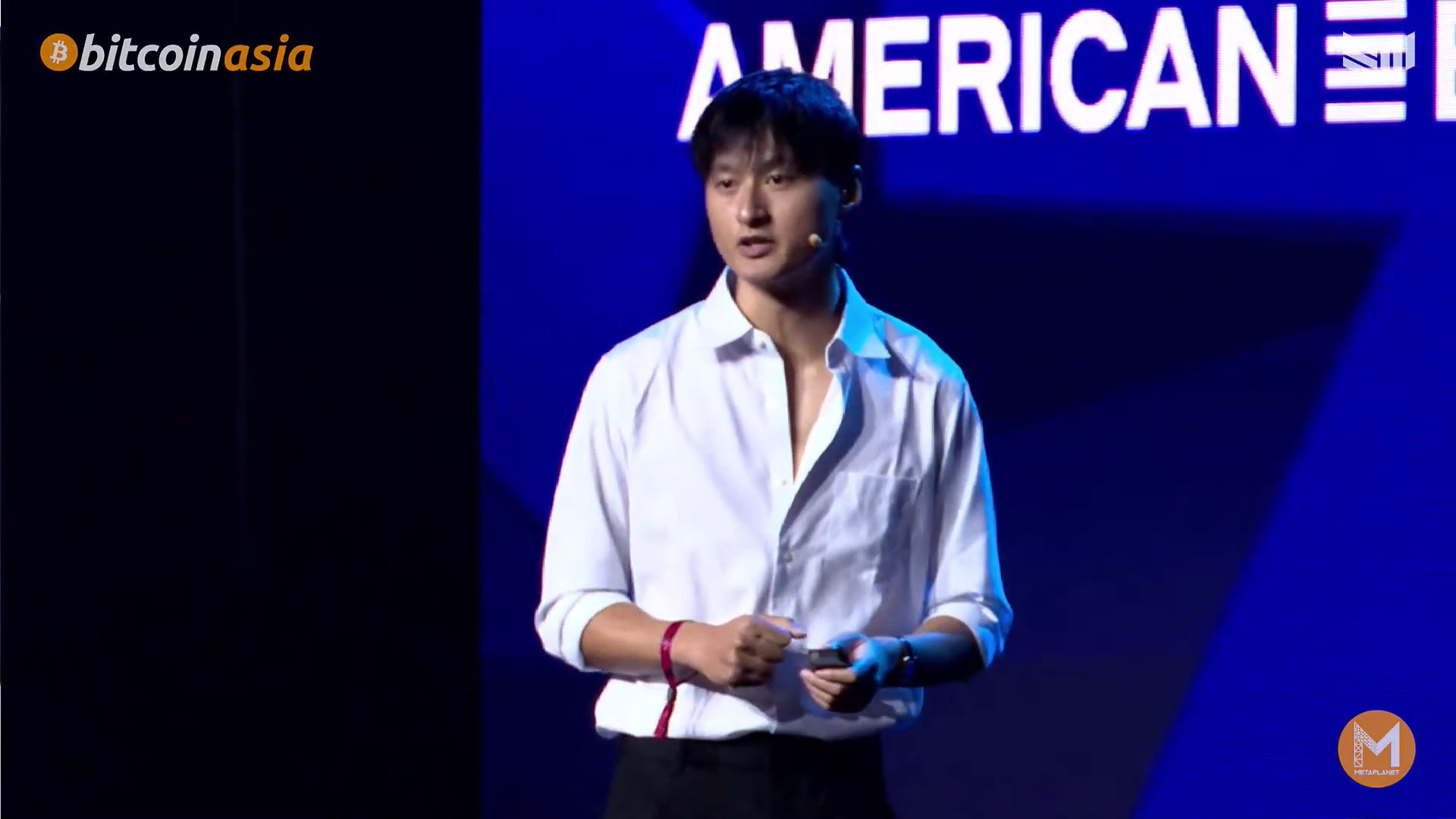
Fund managers dealing in Bitcoin face a looming threat from quantum computing, a concern that is now being actively addressed with innovative solutions. One such groundbreaking development is the successful execution of the first post-quantum resistant Bitcoin transaction on the mainnet, achieved through the efforts of the Starknet Foundation this week.
This significant milestone was unveiled by Damian Chen, VP of growth at the Starknet Foundation, during Bitcoin Asia in Hong Kong. Chen demonstrated how funds vulnerable to future quantum attacks can be secured without necessitating a network-wide fork. He stated, "This is a monumental moment. This is the first post-quantum-resistant Bitcoin transaction on Bitcoin mainnet today. It required no soft forks; it required no hard forks; it required no core protocol upgrades, and it’s live today."
The method behind this innovation was developed by StarkWare researcher Avihu Levy. It addresses a critical vulnerability: Bitcoin transactions briefly reside in a public queue before confirmation, exposing cryptographic material. A sufficiently powerful quantum computer could potentially exploit this window to forge a signature and steal funds before the transaction is finalized. Levy's solution counters this by generating millions of signature candidates until one with a specific structural property is found that does not expose vulnerable material while in the mempool. This process, termed "signature grinding," is computationally intensive, with a single transaction taking hours to produce, but this very cost is what imparts its resistance to quantum shortcuts.
Dubbed "Quantum Safe Bitcoin" (QSB) transactions, Chen emphasized their robustness, explaining to institutions that even if attackers somehow obtained a fund's private keys, they would be unable to execute a fraudulent transfer. He elaborated, "QSB introduces a new hash authorization, and so an attacker with a sufficiently capable computer, even if they have your exposed public key, even if they derive your private key from your public key, even if they try to use that to authorize a spend to move your coins out of your wallet, those things are not enough for them to do so."
It is important to note that current ordinary Bitcoin nodes do not recognize this non-standard transaction format. Consequently, the transaction could not enter the public mempool and instead had to be directly submitted to a miner willing to accept it. MARA’s Slipstream service was the mining company that successfully processed this pioneering QSB transaction.
While quantum researchers have long warned that Bitcoin's underlying software will eventually require upgrades to withstand quantum computing advancements, top Bitcoin developers have maintained that current quantum computers possess limited capabilities. However, they acknowledge that quantum development could accelerate unexpectedly, similar to AI, and have already begun exploring solutions. Chen underscored the urgency of preparedness, saying, "The question to me has never been when will quantum arrive. We all know quantum will arrive at one stage, but the question to me has always been, how long will it take for you to be ready when quantum does arrive?"