Three Nigerians Using Technology to Solve Problems in Agriculture
Femi Adekoya, Aisha Raheem-Bolarinwa and Michael Ogundare are using drones, digital platforms and mobile technology to tackle practical problems across Nigeria’s agricultural sector.

At a farm in Benue State, a drone was used to broadcast rice seed across 120 hectares of farmland, while in another part of Nigeria's food supply chain, a yam processor turned to a digital platform to find more suppliers and then a third business had to rethink its technology after finding that some of the farmers it wanted to reach could not easily use its first product.
Femi Adekoya, Aisha Raheem-Bolarinwa and Michael Ogundare are building businesses around these problems. Their work covers different parts of agriculture, from planting operations to produce sourcing and access to financial services.
Femi Adekoya: Using Drones For Farm Operations
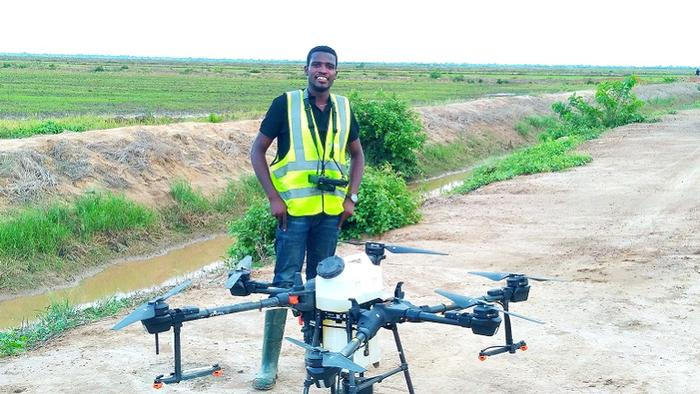
Fatherland Farm in Makurdi, Benue State, faced a practical challenge: broadcasting rice seed across 120 hectares required workers to spread the seed manually across the fields.
Integrated Aerial Precision (IAPrecision), founded by Adekoya, used a drone to carry out the operation.
The company describes using a DJI Agras T50 equipped with a 50-kilogramme spreader tank. The field was digitally mapped, with automated flight routes designed to cover the land systematically and rice seed was applied at a calibrated rate of 100 kilogrammes per hectare.
The average broadcasting time was three minutes per hectare, a 95% reduction in broadcasting time and 98% seed-spread accuracy and consistency.
Adekoya also established Precision Field Academy, which trains people in agricultural technologies such as drones, geographic information systems (GIS) and remote sensing. ItsPrecision Agriculture Incubation Program has run masterclasses on drone technology, GIS and remote sensing, followed by hands-on field sessions.
These skills can be applied to field mapping, crop assessment and other precision-agriculture tasks.
Aisha Raheem-Bolarinwa: Using Technology To Connect Farmers And Buyers
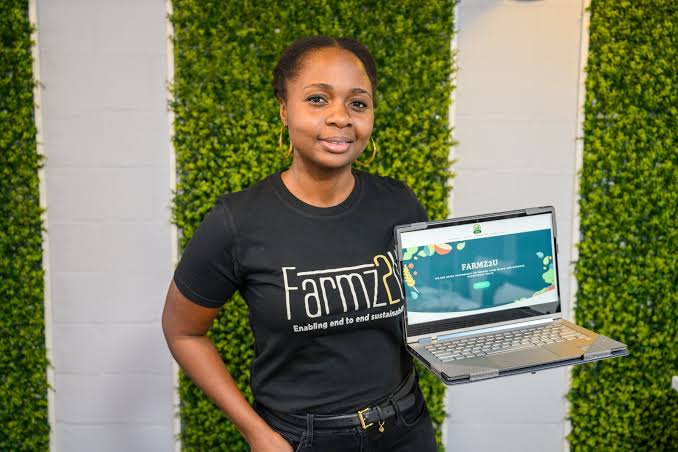
A food processor can have customers waiting for its products and still struggle to meet orders if it cannot source enough raw materials of the right quality.
Aisha Raheem-Bolarinwa, founder and chief executive of Farmz2U, is working on this part of the agricultural supply chain. Her company uses digital tools to help connect farmers, produce suppliers and businesses that need agricultural products. Its Talon platform focuses on making sourcing and supplier relationships easier to organise.
One example is Leky Mills, a Nigerian yam-processing business that struggled to source enough yam of the required quality to fulfil orders. In apublished interview with Rippleworks, Raheem-Bolarinwa explained how Farmz2U helped the processor access a wider network of suppliers and identify those better suited to its needs.
The relationship continued beyond a single transaction. Raheem-Bolarinwa said Leky Mills had been a Farmz2U customer for a year and paid its subscription fee upfront for a year-long contract.
Michael Ogundare: Building Digital Services Farmers Can Access
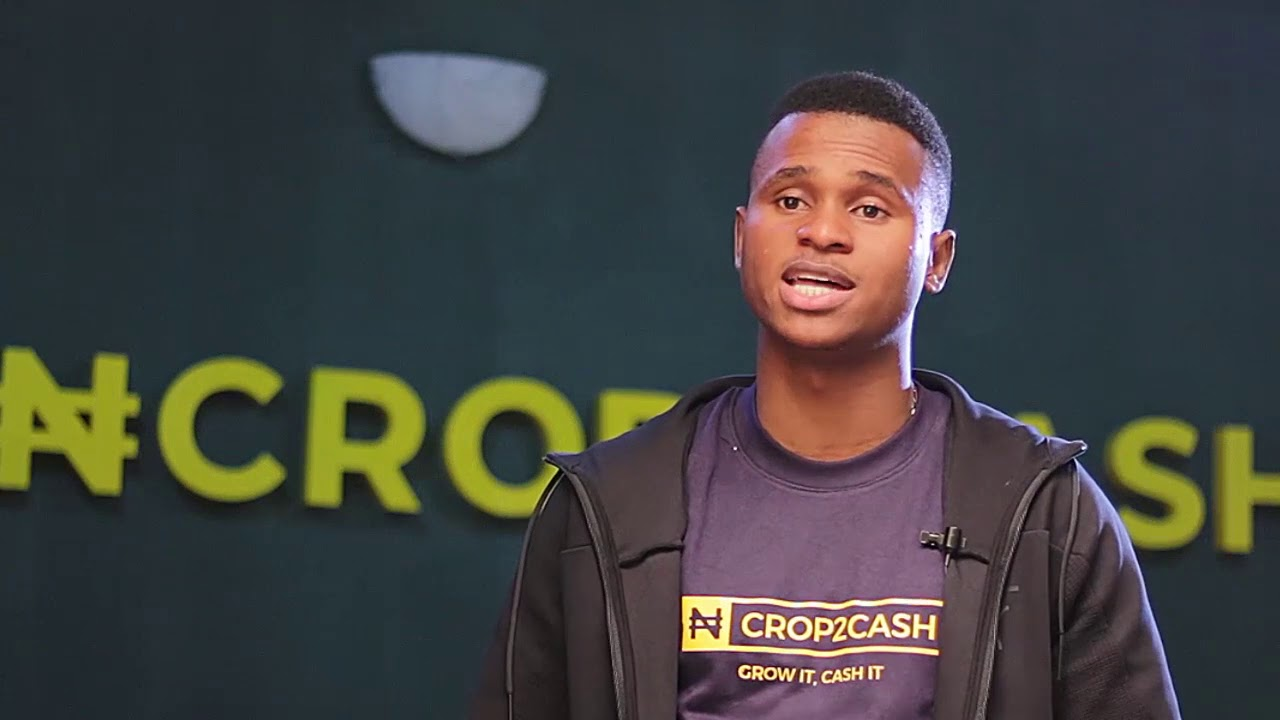
For Michael Ogundare, co-founder of Crop2Cash, one challenge in agricultural technology was making digital services accessible to farmers who could not rely on smartphones or internet access.
Crop2Cash develops digital tools that help farmers access services such as payments and agricultural inputs. Its early approach included a Facebook Messenger bot designed to help farmers sell their produce, but the product did not suit all the farmers the company hoped to reach, particularly those without smartphones or reliable internet access.
Crop2Cash subsequently moved towards USSD, a technology that lets users access services through mobile phone menus without mobile internet.
The company uses USSD to provide farmers with access to services that includereceiving payments and ordering agricultural inputs. The change meant farmers could access these services without needing a smartphone app or an internet connection.

Crop2Cash says it hasonboarded more than 500,000 farmers onto its platform.
The people behind the work
Adekoya’s interest in agriculture began in childhood, but losing a maize crop to pests gave him firsthand experience of the risks farmers face.
Raheem-Bolarinwa came from the financial sector; a personal health scare led her to think more deeply about nutrition and food waste.
Ogundare, a computer scientist, met his Crop2Cash co-founders at a university contest, where their different skills helped bring the business together.
The works they are doing may differ, but each founder started with a problem they had seen up close and kept working until they found a way to address it.