Real Estate: Destroyer or Fortifier of Low-Income Communities?
A neighbourhood gets “discovered,” rents explode, and long time residents vanish. Is real estate building cities or quietly erasing the people who made them liveable?
At some point, every city has a street that becomes cool overnight.
One day it is a quiet neighbourhood with old bungalows, roadside food sellers, children playing football with torn slippers, and rent that does not trigger heart palpitations. The next day, there is scaffolding.
There's a huge hotel, with big billboards and decorations that immediately spell “expensive”, and suddenly, the area has been “discovered” with expensive cars driving in and out daily.
You suddenly wake up and see that the football field is being converted to a shopping mall, and the popular meeting spot now has hotel construction ongoing.
And somehow, the people who lived there long before it was desirable are now the ones who can no longer afford it. They have to move because with development comes an increase in house rents and a higher standard of living.
This is the paradox of real estate development. It arrives carrying jobs, infrastructure, and investment, yet often leaves displacement, cultural erasure, and deeper inequality in its wake.
So the question is not whether real estate development is good or bad. The real question is who it is good for.
When Development Feels Like an Invasion
For low-income communities, real estate development often shows up without consent and without context.
Urban researchers call this process gentrification. It happens when investment flows into historically under-resourced neighbourhoods, raising property values and attracting higher-income residents. On paper, it looks like progress. In reality, it frequently triggers rent hikes, property tax increases, and evictions.
According to studies by the Urban Institute and Brookings Institution, long-term residents in gentrifying areas are disproportionately renters, informal workers, and elderly people. These are groups with the least financial buffer and the weakest legal protections.
When rents rise faster than wages, people do not “move on.” They are pushed out.
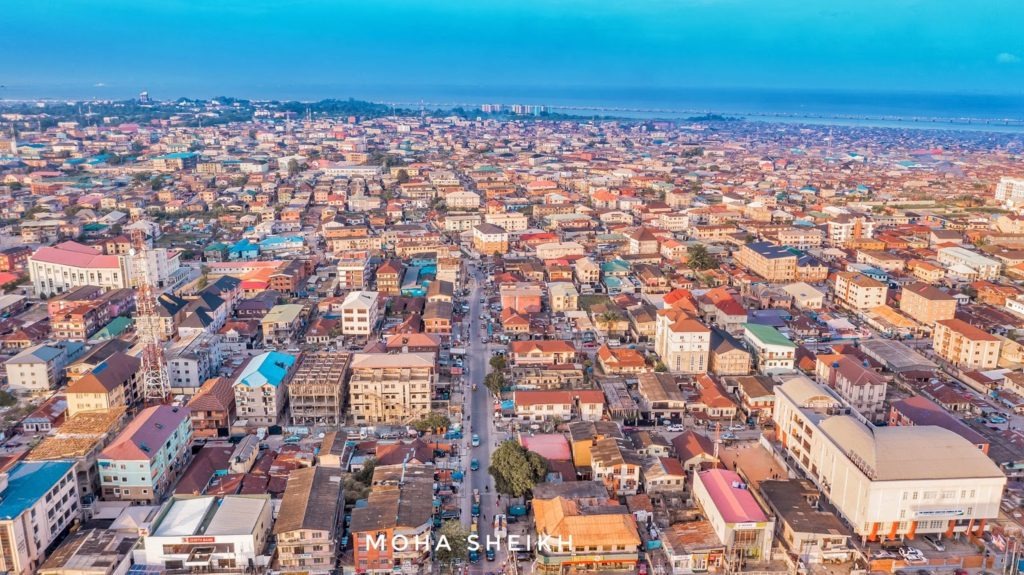
In Lagos, for instance, neighbourhoods like Yaba, Surulere, and parts of Lekki have seen aggressive real estate expansion tied to tech hubs and luxury housing. While the skyline improves, many low-income tenants relocate to the outskirts of the city, trading proximity for affordability. This often means longer commutes, higher transport costs, and reduced access to jobs and schools.
Development did not fail these communities by existing. It failed them by excluding them from its benefits.
The Quiet Violence of Displacement
Displacement is not always dramatic. Sometimes, no eviction notice is served, nor will you see any bulldozer arrive to bring down the building.
Instead, the landlord increases the rent. Everything else follows. Light bills climb. Water costs more. Living in the same house suddenly feels unaffordable.
Informal businesses lose foot traffic because the new residents shop elsewhere.

Sociologists refer to this as indirect displacement. It is quieter but just as destructive.
When communities are broken apart, social networks disappear. Childcare arrangements collapse. Informal credit systems vanish. Cultural identity fades. Research published in the National Institute of Health shows that displaced residents often experience higher stress levels, job instability, and reduced educational outcomes for children.
This is why development can feel less like an opportunity and more like an erasure.
But Stopping Development Is Not the Answer
The uncomfortable truth is that underdevelopment is also violence.
Communities without investment suffer from failing infrastructure, poor sanitation, overcrowded housing, and limited access to healthcare and education. Decades of urban neglect trap residents in cycles of poverty that are difficult to escape.
Real estate development, when done right, can fix what governments have ignored.
Upgraded housing reduces health risks.
Paved roads improve mobility.
Commercial spaces create jobs.
Property ownership builds generational wealth.
In countries like Brazil and South Africa, inclusive housing developments have been linked to improved school attendance, reduced crime, and better long-term economic mobility.
So the problem is not development itself. The problem is extractive development.
When Real Estate Actually Fortifies Communities
Some cities have figured this out.
In Vienna, over 60 percent of residents live in subsidized or rent-controlled housing integrated across income levels. Real estate development there is not driven purely by profit but by social policy. Low-income residents are not pushed out; they are protected.
In Singapore, public housing development combines affordability, ownership, and community planning. Residents benefit directly from rising property values instead of being displaced by them.
Even in African cities, smaller-scale successes exist. Community land trusts, cooperative housing models, and government-backed rent stabilization programs have helped preserve affordability while still allowing development.
The common denominator in all these cases is policy.
Real estate does not operate in a vacuum; it responds to incentives.
When governments prioritize luxury housing through tax breaks and zoning laws while ignoring affordable housing mandates, developers follow the money. When tenant protections are weak, displacement becomes inevitable.
Policies like inclusionary zoning, rent control, property tax caps for long-term residents, and mandatory affordable housing quotas have been proven to slow displacement. Research from the Lincoln Institute of Land Policy shows that cities implementing these measures experience more balanced growth and lower rates of forced relocation.
The issue, especially in many developing countries, is that housing policy often lags behind market speed.
By the time regulation arrives, the damage is already done.
What This Means for Young Adults
This is where this conversation becomes personal, since young adults are entering adulthood in an era where a housing crisis exists. Rent is rising faster than salaries globally, homeownership feels like a dream, and urban living is increasingly exclusive.
At the same time, they are more urban, more mobile, and more politically aware than previous generations. This generation will not just live with the consequences of real estate policy. It will vote, protest, invest, and build within it.
Understanding how development works is not optional anymore. It determines where you can live, how long you can stay, and whether your community survives prosperity.
Real estate can either become a ladder out of poverty or a bulldozer through it. The difference lies in who is invited to the table when decisions are made.
So, Destroyer or Fortifier?
Real estate is neither villain nor saviour.
It is a tool, and tools reflect the values of the hands that wield them. When markets are allowed to operate without guardrails, real estate quietly dismantles low-income communities. Not with sirens or demolition notices, but with rent hikes, exclusionary pricing, and policies that reward replacement over coexistence.
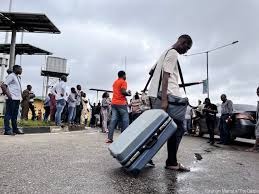
Entire neighbourhoods disappear without ever being declared gone. But when development is shaped by law, accountability, and public pressure, it does something radically different. It stabilizes families. It preserves communities.
It allows people to benefit from growth instead of being erased by it. The future of cities will not be decided by glossy brochures or skyline photos. It will be decided by zoning laws, tenant protections, and whether residents are treated as stakeholders rather than obstacles.
Progress should not demand disappearance. And development that cannot survive alongside the people who built a place is not progress at all.
In summary, for the people who lose their homes, real estate is not a debate, it is a verdict.
When development arrives without protection, it does not uplift communities, it replaces them. It takes the labour, culture, and history of a place and hands the benefits to newcomers with more money and more choices.
But when growth includes the people already there, something else happens. Families stay. Children remain in the same schools. Businesses survive change instead of being buried by it.
People do not fear progress when they are allowed to share in it.
Cities are not skylines. They are routines, relationships, and survival strategies. Any development that improves buildings but breaks lives has failed its most basic purpose.
Progress should not make people disappear.
And development that only works after removing the poor was never meant for them in the first place.