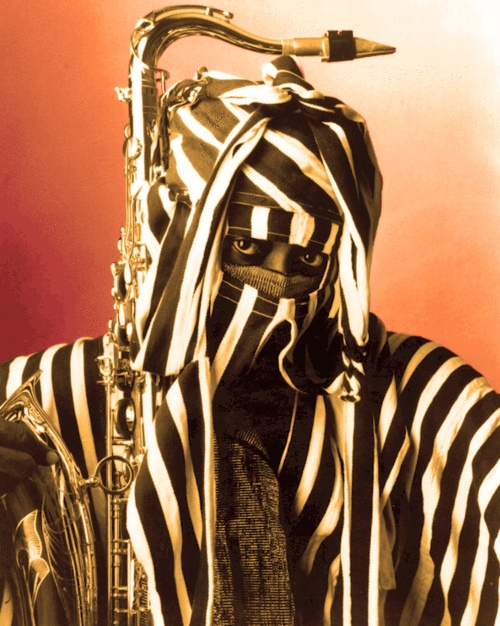
Lagbaja Didn't Need a Face to Become a Voice
From Abacha-era Nigeria to today’s Afrobeats boom, Lagbaja built a cultural legacy without ever revealing his face—proving that message, music, and identity can outshine personal branding.
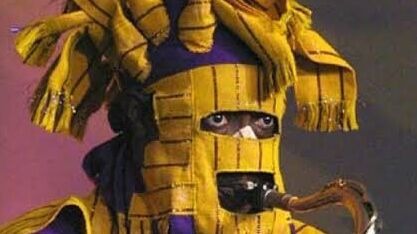
Your parents probably danced to "Konko Below" at their wedding. Your uncle definitely has that one Lagbaja album buried somewhere in his old CDs. This man became one of Nigeria's biggest cultural icons without ever showing his face.
Born Bisade Ologunde in 1960, Lagbaja emerged in the chaotic 1990s when Nigeria was going through it. We are talking about Abacha-era repression, cancelled elections in 1993, and the kind of political madness that made Fela's activism feel prophetic.
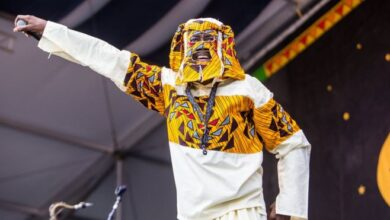
But while Fela's sons carried on their father's militant Afrobeat, Lagbaja took a different route. He wrapped his face in colourful ankara masks and became "nobody in particular" which, ironically, made him impossible to ignore.
The Mask That Said Everything
"I wanted to find an image that would represent the common man," Lagbaja explained in an interview with City People. The word "Lagbaja" literally means "unknown one" in Yoruba which is a perfect representation of everyday Nigerians who felt invisible to their government. The mask was, in itself, commentary.
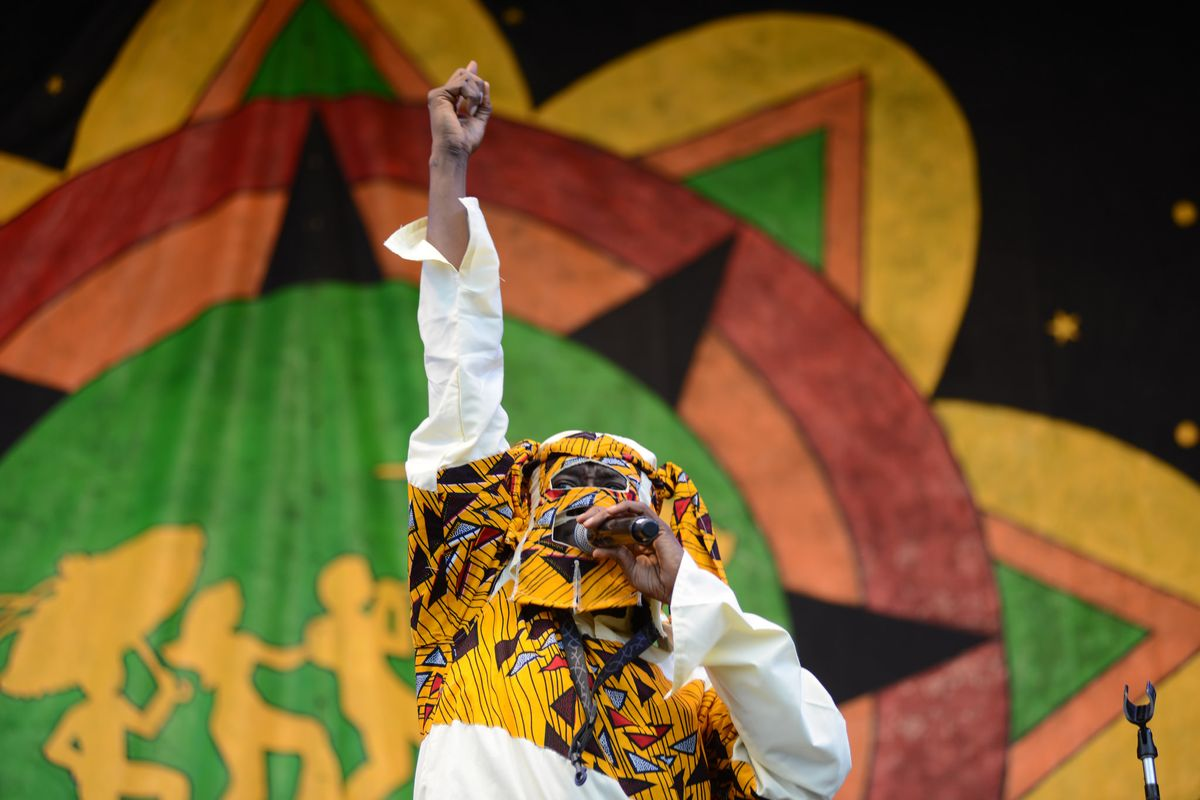
Every time you saw that elaborate, ankara print mask, you were supposed to remember your own facelessness in a system that didn't see you.
In the 90s, when armed robbers were literally sending appointment letters to neighborhoods and ritualists were looking for body parts, Lagbaja was out there doing sold-out shows at his Motherlan' club in Ikeja.
The club, which opened in March 1997, was designed like a traditional African town square,with trees and open-air vibes, representing a radical move when nightlife meant risking your life.
More Than Just Vibes
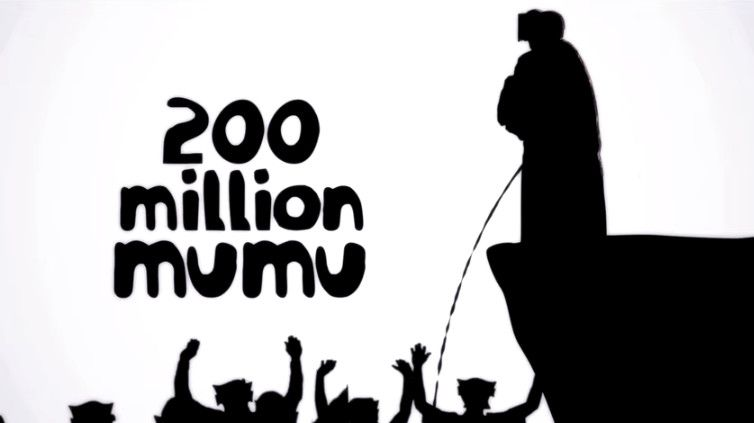
Lagbaja was not just about the faceless aesthetics. His music hit the core. While you could dance to "Konko Below" (and trust me, everyone did), tracks like "Suuru Lere" and "200 Million Mumu" were dragging politicians through the mud.
He grew up on Fela's music but refused to call himself an Afrobeat artist, preferring "Africano" because he wanted to emphasize the African drums — the dundun, bata, sakara, and ogido families that formed the rhythm backbone of every of his track.
In a 2015 interview with Afropop Worldwide, Lagbaja got real about the state of Nigerian music. He noted that even Fela did not like it when people pointed out his style was partly based on James Brown, but the influence was apparent. His point is that every creative borrows, but what matters is developing your own voice. And Lagbaja's voice was unmistakably his.
The Bridge We Forgot
Lagbaja was part of the blueprint. Contemporary sources list him alongside Femi Kuti, Seun Kuti, D'banj, and others as artists who got their inspiration from Fela's music, eventually paving the way for what we now call Afrobeats.
Music critics noted that while Fela's sons were more faithful to Afrobeat's militant spirit, it was Lagbaja's comic offerings that kept the genre alive for a young generation.
His willingness to experiment, mixing Yoruba folk tales with jazz, throwing in some highlife, adding contemporary beats, showed Nigerian artists they did not have to choose between being "authentic" and being accessible.
By the mid-2000s, as democracy stabilized and the industry started favouring the hip-hop fusion that would become Afrobeats, Lagbaja's star began to fade. His vocalist, Ego, left.
The sound that defined '90s Lagos felt dated in the streaming era. But make no mistake: when Burna Boy samples Fela or when any Nigerian artist talks about "staying true to African sound," they are walking a path Lagbaja helped clear.
What We Can Learn
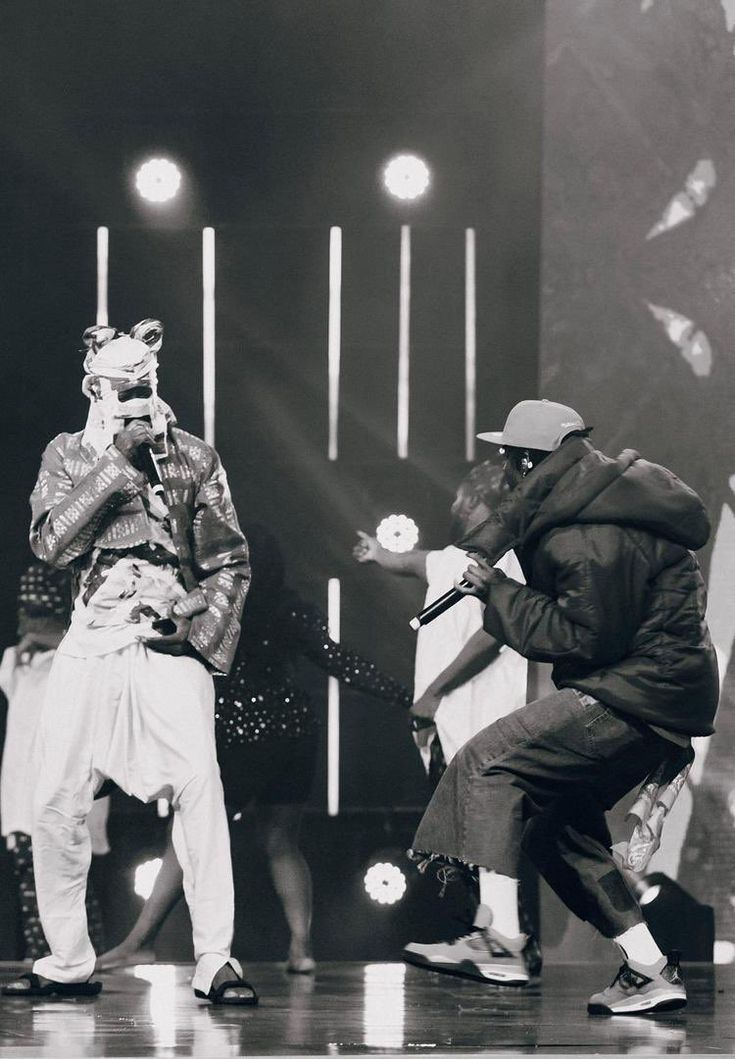
In this age of obsession with personal branding, Lagbaja's whole existence proves a point. He proved you don't need to show your face to make an impact. You don't need to compromise your message to make people dance.
And you definitely don't need to choose between art and activism. You can let the drums do the talking.
The man is still around, still performing occasionally, still masked. And in a world where everyone is trying to be seen, there is something powerful about someone who chose to represent everyone by being no one in particular. That is the kind of energy we could use more of.
So next time "Konko Below" comes on at that owambe (and it will), remember, you are not just hearing a banger from the 2000s. You are hearing the sound of a masked revolutionary who understood that sometimes the best way to be heard is to let the music speak louder than your face ever could.