Labour Party Declares Peter Obi's Exit A 'Blessing'
The Labour Party's national publicity secretary, Obiora Ifoh, addressed Peter Obi's recent exit, framing it as a liberation for the party and denying claims of factionalism. He detailed internal power struggles and outlined the party's strategy to emerge as Nigeria's leading alternative ahead of the 2027 general elections.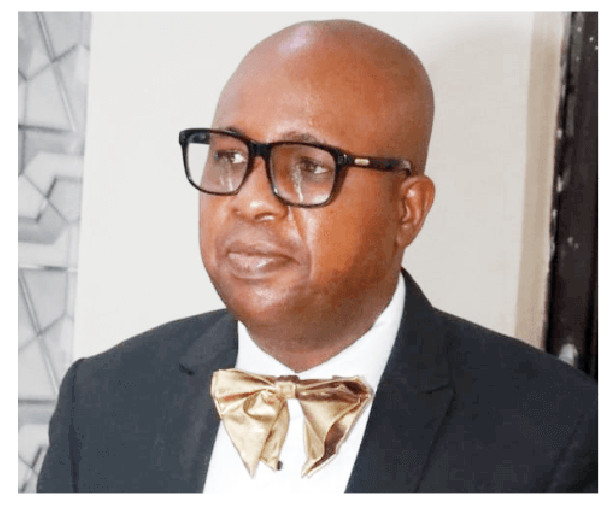
In a revealing interview, Obiora Ifoh, the national publicity secretary of the Labour Party, shed light on the party's internal dynamics, particularly in the wake of Peter Obi's exit and ahead of the 2027 general elections. Ifoh addressed claims of factionalism, dissected the future of the Obedient Movement, and outlined the party's political strategy, emphasizing its distinct ideology and commitment to providing a genuine alternative in Nigerian politics.
Ifoh clarified that while Peter Obi's formal departure from the Labour Party occurred only a few days prior to the interview, his practical disengagement happened much earlier, specifically on September 4th, 2024. This date marked Obi's participation in a meeting in Umuahia, Abia State, which led to the formation of a parallel executive of the Labour Party. According to Ifoh, this action was a deliberate attempt to cause a crisis, aiming to disempower and seize control from the authentic leadership of the party, led by Julius Abure.
The Labour Party views Obi's exit as a significant liberation. Ifoh stated that many individuals had hesitated to join the party, believing Peter Obi would remain the sole presidential flagbearer for 2027. Despite the party having affirmed him as the presidential candidate for 2027 at its April 2024 National Convention, his subsequent departure has now opened the doors for a wider range of members. Within a week of his exit, there was a noticeable surge in new memberships, as the Labour Party is increasingly seen as the viable alternative to dislodge the All Progressives Congress (APC) and prevent a one-party system in Nigeria.
Ifoh vehemently denied the existence of three factions within the Labour Party, describing such claims as a 'media creation'. He asserted that the party's Executive Committee has consistently remained under the singular leadership of Julius Abure. The individuals who sought to assume leadership did so without adhering to established rules and laws governing party formation. They employed various tactics, including sponsoring court cases, funding protests, and engaging in media propaganda against Abure's leadership.
These attempts, backed by resources from National Assembly members and a state governor, aimed to overwhelm the party. However, Ifoh maintained that the Labour Party successfully defeated these efforts by standing firm on the law and securing the unwavering support of its members nationwide. He urged those still aligned with the former presidential candidate to follow him, allowing the party to consolidate its focus on the preparations for the 2027 elections.
Addressing the widespread association of the Labour Party with Peter Obi, Ifoh clarified that this was a misconception. He pointed out that prominent figures like Abia State Governor Alex Otti and Professor Pat Utomi were already significant members of the party before Obi's arrival. While acknowledging that Obi's entry brought additional support, Ifoh explained that the Obedient Movement itself originated as a spin-off of the EndSARS movement, driven by youth participation. This movement sought a platform to challenge perceived misrule by old politicians and was already active before Obi joined the party.
Ifoh emphasized that the Obedient Movement is no longer under Peter Obi's exclusive control, noting Obi's own remarks that 'Obidients' can be found across various political parties, including the PDP. Describing it as an 'amorphous group' largely unaffiliated with any single political entity, Ifoh stated that approximately 50% of the Obedients remain loyal to the Labour Party. He suggested that their continued loyalty stemmed from a realization that Peter Obi did not embody the democratic ideals they had expected.
The Labour Party also learned critical lessons from its engagement with the Obedient Movement. Ifoh noted that many within the movement were solely focused on Peter Obi's interests, often at the expense of broader party objectives. They frequently refused to participate in other elections after the presidential polls and were not registered party members, thereby lacking the rights of card-carrying members who pay dues and actively participate in party activities. This principal-centric approach led to challenges, with some elected officials, who had received free nomination forms due to financial struggles, later defying party policies—such as the acquisition of luxury vehicles—and fighting the party's leadership, deviating from its manifesto.
Looking ahead to 2027, the Labour Party positions itself as the credible alternative to the ruling APC. Ifoh expressed confidence that the party can prevent the APC from steering Nigeria towards a one-party system, noting the severe crises plaguing other opposition parties and dismissing their proposed coalition as comprising 'tired old faces'. The party maintains its openness to alliances with political associations, such as 'The Big Tent,' but firmly rules out mergers with other political parties.
Ifoh also highlighted the resolution of initial challenges with the Independent National Electoral Commission (INEC), which has now begun working effectively with the Abure-led team. The party anticipates significant growth, fueled by the same societal atmosphere that attracted Peter Obi, and speculates about a potential 'implosion' within the ruling party that could further benefit the Labour Party. While acknowledging the prevalence of defections in Nigerian politics, Ifoh stated that the party is not afraid, expecting an influx of new members to balance any exits.
Regarding the management of internal crises, Ifoh attributed the turmoil to one or two individuals, including Peter Obi and Governor Alex Otti, who attempted to unconstitutionally dissolve the party leadership in September 2024. Governor Otti was indefinitely suspended for his role in chairing a convention in March 2024 and then later rejecting the legitimacy of the executive it produced, as well as supporting an interim national chairman who was not a party member. Ifoh noted that if Otti fully repents, his suspension could be lifted, and even Peter Obi would be welcome back, although he expressed surprise that someone with a presidential ticket would seek a vice-presidential ticket elsewhere.
Crucially, the Labour Party unequivocally rejects any notion of a joint presidential ticket or merger with the All Progressives Congress for 2027. Ifoh asserted that the Labour Party possesses a distinct political ideology, akin to Labour parties globally, that fundamentally differs from the APC's. The party is steadfast in its commitment to its core principles and will not compromise its ideology, even if it means having fewer representatives in government. This firm stance underscores its determination to remain a principled and authentic alternative in the Nigerian political landscape.