Electoral Integrity Crisis: Senate's Electronic Transmission Bill Sparks Outcry, Manipulation Fears
The amendments to Nigeria's Electoral Act, particularly regarding electronic transmission of election results, have ignited widespread controversy and protests. Critics, including civil society groups and former presidential candidates, argue that newly introduced loopholes allowing manual results to supersede electronic data undermine electoral transparency and threaten the credibility of the 2027 general elections. The ongoing legislative debate highlights a critical struggle for robust electoral reforms amidst conflicting views on technological readiness and political will.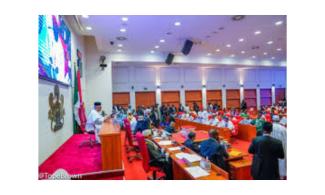
A significant controversy has erupted within Nigeria's political landscape following amendments to the Electoral Act, primarily concerning the electronic transmission of election results. This contentious issue has sparked widespread protests and raised serious concerns about the integrity and transparency of the upcoming 2027 general elections, with various stakeholders accusing lawmakers of attempts to undermine the democratic process.
The genesis of the current uproar can be traced to Tuesday, February 10, 2026, when a Senate source alleged that the version of the Electoral Bill circulated in the National Assembly chamber had been tampered with. The source claimed that a clause previously passed by lawmakers on Wednesday, February 4, 2026, explicitly mandated presiding officers at polling units to electronically transmit results in real-time to the Independent National Electoral Commission’s Result Viewing Portal (IREV). However, the version presented in Tuesday’s Votes and Proceedings reportedly omitted this crucial provision, replacing it with an amendment that focused solely on manual transmission to the next level of collation, a move described as inconsistent with what the Senate had originally approved.
During the earlier plenary session on February 4, 2026, the Senate had considered and adopted recommendations on vote counting and transmission. Clause 59 was retained as recommended. Attention then turned to Clause 60, which initially required presiding officers to record votes, have forms signed and stamped, and specifically mandated electronic transmission of results from each polling unit to the IREV portal in real-time via Clause 60(3). Subsequently, Senator Mohammed Tahir Munguno proposed an amendment to delete Clause 60(3) and replace it with the wording found in Section 60(3) of the principal Act. The Senate ultimately adopted an amended version of Clause 60. The disputed amendment, now appearing as Clause 60(5), states: “The Presiding Officer shall transmit the results including total number of accredited voters to the next level of collation.” This change was met with accusations of fraud from the Senate source, who insisted it did not reflect the Senate's approval from the previous week.
Further intensifying the debate, the Nigerian Senate on Tuesday, February 10, officially amended Section 60 of the Electoral Act. While this revised provision mandates presiding officers to electronically transmit results to the IREV portal after voting, it simultaneously introduced a significant loophole. The amendment states that if electronic transmission fails due to communication or network issues, the manual result sheet, Form EC8A, shall become the primary basis for collation and declaration of results. Senate President Godswill Akpabio, presiding over the plenary, explained that the motion aimed to rescind an earlier decision regarding Section 60, Subsection 3. He clarified that the law now makes provision for situations where electronic transmission is not possible, thereby allowing manual results to supersede electronically transmitted data in such cases. This provision has drawn sharp criticism, with civil society groups and opposition figures arguing that it undermines electoral transparency and creates avenues for manipulation, particularly in areas with poor network coverage.
In response to these legislative actions, public outrage has manifested in widespread protests. On Monday, February 9, former Labour Party presidential candidate, Peter Obi, joined hundreds of demonstrators at the National Assembly Complex in Abuja for the "Occupy the National Assembly" protest. Organized by pro-democracy activists, the protest saw participation from students, civil society groups, members of the African Democratic Congress (ADC), and the Obidient Movement. Protesters specifically condemned the deletion of the phrase "real-time" from provisions for electronic transmission, arguing it weakens safeguards against manipulation and is a deliberate attempt to undermine electoral transparency ahead of the 2027 general elections. The Senate’s clarifications that it did not reject electronic transmission outright failed to appease demonstrators, who insisted on the explicit inclusion of "real-time electronic transmission" to prevent abuse and post-poll interference. Other prominent figures like Omoyele Sowore and Deji Adeyanju also joined or commented on the growing protests, welcoming those previously against such demonstrations.
The debate has also seen conflicting views on Nigeria's readiness for real-time electronic transmission. Abiodun Ajiboye, an APC Chieftain, argued on Arise TV that Nigeria lacks the necessary infrastructure, including adequate telecom coverage and electricity, to support real-time electronic transmission. He posited that manual processes remain central to elections and that attempting real-time transmission would expose the electoral process to cyberattacks, citing a million attacks on the INEC server during the last election. Ajiboye concluded that Nigeria currently lacks the capability for electronic voting or real-time result transmission, asserting that even technologically advanced nations like America do not practice real-time transmission.
Conversely, advocates for real-time electronic transmission vehemently reject these claims. Dr. Usman Bugaje, an Islamic Scholar, Political Activist, and Civil Society Leader, dismissed arguments about insufficient internet coverage as "alibis to prepare for rigging." He highlighted the widespread presence of POS terminals and functional telephones in remote villages, suggesting that if such basic connectivity exists, real-time transmission is feasible. Bugaje further noted that INEC itself has recommended real-time transmission and that experts confirm Nigeria possesses the capacity to implement it successfully. He criticized the Senate leadership for its repeated inaction and for failing to prioritize national interest, warning that delays could lead to manipulation and undermine democratic integrity. Similarly, Senior Advocate of Nigeria, Dr. Olisa Agbakoba, and the Nigerian Guild of Editors (NGE) expressed strong support for mandatory real-time electronic transmission to prevent electoral disputes and strengthen democratic credibility. The ADC National Chairman, Senator David Mark, also emphasized the necessity of electronic transmission as a "game changer" for Nigerian politics.
Civil society organizations (CSOs), including the Centre for Media Society, The Kukah Centre, International Press Centre, Elect Her, Yiaga Africa, The Albino Foundation, and Nigerian Women Trust Fund, have collectively called on the National Assembly Conference Committee on Electoral Act Amendment Bill to adopt the House of Representatives’ version, which mandates electronic transmission of electoral results. They warned that the delay in concluding the amendment process creates legal uncertainty, potentially compromising INEC’s preparations for the 2027 elections. The CSOs proposed a modification to Clause 60(3) for a technology-neutral framework, suggesting that "The designated election official shall electronically transmit all election results in real time, including the number of accredited voters, directly from the polling units and collation centres to a public portal and the transmitted result shall be used to verify any other result before it is collated." They defined "real-time" transmission as sending official polling unit results recorded on Form EC8A electronically to a central portal immediately after counting and public announcement, in the presence of agents and voters. Furthermore, CSOs expressed concern over the proposed removal of a 10-year ban for PVC buying/selling offenses and advocated for downloadable missing/unissued voters’ cards to combat disenfranchisement. They also recommended retaining current electoral timelines (360 days for notice, 180 days for candidate lists, 150 days for publication) to avoid logistical risks and ensure operational stability for INEC.
Amidst the escalating controversy, the Senate has taken steps to harmonize the differences with the House of Representatives on the electoral amendment bills, increasing its conference committee to 12 members to match the House's delegation. Senate President Akpabio expressed optimism that the process would be concluded swiftly, with the final bill expected to be transmitted to the President for assent by February. However, critics like Dr. Bugaje warned of severe accountability for any breach of law by the President or National Assembly if the enacted provisions are not upheld. The ongoing saga underscores a critical moment for Nigeria's electoral reforms, with citizens and advocates insisting on mechanisms that guarantee free, fair, and transparent elections ahead of 2027.