If You Want to Run for President Or Participate In Nigeria's Next Election, Read This
The APC has pegged its 2027 presidential nomination form at N100 million. With other parties following similar patterns, the question isn't just who can afford it, it's whether Nigerian democracy was ever truly designed for the average citizen. Here's what that means, and what you can still do about it.
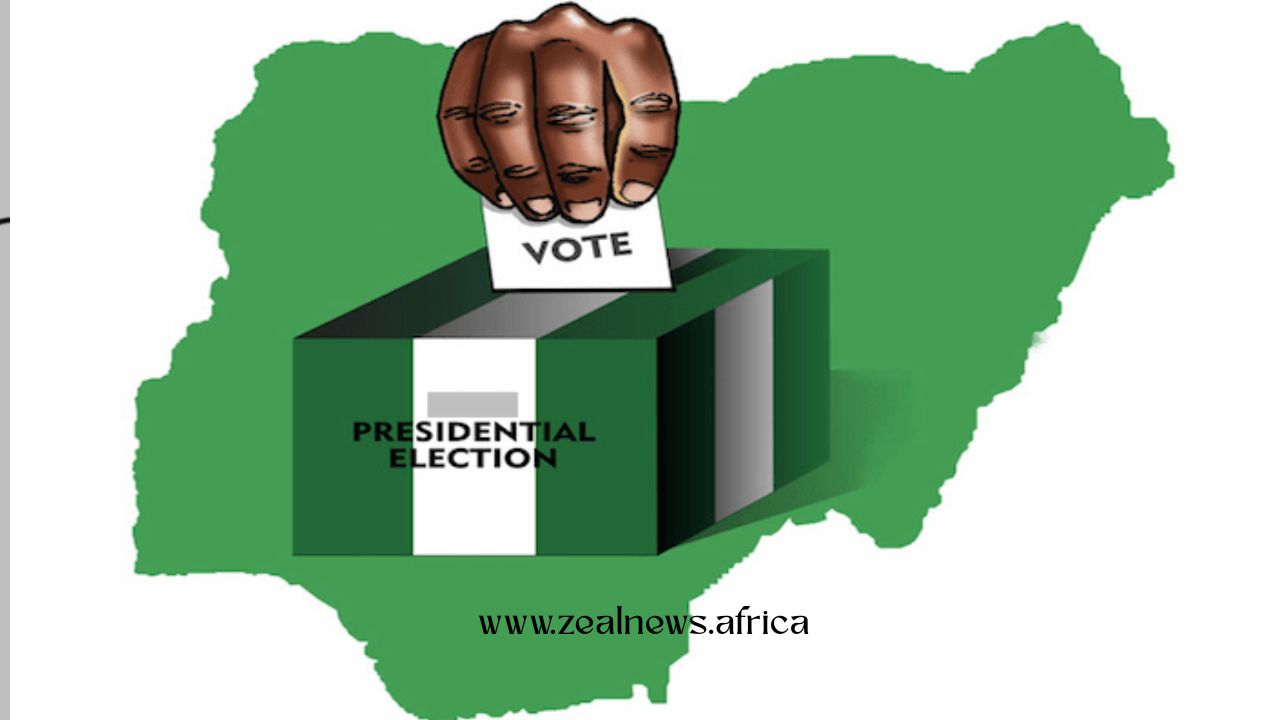
There is a friend of mine, let's call him Emeka. Emeka is the kind of person who genuinely believes in Nigeria.
I'm not talking about that kind of performative belief that only surfaces every four years on election day, but the kind that makes a man actually pay attention to what the government is doing with his money, argue about policy at a pepper soup joint, and genuinely consider, somewhere in the corners of his ambition, whether he could one day be the one making the decisions instead of enduring them.
Emeka is from Aba. He sells electronics, and he's very smart. He is fully connected to his community, has strong opinions about infrastructure and trade policy, and has been told by enough people over enough years that he should go into politics.
So when the party he was aspiring to push his ambition through, released its timetable for the elections, and Emeka saw the numbers attached to the presidential nomination form, he went quiet in a way that didn't need words.
One hundred million naira, not in total. Just to buy the form.
The Price Tag on Democracy

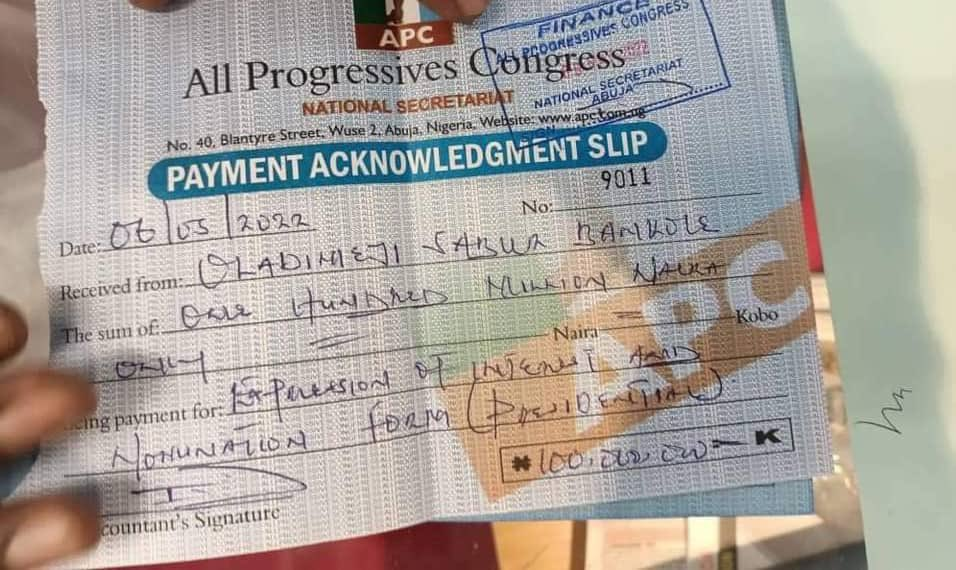
The All Progressive Congress (APC) has announced the price for its nomination form for its aspiring candidates, and the amount is pocket-widening.
Let's state what the APC actually announced, because the details deserve to sit in full view before anyone tries to soften them.
For presidential aspirants, the party pegged the expression of interest form at N30 million and the nomination form at N70 million, a combined total of N100 million.
This is before a single campaign poster is printed, before a single rally is held and even before a single vote is cast.
For the governorship form, the combined cost is N50 million. Senate aspirants are looking at N20 million. House of Representatives seats come at N10 million. State House of Assembly forms start at N6 million.
The party also noted that female aspirants, youths, and persons with disabilities are required to pay the full expression of interest fee and 50 per cent of the nomination fee, which, depending on how generously you read it, is either a concession or a confirmation that the baseline was always the obstacle.
Now, before this reads as an attack on one party, this is not a new pattern, and it is not exclusive to the APC. The Peoples Democratic Party (PDP) has historically attached similarly steep price tags to its nomination forms across election cycles, although not as high as The All Progressive Congress.
The Labour Party's 2023 forms drew significant commentary for their cost relative to the party's own positioning as an alternative movement.
Across the board, Nigerian political parties have institutionalised the price of participation as if it were simply a cost of doing business, which, for the people who can afford it, it is.
The question is what it is for everyone else.
The woman in Zaria who has spent fifteen years building a constituency of trust in her local government, through community health work, through advocacy, through showing up when the government didn't, cannot pay N6 million for a state assembly form.
The young man from Warri with an economics degree, a genuine grasp of what is broken in the Niger Delta, and the kind of local credibility that takes years to build, cannot pay N100 million for the right to be considered.
Emeka from Aba, with everything he has and everything he knows, cannot pay that either.
Democracy, the version we were all taught in school, is of the people, by the people, and for the people. The version currently on sale in Nigeria has a different price list.
A Democracy That Filters Before It Starts


The uncomfortable truth about nomination form pricing is that it doesn't just exclude the poor, it actively selects for a particular kind of candidate.
When the entry fee is N100 million, the people who pay it are not visionaries with community roots. They are, almost by definition, people who already have access to that kind of money or people backed by interests willing to provide it.
And interests that fund political ambitions rarely do so without expectations attached. This is how a democracy begins to hollow out from the inside.
All this happens not through a coup, or through a dramatic constitutional crisis. But through a quiet, bureaucratic mechanism, a form with a price, that ensures the people making decisions about roads, hospitals, schools, and security are drawn from the same narrow pool of wealth and connection, election after election.
There is a name for this in political science: elite capture. It is what happens when democratic institutions are technically functional but practically inaccessible to the majority of citizens they are supposed to represent.
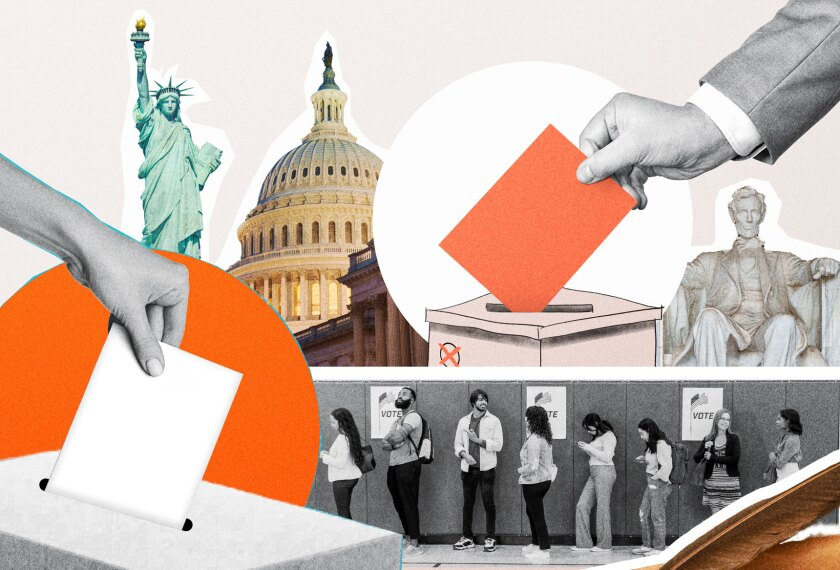
Nigeria has not just flirted with elite capture, it has institutionalised it. The nomination form is not the cause of the problem. It is the clearest visible symptom.
What makes this particularly sharp is the language the parties themselves use. Words like inclusion, grassroots, and representation appear regularly in party manifestos and press statements.
The same parties use those words while pricing out the grassroots entirely. The contradiction isn't accidental, it's architectural.
A system designed to look democratic while functioning as a gatekeeper serves those already inside it very well.
For Nigerians watching from outside the gate, the lesson being taught, repeatedly, across every election cycle, is that the system was not built with you in mind.
That lesson, absorbed long enough, produces apathy and apathy, more than any rigging or manipulation, is what keeps an unrepresentative political class in permanent rotation.
What You Can Do That Doesn't Cost N100 Million
Here is the part that matters, and it matters precisely because despair is the easiest and most useless response to all of this.
Buying a nomination form is not the only way to participate in democracy. In fact, for most Nigerians, it is never the entry point.
The entry point is the vote and it counts more than the political class would prefer you to believe, because if it didn't, the same political class would not spend so much money trying to buy, and manipulate it.
Voter registration is free and collecting your Permanent Voter Card (PVC) is also free. Showing up on election day is free.
These are not small things. They are the foundation of every political outcome in this country, including the ones that produced the same parties currently selling N100 million forms.
Political sensitisation, the conversations in markets, churches, mosques, schools, and WhatsApp groups about who is running and what they stand for, is not a waste of time.
It is how communities build collective will, and collective will is the only force that has ever moved a democratic system toward its stated ideals. The ballot has removed governments that money tried to keep in place. It can do it again.
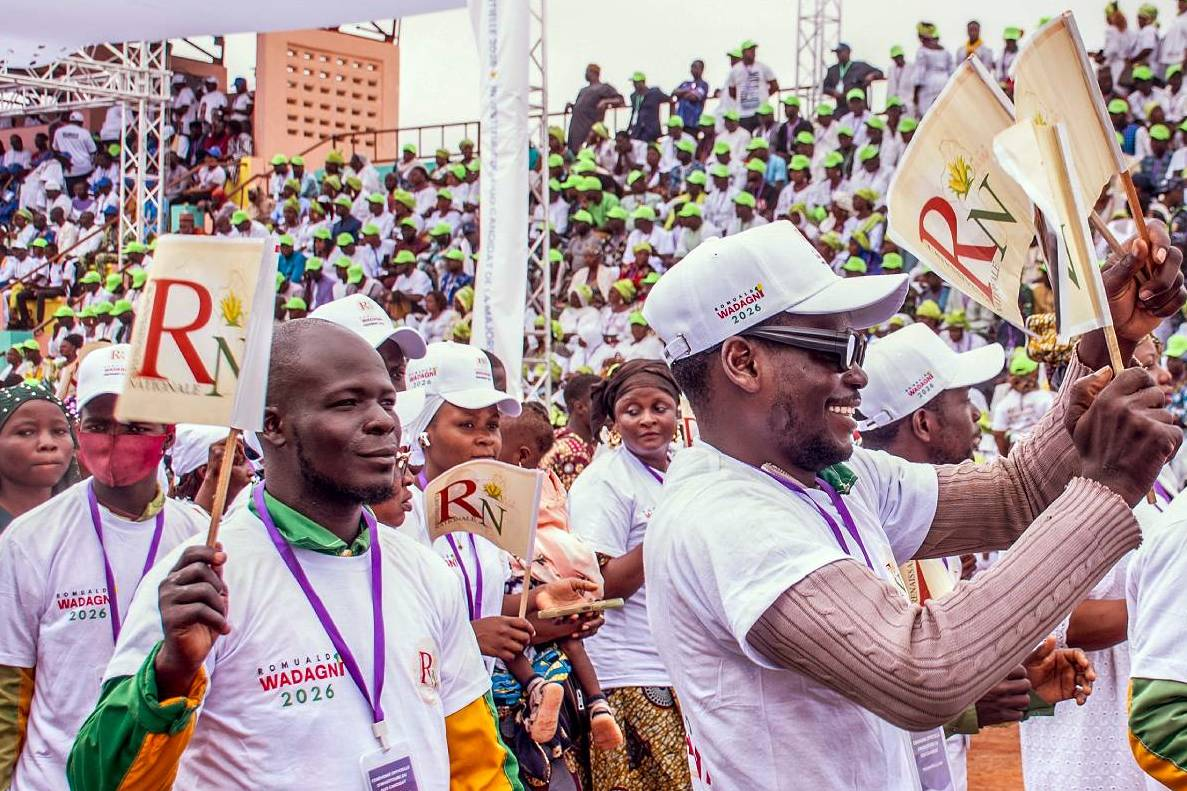
Aspiring politicians who cannot afford nomination forms can and do build influence through civil society, community leadership, policy advocacy, and party engagement at ward level, the level closest to actual people, and ironically the level most neglected by the same parties charging N100 million at the top.
Ward councillors shape daily governance more than most Nigerians realise. Local government elections are where political careers are actually built, not bought.
The system is skewed. That is not an opinion, it is the visible output of the numbers flying around. But a skewed system is not the same as a closed one, and the difference between those two things is where citizen action lives.
Emeka is still quiet, but he's thinking and thinking, in a country where the plan is for you not to, is already a form of resistance.
The real barrier to Nigerian democracy isn't just the nomination form. It's the belief that participation requires one.