If There Is One Thing That Will Kill Us Fast in Nigeria, It Will Be Our Impatience
Nigeria’s traffic crisis is not always the government’s fault. From the Lagos-Ibadan Expressway to everyday Lagos roads, impatience, reckless driving and refusal to stay in our lanes may be making our traffic nightmares worse.
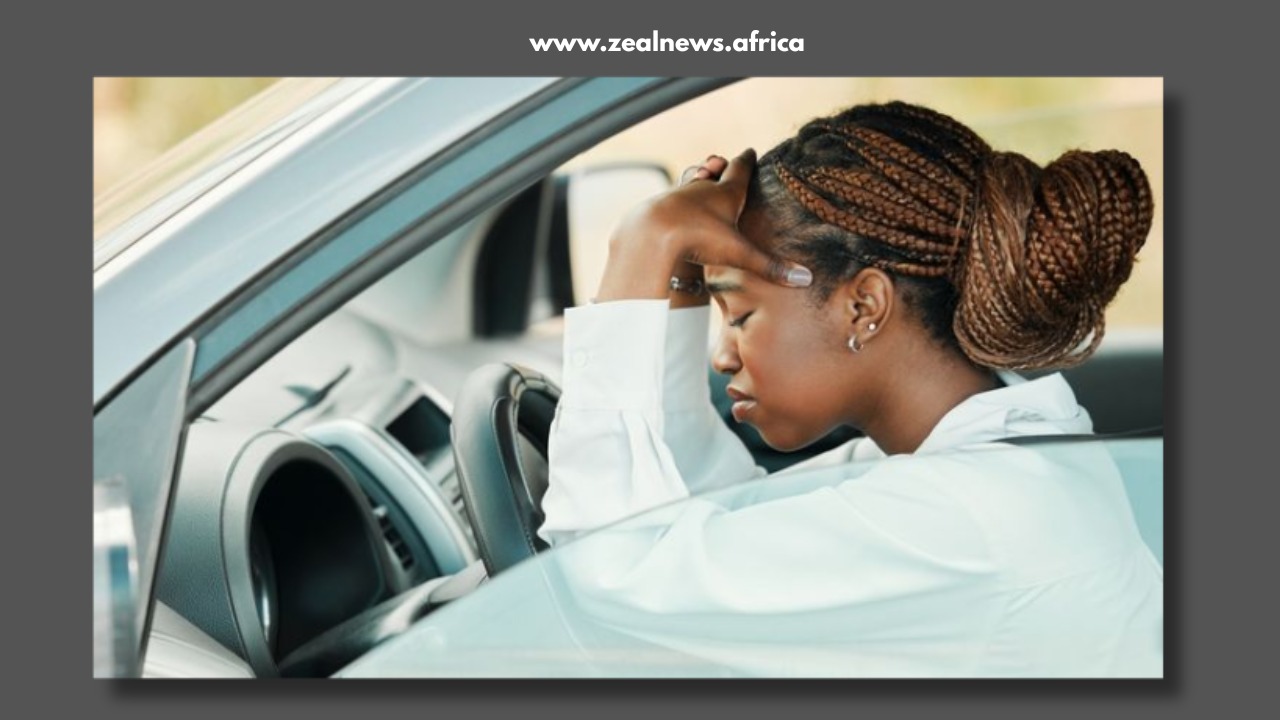
On Tuesday morning, thousands of Nigerians woke up and entered traffic. By Tuesday night, some of them were still there.
Some slept in their cars. Some abandoned their vehicles and trekked. Some spent six, seven, nine, even fourteen hours trying to complete journeys that should have taken a fraction of that time. Transport fares jumped, workdays disappeared, appointments were missed, and tempers rose.
And, naturally, Nigerians did what Nigerians do best. We blamed the government.
To be fair, there was plenty to blame.
The Kara Bridge was already undergoing repairs, reducing the amount of usable road space on one of the busiest corridors connecting Lagos and Ogun.Then, in the early hours of Tuesday, a 40-foot container truck reportedly developed a mechanical fault and crashed into six other vehicles, leaving seven vehicles involved in the pile-up.
The crash triggered an enormous backlog that eventually stretched from the Lagos-Ibadan Expressway into parts of Lagos.
So yes, infrastructure may be highly important, but then something else happened.
Some motorists, tired of sitting in traffic, decided that the traffic rules were apparently optional. They began driving against traffic.
And that is where I think we need to have an uncomfortable conversation.
What if one of the things making Nigeria unbearable is not only what the government fails to do, but our inability to wait?
How Many Minutes Are We Actually Trying To Save?
I have spent enough time commuting in Lagos to recognise the pattern. You are moving. then you stop.
Five minutes.
Ten minutes.
Twenty minutes.
The line is barely moving and everyone starts looking for an escape route. One driver suddenly turns into the lane meant for oncoming traffic. Another follows. Then another. Before you know it, everybody has become a traffic strategist.
A self employed LASMA
Someone is reversing. Someone is squeezing through a tiny gap. Someone has mounted the shoulder. Someone is shouting at a LASTMA official. Someone is honking as if the horn can physically move 300 cars. And someone has decided that because “I just want to pass”, the laws of road use no longer apply to them.
The irony is that everybody is trying to save five minutes. And collectively, they create another three hours of traffic.
This is exactly what happened on the Lagos-Ibadan Expressway this week.
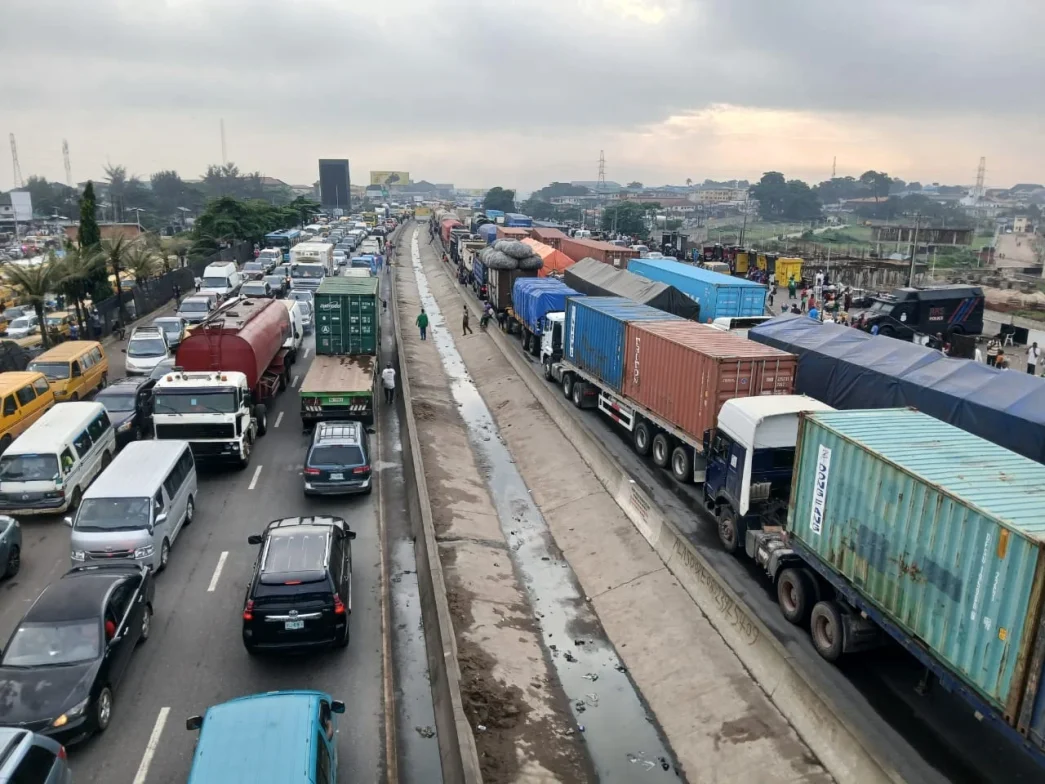

As the gridlock worsened, motorists drove against traffic to escape. According to reports, some of them eventually occupied three of the four lanes available to vehicles heading towards Lagos, leaving just one lane for legitimate traffic.
When those motorists later tried to rejoin the proper carriageway around OPIC, they created another obstruction.
Think about that.
The traffic was bad. People became impatient. Their impatience created another blockage. The new blockage made the traffic worse. The worse traffic produced more impatience.
And suddenly thousands of people were trapped inside a problem that human beings had helped manufacture.
At some point, this stops being a traffic problem. It becomes a behaviour problem.
We Are Too Eager To Find Someone Else To Blame
There is something very convenient about blaming the government.
Bad road? Government.
Traffic? Government.
Accident? Government.
Fuel price? Government.
Your neighbour refusing to indicate before changing lanes? Well, somehow, probably government too.
And again, government absolutely has responsibilities.
The Kara Bridge repairs themselves are a reminder of that. The Federal Government began replacing deteriorating expansion joints on September 8, with the project scheduled to run until September 22. The reduced road capacity has made the corridor particularly vulnerable to crashes, breakdowns and other disruptions.
Nobody should pretend infrastructure does not matter.
But there is a difference between acknowledging an infrastructure problem and pretending human behaviour has nothing to do with what happens afterwards.
A poorly designed or congested road can create a difficult situation.
Indiscipline can turn that difficult situation into chaos.
And this is not simply my personal theory.
The Federal Road Safety Corps has repeatedly linked road crashes to human behaviour. In 2025, the FRSC attributed thousands of road deaths to reckless driving and human error, while its road-safety messaging has specifically identified impatience, speeding and disregard for traffic rules as major contributors to crashes.
In the third quarter of 2025 alone, speed violations were recorded as the leading identified cause of road crashes, with 2,284 cases. Other recorded factors included dangerous driving, wrongful overtaking and route violations.
So perhaps the question is not simply:
“Why are Nigerian roads so bad?”
Perhaps sometimes we should also ask:
“Why do we behave so badly on the roads we already have?”
The Nigerian Hurry
I think impatience goes beyond traffic. It is almost a national reflex.
We want everything immediately. We want the salary immediately. The contract immediately. The promotion immediately. The food immediately. The bus immediately. The road to clear immediately. The traffic light to change immediately.
And when reality refuses to cooperate, we start looking for shortcuts.
We overtake dangerously. We drive on the shoulder. We use one-way roads. We jump queues. We squeeze into spaces that clearly do not exist. We see somebody trying to merge and speed up because apparently allowing one car into our lane will personally destroy our bloodline.
There is something deeply revealing about that.
We often behave as though everybody else's time is less valuable than ours. The person in front of us is wasting our time. The person beside us is delaying us. The person coming from the opposite direction is in our way. The traffic officer is annoying us. The pedestrian is too slow.
Everybody is an obstacle.
And because everybody thinks that way, the road becomes a battle for individual survival.
That is how you get four lanes behaving like eight. That is how you get a driver who has waited for an hour deciding that the only logical solution is to enter the lane meant for thousands of other people. That is how you turn a traffic jam into a deadlock.
And sometimes, into an accident.
Maybe Patience Is Also An Infrastructure
We talk about infrastructure as though concrete and asphalt are the only things that keep a country moving.
They are not.
Rules, discipline and trusts are infrastructures too.
Knowing that the person coming towards you will stay in their lane is a form of infrastructure. Knowing that the driver beside you will not suddenly cut across three lanes because they remembered their destination is a form of infrastructure. Knowing that everyone will wait their turn is a form of infrastructure.
Without those things, even a perfectly constructed road can become dysfunctional.
And this is where I think Nigerians need to look at ourselves.
Not politicians.
Not ministries.
Not LASTMA.
Ourselves.
Because you cannot build enough roads to compensate for millions of people determined to ignore the ones already available.
You cannot widen every road because drivers refuse to stay in their lanes.
You cannot construct your way out of every bad decision.
At some point, people have to accept that our individual decisions have collective consequences.
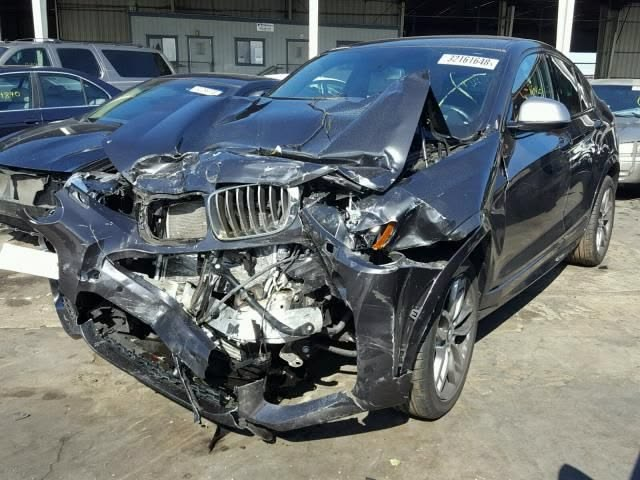
The driver who enters one-way is not just finding a clever shortcut. He is potentially creating another traffic jam.
The driver who overtakes dangerously is not merely “trying to get there early.” He may be putting another person's life at risk.
The person who refuses to wait because “I cannot come and kill myself” may ironically be contributing to the exact situation that keeps everybody on the road for hours.
And there is the tragedy of it.
We are often so desperate to avoid wasting time that we waste everybody's time.
We Cannot Keep Calling Everything A Government Problem
Nigeria absolutely needs better roads. Nigeria needs better traffic management. Nigeria needs stronger enforcement. Nigeria needs safer transport systems and better urban planning.
All of that is true.
But there is another uncomfortable truth.
The government cannot be inside every car with us.
It cannot physically hold the steering wheel when we decide to drive against traffic. It cannot slap our hands away from the wrong lane. It cannot force us to stop overtaking when we are late. It cannot make us understand that sometimes, sitting still for thirty minutes is better than spending three hours creating a problem for ourselves and everyone behind us.
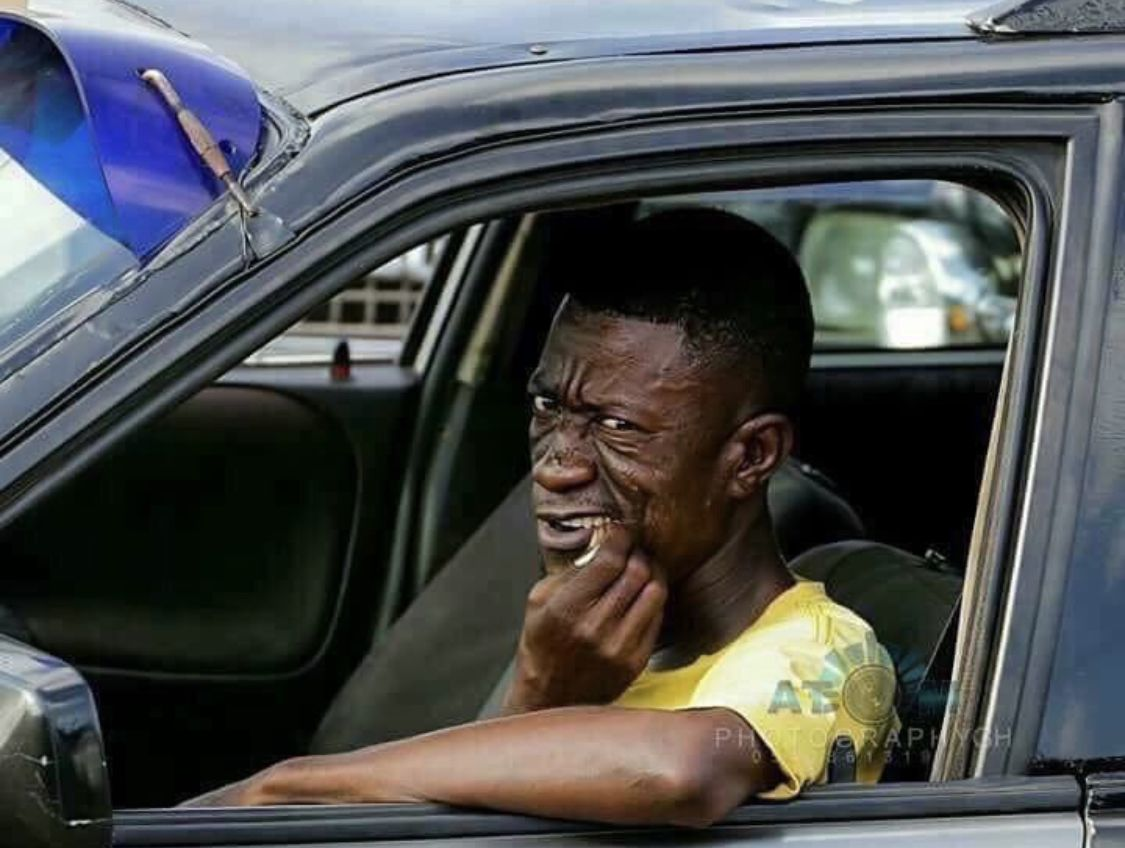
We need to learn something painfully boring.
Wait.
Stay in your lane.
Follow the traffic.
Let the people coming from the opposite direction pass.
If the road is blocked, it is blocked.
You are not the only person going somewhere. You are not the only person who has somewhere important to be.
And your emergency does not automatically become everybody else's emergency.
The events around Kara this week were a perfect demonstration of what happens when infrastructure problems collide with human impatience. The crash and bridge repairs created the conditions for severe congestion, but motorists driving against traffic added another layer of obstruction, turning an already terrible situation into an even bigger one.
if there is one thing that might eventually kill us in this country, it may not be bad roads alone.
It may be this desperate need to be first.
First out of the traffic.
First through the junction.
First into the bus.
First to overtake.
First to arrive.
First to win.
Even when trying to be first means making everybody lose.
Maybe Nigeria does not only need better roads.
Maybe Nigeria needs Nigerians who can stay in their lane.