If Change Is Constant, Then Change Itself Is Changing
Change is the only constant, but what if change itself is changing? This essay explores how transformation has shifted from gradual to accelerating, why we are living through the change of change, and what it means to navigate a future that no longer moves in straight lines.
You have heard it countless times, and in some scenarios, it's always exhausting to hear.
Conversations and talks like this are delivered in the measured tone of someone who has always believed that they have lived enough to know, with the popular mantra: change is the only constant.
It is a kind of statement that arrives early in life and settles in like a reliable piece of furniture in one part of your brain.
Let go of what is familiar, it tells us. Don't cling to people, places, or versions of yourself that were only ever passing through.
Everything changes, including you. The job, the relationship, the city, the person staring back at you in the mirror on a quiet Tuesday, it all moves before you realise what is happening.
The advice is well-intentioned, and much of it is true. We do outgrow things, friendships that once held the whole weight of a season eventually thin.
Dreams? Dreams and aspirations that once felt urgent usually end up becoming footnotes in the history of our minds.
The person you were at twenty would not recognise your priorities at thirty, and that is not tragedy, it is the work of living.
But here is the question that rarely follows: if change is constant, what exactly is doing the changing? And more urgently, is change itself still the same thing it used to be?
Change Was Never a Soldier at the Door
The most disorienting thing about change is how quietly it arrives before we name it. It doesn't announce itself.
It isn't a letter in a red envelope or a knock at the door. It lives in the silence that accumulates in the space between friends before they become strangers.
It lives in the small decision not to board a bus, and then suddenly there is no bus. It lives in the compounding weight of missed classes and tests, each one unremarkable on its own, until the notice board makes the cost visible all at once.
We are not passive witnesses to change. We are participants in it, and often, without realising it, we are the change.
Every habit quietly practised or neglected, every small choice repeated until it becomes character, every conversation that slightly reshapes how we see ourselves, these are not reactions to change.
Social Insight
Navigate the Rhythms of African Communities
Bold Conversations. Real Impact. True Narratives.
They are change, accumulating in the daily compound interest of who we are becoming.
The older understanding of change was that it happened in decades. Generations defined by a single war, a single economic collapse, a single technological breakthrough.
You had time to adjust. You had time to grieve what was lost before the next wave arrived.
That understanding, dear readers, is no longer perfectly accurate and applicable.
Change Is No Longer Constant; It Is Accelerating
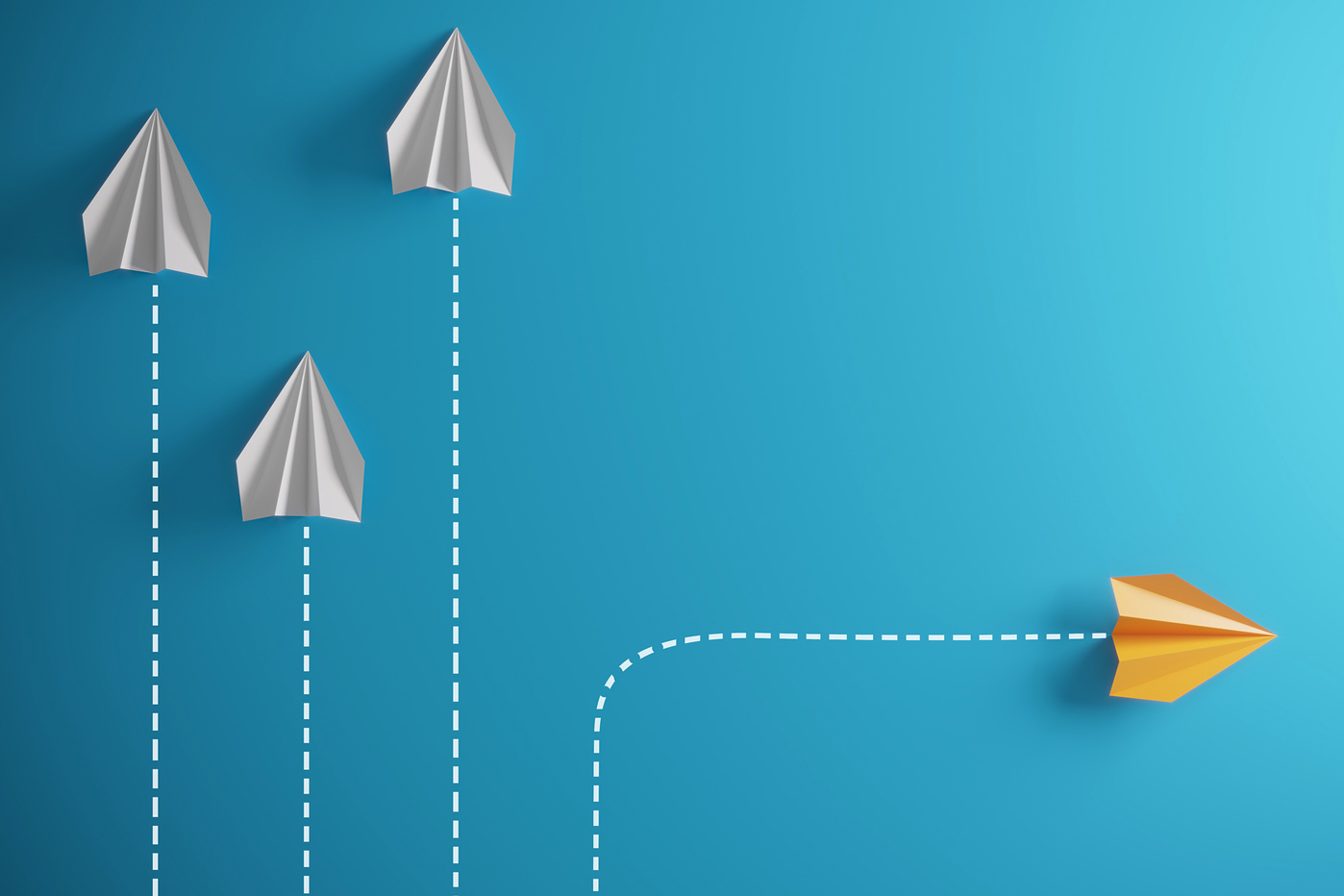
Technology is not just changing industries. It is compressing the timeline on which change itself operates.

Artificial intelligence (AI) is altering the trajectory of fields that took generations to build, accounting, medicine, journalism, law, education, in windows measured in months.
Social media hasn't just changed how we communicate; it has altered how culture forms, how attention works, how identity is built and dismantled in public.
Economic conditions that once shifted across a decade now pivot on a quarterly earnings report or a single geopolitical event thousands of miles away.
Things are happening before people have finished thinking about whether they should. Decisions are being made at the speed of an algorithm, not the speed of reflection.
And the consequence is that many people are not adapting to change; they are perpetually catching up to it, which is a different thing entirely.
Career certainty, once handed down like an heirloom, is now a negotiation. The profession that was stable at the start of a degree may not exist in the same form by graduation.
Economic assumptions that parents built their lives on, that hard work compounds predictably, that loyalty to an institution is eventually reciprocated, that tomorrow will broadly resemble today, are no longer reliable maps.
The future, which once felt like a distant country you had time to prepare for, now feels like a moving target. It doesn't wait.
There is also a philosophical question worth sitting with here. If change is constant, then by definition, nothing about change should itself change.
A constant doesn't accelerate. It doesn't shift shape or take new form. It doesn't become layered and recursive.
Social Insight
Navigate the Rhythms of African Communities
Bold Conversations. Real Impact. True Narratives.
So perhaps the more honest observation is this: we were not watching change all along. We were watching things change, while assuming the nature of change itself was fixed. It wasn't. It isn't.
Or, and this is the harder thought, perhaps we are the ones who are the true constant.
We remain human, limited in our processing speed, still needing sleep and meaning and belonging, while the world around us changes itself at a pace our nervous systems were never designed for.
If that is true, then everything is changing around a creature that fundamentally stays the same, and the gap between those two speeds is where most of the anxiety of modern life actually lives.
Living Through the Change of Change
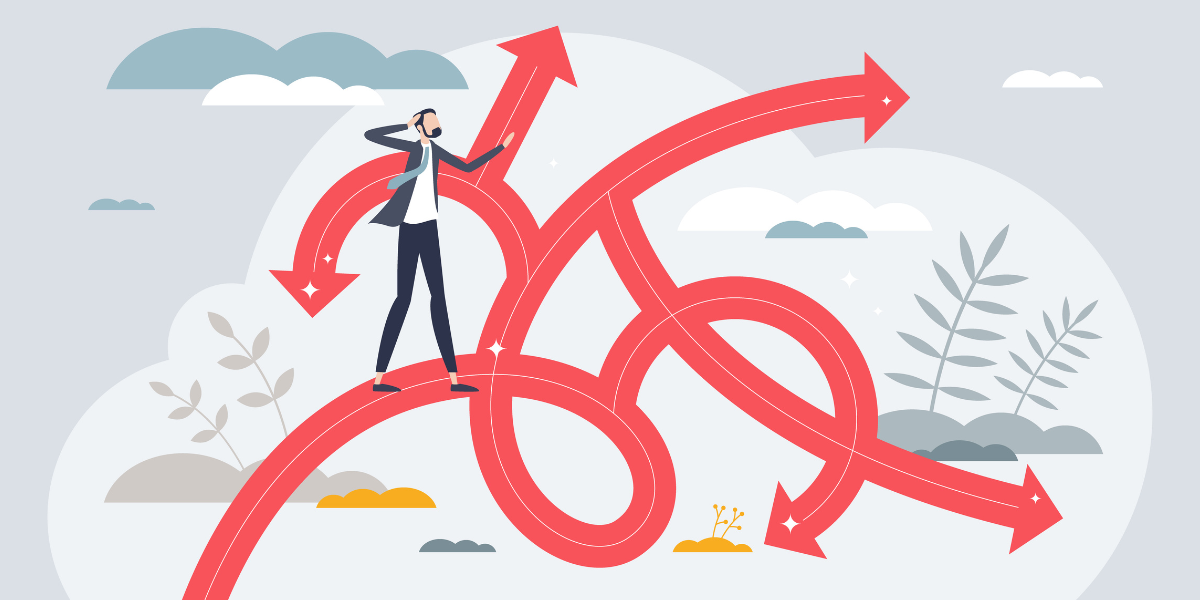
There has always been change. That part is not new. But today's change is layered in a way previous generations did not experience, a change that loops back on itself, accelerates its own acceleration, and refuses to settle into a pattern long enough to be called a constant.
The future is no longer linear or fully predictable r. It doesn't progress in the clean arc of cause and effect that old frameworks relied on.
It branches, collapses, restarts, and expectations that were reasonable last year become naive this year. What was cutting-edge at the beginning of a career can become obsolete before the career matures.
We are not simply living through change. We are living through the change of change, a period in which the very nature of transformation has transformed.
The rules of adaptation are themselves being rewritten while we try to apply them.
Understanding this distinction may be the most honest thing we can do right now, not to overcome it, not to master it, but to see it clearly.
The first step to navigating an accelerating world is resisting the comfort of frameworks and structures built for a slower one, including the reassurance that change, at least, is something we can count on to stay the same.
It isn't, and that might be the most important change of all.