How the Bunyoro-Kitara Tribe Mastered Brain Surgery and C-Sections Centuries Before Modern Medicine
Long before hospitals and antibiotics, Uganda’s Bunyoro-Kitara tribe performed complex brain surgeries and life-saving C-sections with remarkable success. Here's story.
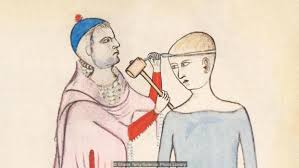
When people talk about groundbreaking medical achievements, they often jump straight to European surgical pioneers or modern hospital breakthroughs. Yet, long before antiseptics and anaesthesia became standard in Europe, African societies were performing procedures so advanced they startled colonial doctors. Among them, the Bunyoro-Kitara tribe of Uganda holds a special place in medical history, not just for their deft handling of childbirth through Caesarean sections, but also for their place in the wider East African tradition of intricate, and often lifesaving, surgical techniques.
This is a story that dismantles the myth of Africa as a passive recipient of medical progress. Instead, it reveals a continent that was actively shaping the global story of medicine, with its own sophisticated systems of knowledge, tools, and techniques.
Ancient Neurosurgery in East Africa: Trepanation and Beyond
Long before “neurosurgery” became a specialized discipline, the people of East Africa were performing procedures that required extraordinary anatomical understanding and precision. Trepanation, the surgical removal or drilling of part of the skulls among the oldest surgical interventions known to humanity, found in prehistoric sites from the Andes to Europe. But in East Africa, it was not a rare curiosity; it was a practiced, perfected tradition.

Photo Credit: National Geographic | A skull found by archaeologists that had been trepanned
Archaeological finds from Uganda and western Kenya suggest that trepanation may have been performed as far back as the early Iron Age. The Kisii of Kenya, a Bantu-speaking people culturally related to communities in Uganda, are especially well-documented in this regard. Ethnographers and early colonial observers described Kisii healers carefully scraping or drilling small, circular openings in the skull using tools of sharpened stone, obsidian, and later iron or copper.

Photo Credit: Digventures | Some of the tools used for Trepanation
The purposes were both medical and spiritual. Medically, trepanation relieved intracranial pressure from head injuries, often the result of falls, animal attacks, or warfare. It could also treat symptoms such as seizures or severe headaches. Spiritually, it was believed to allow “bad winds” or malevolent spirits to escape from the head, restoring balance to the body. Patients were given herbal pain remedies, and the operation site was cleaned with fermented banana wine; an antiseptic step that would not be adopted in Europe for centuries.
Remarkably, survival rates were high enough for anthropologists to find evidence of healed skulls, indicating that patients often lived for years after their surgery.
The Bunyoro-Kitara Tribe’s Mastery of the Caesarean Section
While trepanation is impressive, the Bunyoro’s work in obstetrics astonished the outside world even more. In 1879, Robert W. Felkin, a Scottish medical missionary, traveled to Uganda and witnessed a procedure that would become legendary in medical history: a successful, fully aseptic Caesarean section performed under traditional methods.

Photo Credit: African Heritage | The knife used for the c-section operation in 1879
At that time, in most of Europe, a C-section almost always meant the death of the mother. In many cases, the operation was performed only after the mother had died in labor, in an attempt to save the baby. If attempted on a living woman, the risk of infection, hemorrhage, and shock was astronomically high.
History
Rewind the Stories that Made Africa, Africa
A Journey Through Time, Narrated with Insight.
What Felkin observed among the Bunyoros was almost the reverse: the mother survived, recovered quickly, and began breastfeeding her healthy baby within hours.

Photo Credit: African Heritage | Sketch of Caesarean delivery in Uganda in 1879, by Felkin in Edin. Med. J. 1884
Step-by-Step: How the Bunyoros Performed a C-Section
Felkin’s detailed notes remain one of the clearest ethnographic records of the procedure:
Preparation & Sedation – The mother was made to drink a generous amount of banana wine, which served as both a mild sedative and a disinfectant. The abdominal area was then washed thoroughly with the same liquid.
The Incision – Using a clean, sharp iron knife, the healer made a swift midline incision through the abdominal wall and uterus, minimizing time between exposure and delivery.
Delivery of the Child – Assistants stood ready to lift out the infant immediately and begin postnatal care.
Hemostasis (Bleeding Control) – A red-hot iron rod was applied directly to blood vessels to cauterize them — an advanced technique for the time, which prevented major blood loss.
Closing the Wound – Instead of sutures, the abdominal layers were held together with seven smooth, sharpened iron spikes. Bark cloth strips were tied to keep the wound stable.
Dressing and Protection – A paste made from chewed medicinal roots was applied over the wound, then covered with warmed banana leaves for both heat and sterility.
Postoperative Care – The patient was positioned briefly in an inclined or inverted posture to allow fluids to drain. She was then laid on a warmed bed and given herbal tonics to restore strength.
The mother Felkin observed made an “excellent recovery,” with no signs of infection — an astonishing outcome compared to the mortality rates of European hospitals at the time.
Tools and Materials: A Local Pharmacopoeia of Healing
The genius of the Bunyoro-Kitara healers was not only in their surgical skill, but in their resourcefulness with local resources:
Banana wine – antiseptic, mild sedative, symbolic purifier.
Red-hot iron rods – cauterization to prevent hemorrhage.
Iron spikes – secure closure without sewing, minimizing tissue trauma.
Bark cloth – flexible, breathable wound binding.
Medicinal root paste – anti-inflammatory and antibacterial.
Warmed banana leaves – natural sterile covering.
Many of these materials, particularly the antiseptic and anti-nflammatory plant extracts, have since been shown through modern research to possess genuine medicinal properties.

Photo Credit: Perplexity | Bunyoro elders share centuries-old surgical knowledge in a Ugandan village, preserving advanced medical traditions long before modern medicine
Cultural and Spiritual Dimensions
Surgery among the Bunyoro-Kitara tribe was never a purely mechanical act; it was deeply enmeshed in cultural and spiritual frameworks.
Childbirth was considered both a biological event and a sacred passage. The use of banana wine symbolized ritual cleansing. Protective chants and charms were often present in the room to ward off evil influences. The placenta was treated with reverence, buried with protective measures such as a small fire or thorn barricade to shield it from malevolent forces.
Community participation was vital. Female relatives and attendants surrounded the mother, not only to assist physically but to offer emotional reassurance, prayers, and blessings.
Comparisons with Contemporary European Medicine

Felkin’s account forces a striking comparison:
In Europe, hospital births in the 19th century were plagued by sepsis, due in part to doctors moving between patients — and even from morgues — without washing hands.
In Bunyoro-Kitara’s practice, antiseptic cleansing, rapid operation times, and controlled bleeding reduced infection risk dramatically.
The irony is sharp: the so-called “modern” world was losing mothers and babies to infections that Ugandan traditional medicine had already learned to prevent.
Legacy and Influence
While colonial medical systems often dismissed African methods as “primitive,” there is evidence that early exposure to cases like Felkin’s influenced medical debates in Britain and beyond. They challenged entrenched beliefs about what was possible under “non-Western” medicine and helped spark conversations about antisepsis, rapid surgical intervention, and postpartum care.
History
Rewind the Stories that Made Africa, Africa
A Journey Through Time, Narrated with Insight.
Today, Uganda’s modern medical institutions acknowledge this heritage. In rural areas, midwives and healers continue to incorporate aspects of traditional birth care; herbal tonics, certain positioning techniques, and community-based recovery rituals, alongside modern obstetrics.
Why This History Matters
The Bunyoro’s mastery of complex surgery is more than a historical curiosity; it is a reminder that medical knowledge has multiple lineages. Africa’s contributions have often been erased or downplayed in global histories of science and medicine. Yet the evidence, in the form of healed skulls, living mothers, and healthy children, is undeniable.
In telling these stories, we are not romanticizing the past or suggesting that traditional methods should replace modern medicine wholesale. Rather, we recognize that innovation, adaptability, and human ingenuity are universal, and that Africa’s role in that story is both profound and ongoing.
To cut it short, long before sterile gloves, antibiotics, or surgical theatres, Bunyoro-Kitara tribe of Uganda were performing brain surgeries and Caesarean sections with a precision and survival rate that would have impressed the best European doctors of their time. That legacy, grounded in both scientific skill and cultural meaning, deserves to be remembered as one of Africa’s great contributions to the history of medicine. This is Africa and this is one of our stories.