Chaos in the Middle East: Flights Out Empty as Elites Flee War Zone

The Middle East has recently been plunged into chaos following a series of US strikes on Iran, leading to severe travel disruptions and creating significant challenges for both American and British nationals attempting to evacuate the volatile region. This period has starkly highlighted disparities in evacuation opportunities, with well-connected individuals sometimes securing swift exits while millions of ordinary citizens remain stranded.
Among those who managed to escape were a group of six Americans, including Trump adviser Alex Bruesewitz, dog-walker Sarah Daither, and former lobbyist Jay Footlik. Bruesewitz chartered a private jet for the group, enabling their departure amidst an active war zone where Iranian missiles were reportedly flying overhead, airports were closed, and the US Embassy had advised employees to shelter-in-place. Bruesewitz described it as the “craziest experience of my life” and expressed gratitude for reaching safety.
To facilitate their escape, Bruesewitz leveraged his White House connections alongside officials in Saudi Arabia and Qatar. White House Deputy Chief of Staff James Blair and Representative Anna Paulina Luna were instrumental in securing a safe route. Additionally, US Ambassador Kimberly Guilfoyle, then-fiancé of Donald Trump Jr., and her staff ensured a safe landing for the private jet in Athens, Greece, despite the short notice. Bruesewitz also extended thanks to Saudi officials for their assistance in their departure. He reportedly plans to remain in the region to help coordinate further private evacuations.
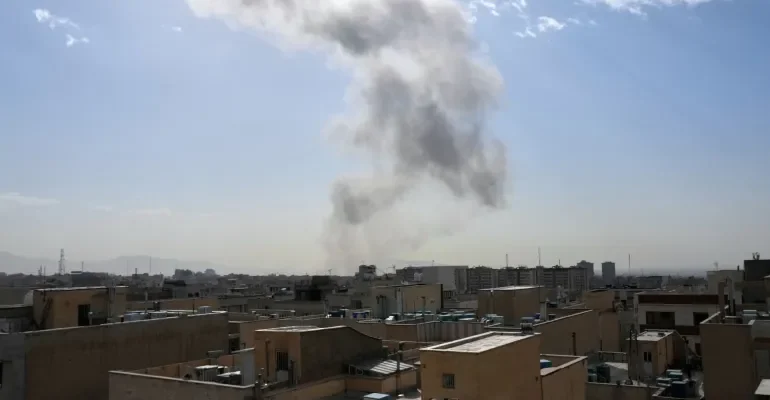
However, the plight of Bruesewitz’s group contrasted sharply with the broader situation for Americans. More than a million ordinary Americans were believed to be trapped without a clear way out. The US State Department issued urgent instructions for Americans in 16 countries, including Israel, Qatar, Iran, and Saudi Arabia, to “DEPART NOW” using commercial transportation due to “serious safety risks.” The US Embassy in Jerusalem warned its staff to shelter in place, stating it was unable to evacuate anyone, while Tel Aviv airport remained closed and Jordan’s Queen Alia International Airport operated with limited service. US and Israeli forces had launched a fresh wave of strikes on Tehran, with President Trump announcing the initial US strike from his Mar-a-Lago estate, citing the need to defend American people from the Iranian regime’s “imminent threats.”
A similar, yet distinct, evacuation challenge unfolded for British citizens. A British Airways evacuation flight, BA80, from Muscat, Oman, to Heathrow, departed with more than 100 empty seats despite thousands of British nationals registering as stranded in the Gulf. The twin-jet Boeing 787-9 Dreamliner carried approximately 100 pilots and crew members, significantly fewer than its commercial passenger capacity of 220-300.
British Airways explained that it does not typically operate flights to Oman and required special permission to land. Consequently, the airline lacked the necessary baggage crews or passenger services to accommodate commercial passengers, making it easier to evacuate crew members due to different safety requirements. This situation drew sharp criticism from stranded Britons, with Andrew Rae, a retired ship broker, calling it “pathetic” and expressing frustration at the lack of assistance, having to rebook at a cost of £4,000 for himself and his wife. The Foreign Office advised Britons to shelter in place as Iranian strikes continued, while also working on
You may also like...
Late Setback for Liverpool in Shock Loss to Bottom Wolves

Liverpool suffered a crushing 2-1 defeat to bottom-placed Wolverhampton Wanderers, conceding a 94th-minute winner, marki...
Exclusive Look: Dylan Sprouse Returns in Upcoming 2026 Thriller!

Josh Duhamel and Dylan Sprouse team up for the explosive action-thriller "Neglected," directed by David Lipper. The film...
Shockwaves: Trent Reznor Hints at Nine Inch Nails' Impending End

Nine Inch Nails frontman Trent Reznor hinted at the potential end of the band's touring during a recent concert, while a...
Emmys Gala: Regina Spektor Charms at Children's & Family Awards, Full Winners Unveiled

The fourth annual Children’s & Family Emmy Awards, hosted by John Tartaglia and opened by Regina Spektor, celebrated top...
Zimbabwe Tourism Authority Cracks Down, Closes 28 Unregistered Facilities

The Zimbabwe Tourism Authority has launched a major operation, shutting down 28 unregistered tourism facilities across s...
Deadly Collapse Rocks Joburg: Illegal Construction Blamed for Nine Fatalities

A building collapse in Ormonde, Johannesburg, tragically killed nine workers, with Mayor Dada Morero confirming the deve...
Chaos in the Middle East: Flights Out Empty as Elites Flee War Zone
Amidst the chaos of US strikes on Iran, American and British citizens faced challenging evacuations from the Middle East...
Trump's 'No Churchill' Jibe Ignites UK Political Storm as Starmer Faces Scrutiny

Donald Trump launched a scathing attack on Keir Starmer, branding him 'no Churchill' and criticizing the UK's perceived ...