Before Modern Borders: The Kanuri People and the Empire That Connected Africa
Long before modern borders divided Nigeria, Chad, Niger and Cameroon, the Kanuri people and the Kanem-Bornu Empire helped connect communities across the Lake Chad region.
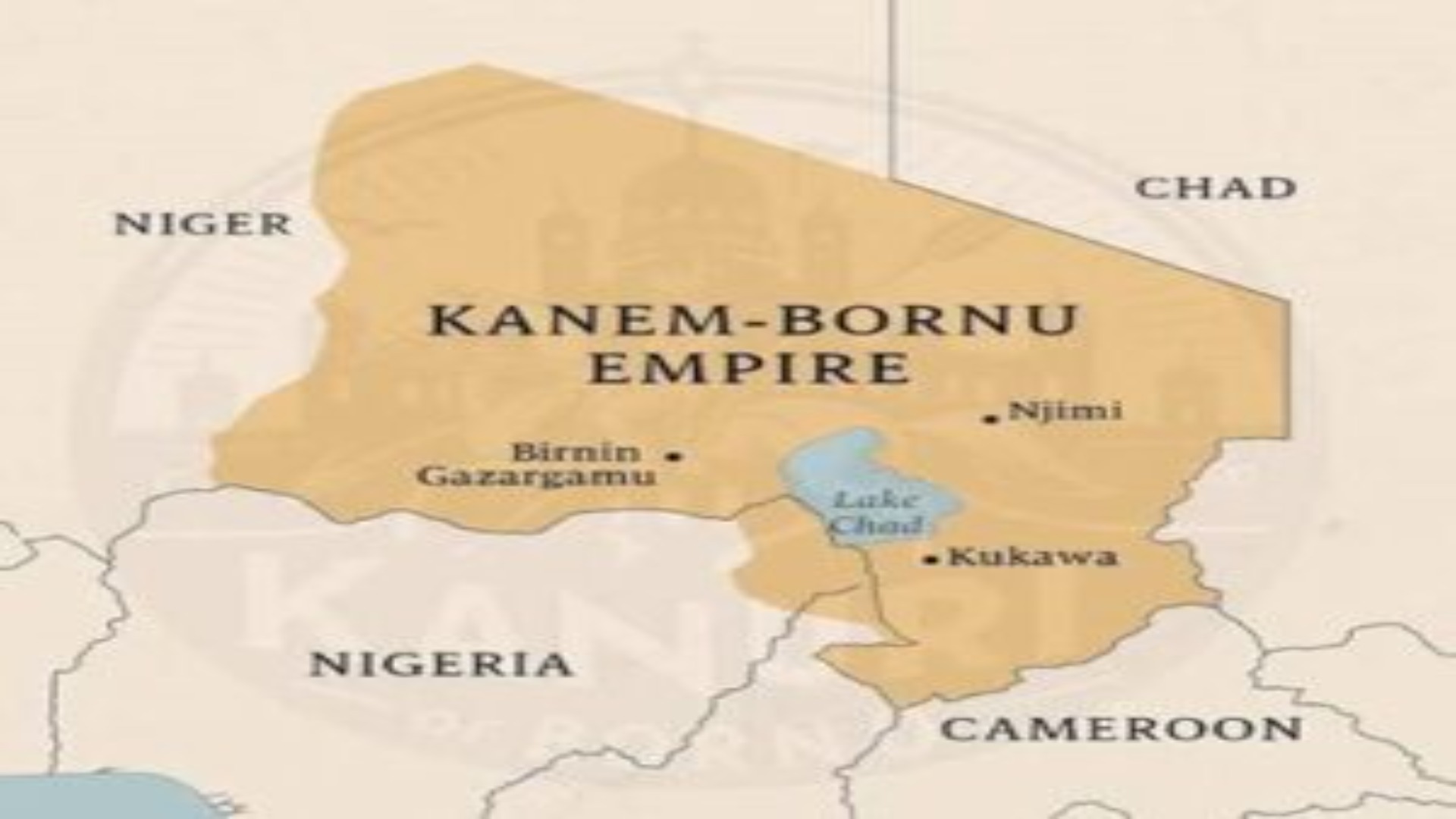
Long before Nigeria, Chad, Niger and Cameroon became separate modern countries, communities around Lake Chad were already connected through trade, migration, religion and political alliances.
At the heart of this history was the Kanem-Bornu Empire, one of Africa’s longest-lasting precolonial states. Its story is closely linked to the Kanuri people, whose language, traditions and historical institutions helped shape life across the Lake Chad region for centuries.
The empire’s history stretches back roughly a thousand years or more, although historians debate the precise date of its beginnings.
But how did this empire rise, what made it powerful, and how did its influence survive after its political power declined?
How the Kanem-Bornu Empire Began
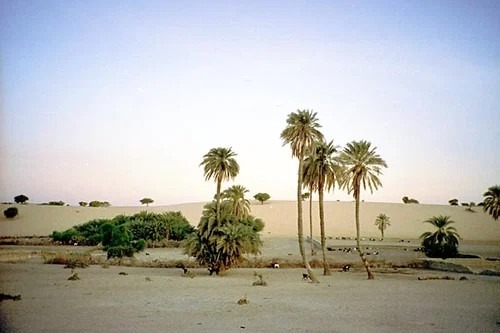
The story begins in Kanem, east of Lake Chad, inan area that is now part of Chad. Around the ninth century, the Kingdom of Kanem emerged as a significant political power, associated with ancestors of the Kanembu people and the ruling Sayfawa dynasty.
Its location was important, because Lake Chad supported fishing, farming and other livelihoods, while routes passing through the surrounding region connected communities with North Africa and the wider trans-Saharan trading world.
As Kanem grew, its rulers extended their authority through warfare, diplomacy and control of trade routes. Merchants moved goods between communities, while political relationships helped maintain connections across a large and diverse region.
By the eleventh century, the ruling elite had adopted Islam, strengthening links with Muslim scholars, merchants and states beyond the Lake Chad basin. Islam gradually became an important part of the empire’s political and intellectual life, although local customs and traditions continued to influence society.
The empire’s development was not simply the achievement of one ruler or one ethnic group. It involved generations of political organization and interactions among different communities living across the region.

The Kanuri People, Trade and the Empire’s Rise
The Kanuri people became closely associated with the Bornu state, particularly after the political centre shifted westward from Kanem.
During the late fourteenth century, conflicts and attacks by the Bulala weakened the ruling dynasty’s position in Kanem.
The rulers eventually moved their political centre to Bornu, west of Lake Chad. Rather than disappearing, the state reorganized itself and continued under the name Kanem-Bornu.
History
Rewind the Stories that Made Africa, Africa
A Journey Through Time, Narrated with Insight.
Over time, the history of the region helped shape the identity and traditions of the Kanuri people.
Trade was central to the empire’s influence.
Caravans travelled across desert routes, linking the Lake Chad region with North Africa, because salt, livestock, agricultural products, textiles and other goods moved through these networks.
The wider trans-Saharan trade also involved commodities such as ivory and enslaved people, revealing that these connections brought wealth and opportunities to some while also involving exploitation and suffering.
One of the empire’s most notable rulers was Mai Idris Alooma, who ruled in the late sixteenth century and early seventeenth century.

He is remembered for strengthening the military, improving administration and expanding the empire’s influence. His reign became one of the high points in Kanem-Bornu’s history.
Yet the empire’s significance went beyond the goods being exchanged, because with the trade routes which connect the merchants, scholars, travellers and political leaders.
They helped ideas, religious traditions and knowledge circulate between communities that were separated by long distances.
The Lake Chad region was therefore not an isolated corner of Africa. It was part of a wider network connecting societies across the continent and beyond.
What Happened to the Empire, and What Remains Today?
An empire that survived for centuries did not disappear because of one event alone.
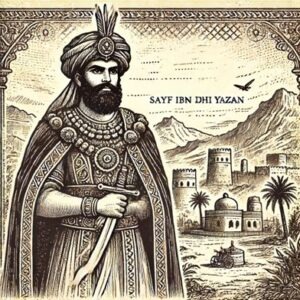
Over time, Kanem-Bornu faced internal political disputes, changing trade patterns, environmental pressures and conflicts with neighbouring powers. In the early nineteenth century, Fulani-led forces captured the capital, Ngazargamu, in 1808.
The scholar and military leader Muhammad al-Kanemi helped resist further expansion and established a new political order in Bornu.
The old Sayfawa dynasty eventually lost power, while the al-Kanemi dynasty became dominant.
Later, in 1893, the Sudanese warlord Rabih az-Zubayr conquered Bornu, and European colonial expansion subsequently divided the former empire’s territories among colonial administrations, ending its independence as a major regional state.
History
Rewind the Stories that Made Africa, Africa
A Journey Through Time, Narrated with Insight.
But the end of an empire does not mean the end of its people or culture.
Today, Kanuri communities remain especially prominent in northeastern Nigeria, with communities also found in Niger and northern Cameroon.
But related Kanembu communities live in Chad. The Kanuri language, Islamic traditions, cultural practices and historical institutions remain important parts of the region’s identity.
Traditional institutions in Borno State, Nigeria, also preserve links to the history of the old state.
The legacy of Kanem-Bornu also reminds us that modern national borders do not always reflect the older relationships between neighbouring communities. Families, languages, trade and cultural traditions can stretch across borders that were established much later.
Conclusion
The history of the Kanuri people and the Kanem-Bornu Empire is a reminder that Africa’s past was shaped by more than isolated kingdoms or individual rulers. It was also shaped by the connections people built across landscapes, markets and generations.
Lake Chad was not merely a body of water surrounded by settlements. It was part of a wider world where people traded, travelled, built political alliances and shared ideas.
The empire eventually lost its independence, but the communities it helped shape continued to live, adapt and preserve their heritage.
The borders may have changed, but the history connecting the people of the Lake Chad region did not simply disappear.