African Female Stance on Heritage: Whose Legacy Is It Anyway?
For generations, African women have preserved identity but been denied inheritance. This powerful piece explores how women across the continent are reclaiming their right to land, legacy, and voice — challenging age-old customs and reshaping what heritage truly means.
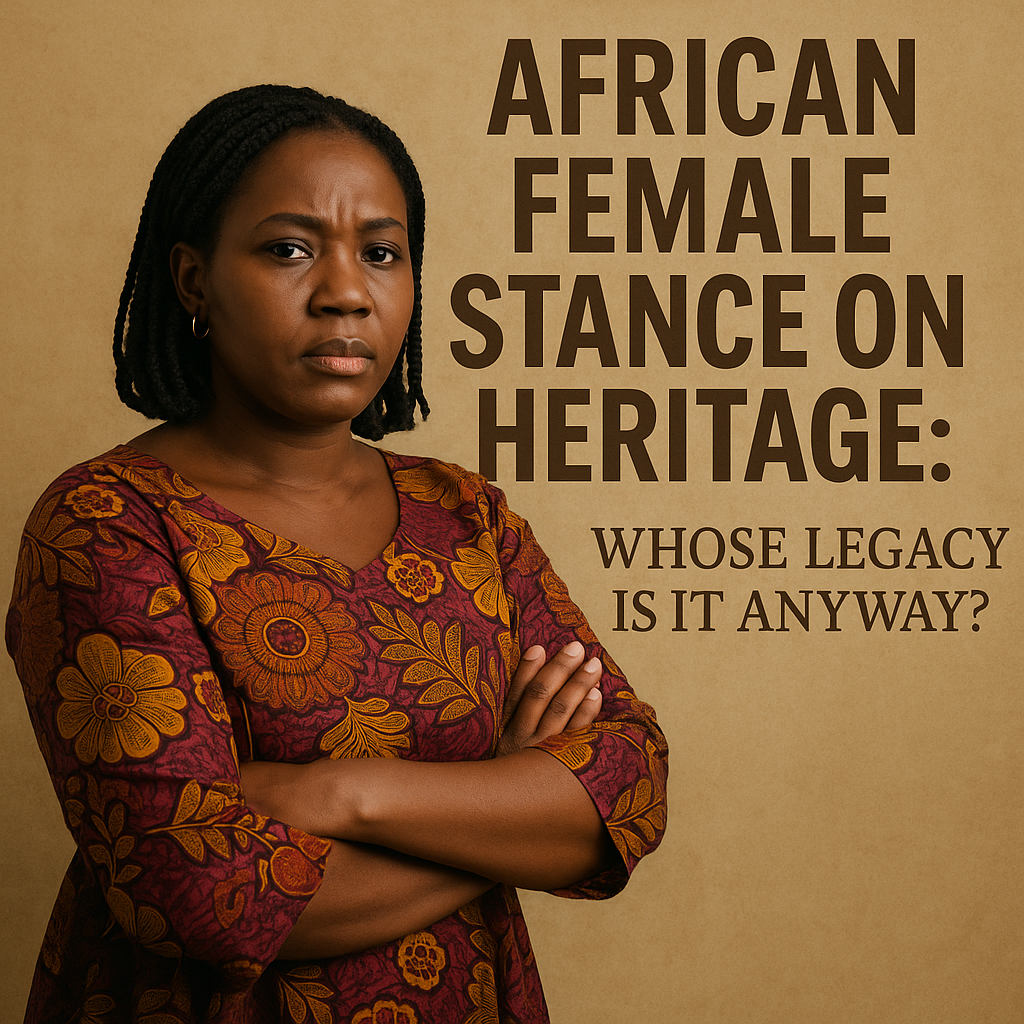
In African homes, heritage is rarely silent. It hangs in the photo frames of grandfathers who wore agbadas stiff with starch. It whispers in the family land, the ancestral stool, the chieftaincy titles passed from father to son. But more often than not, when it’s time to divide this heritage, someone clears their throat and says: “She’s a woman—she’ll marry into another family.”
And just like that, daughters become guests in the homes they were raised in.
But is this changing?
The Legacy of Exclusion
For generations, women in many African cultures have been entrusted with preserving identity but not property. They sing the songs, remember the stories, prepare the ancestral meals—but when the land is being shared or the inheritance divided, tradition often pushes them to the side.
Customary law, still widely respected across Africa, tends to favor men. In some communities, daughters can’t inherit land. Widows can’t inherit property unless they have male children. Some are expected to vacate family homes after their husbands’ deaths—homes they helped build.
The reasoning is familiar: “It’s the tradition. Women marry out. Land stays with the men.”
But what if tradition is due for an update?

The Ground is Shifting
Across the continent, legal reforms and landmark court cases are challenging the old order.
Rwanda
In the aftermath of the 1994 genocide, Rwanda rewrote its laws and rebuilt its society. Women gained equal rights to inherit and own land. Today, over 50% of registered land titles in Rwanda include a woman’s name—a quiet revolution by any standard.
Kenya
The 2010 Constitution guarantees gender equality. Courts have upheld daughters’ inheritance rights, even when challenged by tradition. In 2023, a Nairobi court ruled in favor of a firstborn daughter denied family land, calling the custom “unconstitutional and outdated.”
South Africa
The Constitutional Court has struck down multiple customary laws that excluded women from inheritance. In a historic case, a firstborn daughter was granted the right to succeed her late father as a traditional chief—an honor once strictly reserved for sons.
Uganda & Ghana
Uganda’s Land Act and Ghana’s matrilineal traditions offer partial protections. Yet, even in these spaces, men often retain administrative control, and enforcement remains uneven.

These wins matter. But they are often urban and elite. In many rural areas, women still face stigma, family pressure, and community silence when they claim what is rightfully theirs.
Nigeria: Progress on Paper, Resistance in Practice
Nigeria, Africa’s most populous country, tells a complex story.
On paper, Section 42 of the 1999 Constitution prohibits discrimination based on sex. In 2014, the Supreme Court ruled that Igbo customs disinheriting female children were unconstitutional. This case, Ukeje v Ukeje, was seen as a watershed moment.
Yet, on the ground, many families still cling to customs that exclude daughters. Among the Igbo, ancestral property remains a male affair. Among the Yoruba, inheritance is more equitable, but women still receive less. In Nigeria’s Sharia-governed northern states, Islamic law grants women inheritance, but only half the share of male heirs.
More troubling: although women make up 70% of the agricultural workforce, they own less than 20% of farmland. Access to land, wealth, and legacy is often mediated through fathers, brothers, and husbands, not through legal rights.
.jpg)
In many homes, daughters are still told to “understand” and “let the men handle things.”
What Are Women Doing About It?
They're pushing back.
Women-led organisations like FIDA Nigeria and WARDC are offering legal aid and advocacy. Social media has become a courtroom of its own—where women share stories, name injustices, and reclaim their voices.
And across the continent, women are refusing to choose between tradition and justice—they’re rewriting both.
They are appealing to courts, challenging elders, educating younger girls, and most powerfully—claiming their space around the family table.
Heritage is More Than Land
Even as the law catches up, African women are expanding what it means to inherit. Heritage isn’t just a parcel of land—it’s also language, memory, and identity.
It is:
The South African woman reviving her grandmother’s Xhosa lullabies in digital archives.
The Nigerian filmmaker retelling family folklore through streaming platforms.
The Kenyan daughter who tattoos her lineage on her wrist and her CV.
They may not always get the keys to the ancestral home, but they are holding onto the stories, and passing them on—not through will documents, but through willpower.
So, Whose Legacy Is It?
For too long, African heritage has been defined through a patriarchal lens. But a continent is only as strong as the stories it allows all its children to inherit.
.jpg)
What is heritage, if it is denied to half the people who carry it in their hearts and backs?
When African women inherit—not just symbolically, but legally, culturally, fully—something deeper than ownership happens. The story gets told differently. The land grows differently. The future walks taller.
Because heritage should not be who you’re born to. It should be what you’re allowed to carry forward.
Let’s stop asking women to “understand” and start asking systems to do better.
After all, when women inherit, everyone eats.