African Countries Receiving Electricity Supply from Nigeria As Domestic Power Struggles Persist
Nigeria exports electricity to Benin, Togo, and Niger, yet generates barely 5,000 MW daily against a demand of over 18,000 MW for its 230 million citizens. Here's the full breakdown of who gets Nigerian power, how long these deals have existed, and what it says about the country's energy priorities.
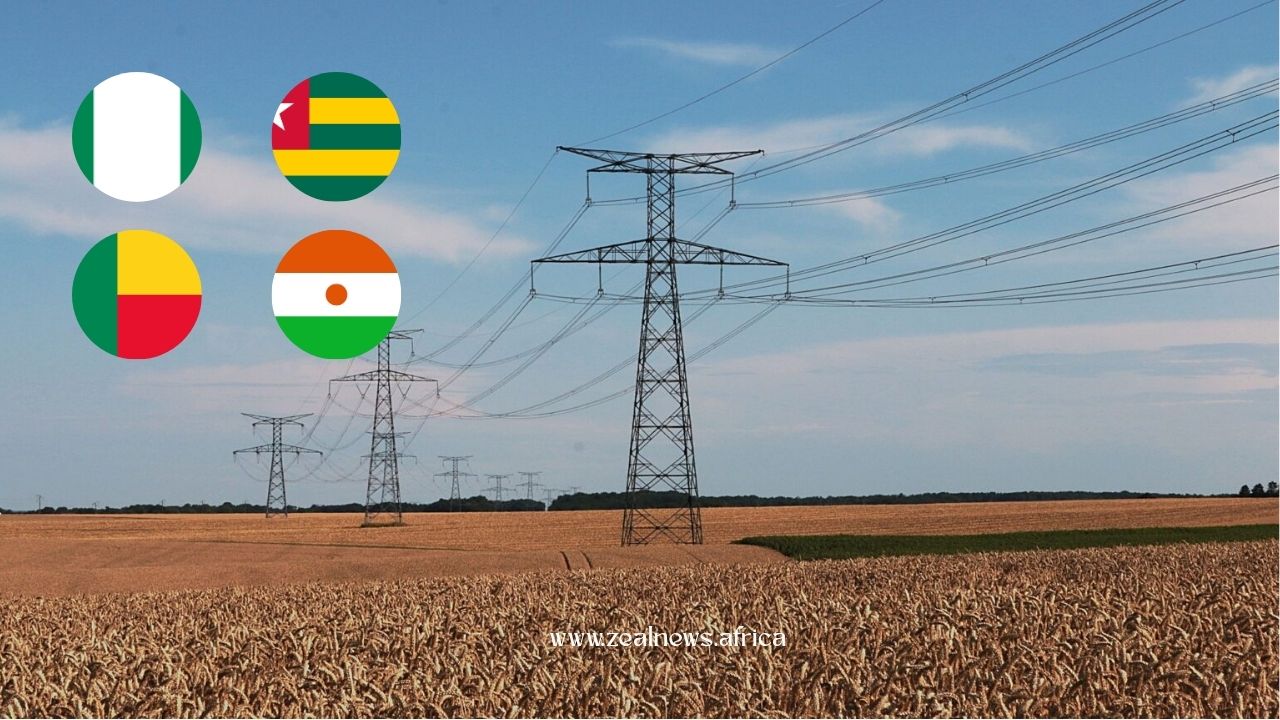
Nigeria is a country where power outages are a routine that they have now become part of the cultural rhythm of the average citizens.
A country often seen as a place where generators or alternative means of power generation runs parallel with the economy.
Amidst all of this real time scenario the country is supplying electricity to three of its neighbours.
This has been an economic relationship for decades and those neighbours, as of the fourth quarter of 2025, owe Nigeria $9.55 million in unpaid electricity bills, having remitted only 53 percent of a $20.44 million invoice.
RELATED ARTICLE:Tinubu’s ₦3.3 Trillion Power Plan: Will Nigerians Finally See the Light?
The Countries, the Deals, and What Nigeria Is Actually Sending Out
Nigeria currently exports electricity to three West African nations: the Republic of Benin, the Republic of Togo, and the Republic of Niger.
This isn't a new arrangement, these bilateral power supply relationships stretch back decades, formalised under country-to-country agreements managed through the Transmission Company of Nigeria (TCN) and monitored by the Nigerian Electricity Regulatory Commission (NERC).
Benin Republic
Benin Republic receives power through a 330-kilovolt (kV) transmission line running approximately 70 kilometres from Ikeja in Nigeria to Sakété in Benin, supplied primarily by Paras Energy and Transcorp's Ughelli and Afam 3 plants.
The relationship is arguably the oldest and most commercially significant of the three, with Benin's state utility, Société Béninoise d'Énergie Électrique (SBEE), as the receiving body. Nigeria's electricity exports to Benin Republic reached approximately $66 million for the fiscal year ending early 2025.
Togo
Togo is supplied primarily through the Calabar Power Plant and the Odukpani facility, with Compagnie Énergie Électrique du Togo (CEET) as the off-taker. Paras-CEET in Togo was billed $2.18 million in Q4 2025 and paid $1.46 million, a remittance rate of 64.97 percent.
Niger Republic
Niger Republic receives supply through Mainstream Energy Solutions from the Kainji hydropower plant. Nigeria cut power supply to Niger by 42% to 46mw in 2025. The cut came as a result of Nigeria battles with low power generation and supply, utilising its current transmission capacity to maximum.
Niger has historically been among the most inconsistent payers, and the arrangement has been suspended and reinstated multiple times over the years.
In November 2025, Nigeria conducted a grid synchronisation test with 15 West African countries, the first of its kind, positioning itself to earn up to $1 billion annually in electricity export revenue from across the Economic Community of West African States (ECOWAS) sub-region by June 2026.
The Numbers That Make This Hard to Justify
Here's what makes this conversation uncomfortable. Despite an installed generation capacity in excess of 13,000 MW, Nigeria's average daily generation remained under 5,000 megawatt-hours per hour throughout 2025 up till now, far below the estimated national demand of 18,345 MW.
Compared to the continent, Egypt now leads Africa with a total installed electricity capacity exceeding 60,000 MW, having overtaken South Africa, whose capacity sits between 58,000 and 61,200 MW.
Nigeria, Africa's most populous nation with a population of approximately 250 million people, operates at roughly 13,000 MW installed, of which barely 5,000 MW is reliably available on most days. Egypt has a population less than half of Nigeria's and generates more than ten times the power.

The World Bank estimates Nigeria loses $26.2 billion annually to power unreliability. Generators are not a backup, for most Nigerian businesses and households, they're the primary source of electricity.
Yet, three countries get Nigerian power and the tiring part? On credit.
Exporting Scarcity: When Supply Falls Short at Home
The standard defence of these export arrangements is that they generate foreign exchange, strengthen regional diplomatic ties, and prevent resource conflicts over shared water bodies used for hydropower.
These arguments carry weight and they're not entirely wrong. Nigeria does need the forex. Regional stability does matter and some of the electricity exported is categorised as "stranded" power that cannot be wheeled to domestic consumers due to transmission bottlenecks.
But stranded power is a consequence of a broken transmission infrastructure, not a justification for exporting it while Nigerians sit in darkness.
The electricity access rate in Nigeria stood at 61.2 percent as of 2023, with stark urban-rural disparities, 89 percent access in cities, 26 percent in rural areas. That means roughly four in every ten Nigerians have no connection to the national grid at all.
A country that cannot light its own homes is supplying electricity to three neighbours and chasing unpaid invoices from those same neighbours while doing it.
That's not regional leadership, that's a policy contradiction that almost 250 million people are living inside, every night, when the generator goes off and the darkness settles back in.
The export arrangements aren't the enemy. The absence of a functioning domestic power sector is. Until Nigeria fixes what's broken at home, every megawatt that crosses the border is a megawatt that should have been the question, not the answer.