7 Things About Nigerian Fintech That Should Have Been the Government's Job
Nigeria has over 500 fintech companies solving problems the government created and never fixed. From financial inclusion to cross-border payments, here are 7 things startups are doing that should have never been their responsibility
Nigeria has over 500 fintech companies. Five hundred. That is not a tech ecosystem; it is a country quietly outsourcing its most basic responsibilities to founders with laptops and venture capital.
Nigeria processed nearly 11 billion transactions in 2024, yet 26% of adults remain financially excluded, with exclusion rising to 37% in rural areas and nearly 47% in northern Nigeria.
The government has had decades to fix this. Instead, a generation of startups showed up and started doing the work.
Here are seven things Nigerian fintech is doing that should never have been a startup's problem to solve.
1. Getting Ordinary Nigerians Into the Financial System
Before apps like OPay, PalmPay, and Moniepoint arrived, millions of Nigerians had no relationship with any formal financial institution. No bank account, no saving, no way to receive a transfer or pay a bill without physically handling cash.

Financial inclusion in Nigeria has had undeniable successes, with the onboarding of residents to the banking sector consistently progressing. But overall exclusion rates continue to exceed official targets, not least due to low financial literacy.
The government had a target, and they missed it. Fintech showed up and started onboarding the people the banks had written off for decades. Bringing citizens into the financial system is not a startup opportunity. It is a government obligation. Nigeria just never treated it like one.
2. Building the Infrastructure for Payments
Nigeria was an early mover in real-time payments. In 2011, the country rolled out a nationwide instant payments system years before similar infrastructure appeared in markets like the United States. Today, the NIP platform processes a growing share of Nigeria's electronic transactions and has become the backbone of everyday financial activity.
That part the government got right. But what grew on top of it: the apps, the agent networks, the merchant tools, the last-mile payment infrastructure that actually reaches ordinary Nigerians, was built almost entirely by private companies chasing a market the government created and then abandoned.
The infrastructure exists, but the distribution was left to entrepreneurs to figure out.
3. Giving Small Businesses Access to Credit
Walk into any Nigerian market and ask a trader if their bank has ever given them a loan. The answer will tell you everything.
Traditional banks have historically ignored small businesses and informal traders, the people who make up the majority of Nigeria's actual economy. The collateral requirements are impossible. The paperwork is designed for people who already have money, and even the interest rates are punishing.
Cash flow solutions for agricultural value chains are underfunded. Infrastructure that genuinely reduces the cost of doing business often goes unnoticed. Productive credit for manufacturers remains scarce.
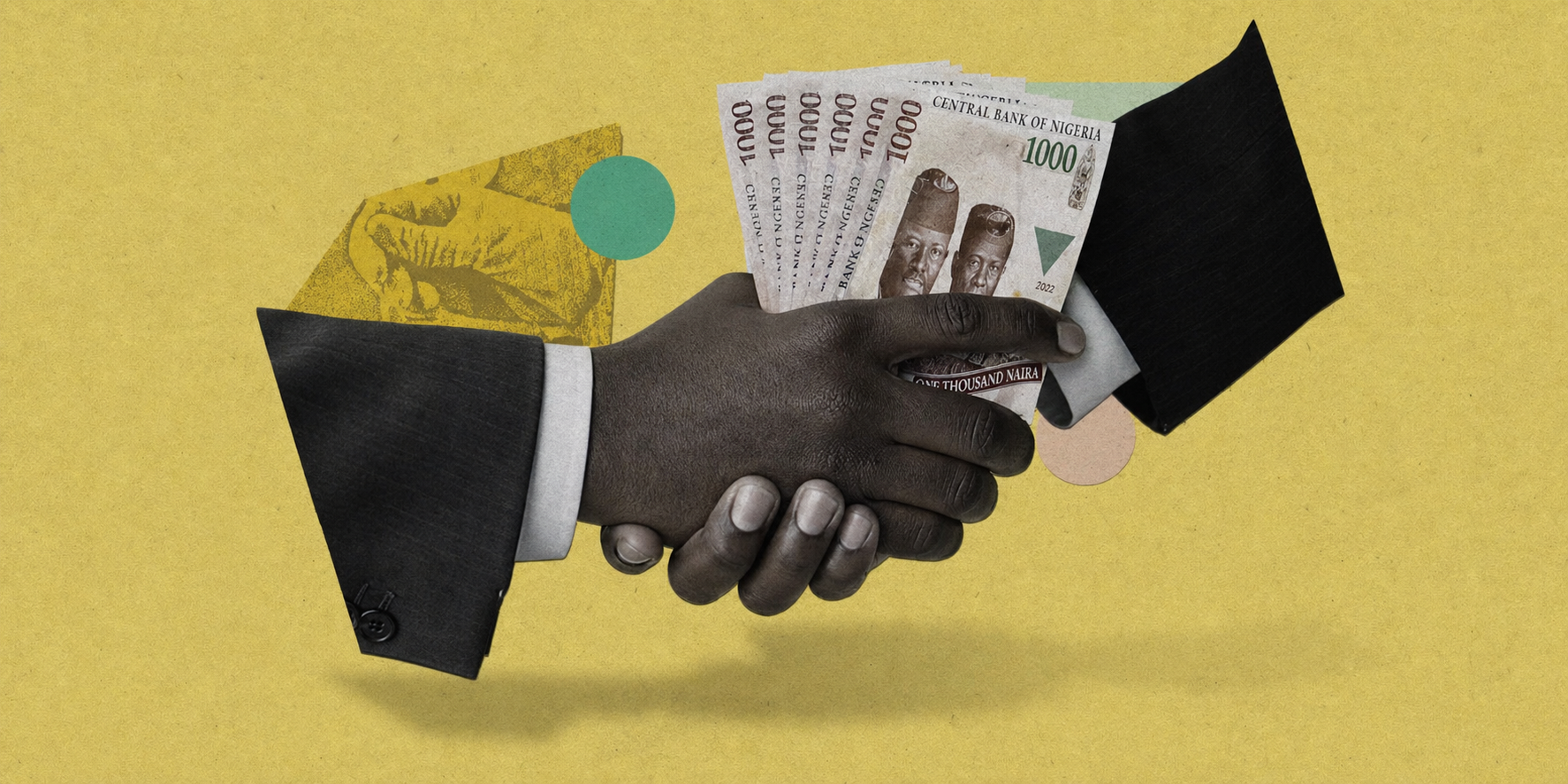
Fintech lending platforms stepped into this gap. They built credit scoring systems from scratch, using transaction data, airtime usage, and behavioural signals to assess borrowers that the formal system refused to look at. Deciding who gets access to credit in an economy is one of the most powerful levers a government has. Nigeria handed it to startups.
4. Fixing the Identity Problem
You cannot access financial services without verified identity. For a long time, proving who you are in Nigeria was a bureaucratic nightmare involving multiple disconnected government databases, inconsistent records, and systems that barely talked to each other.
Digital identity remains one of the biggest barriers to financial inclusion. Fintech firms rely on identity systems such as the Bank Verification Number and the National Identification Number to verify customers and meet anti-money laundering requirements. While these systems exist, integration costs and system reliability can still pose challenges for fintechs trying to scale services.

Fintechs built their own verification layers, identity checks, and KYC processes on top of a government system that should have been seamless from the beginning. They are essentially compensating for the state's failure to build a functional identity infrastructure and being charged regulatory compliance costs for the privilege.
5. Sending Money Across Borders Affordably
Nigeria is one of the top recipients of remittances in Africa. Millions of Nigerians in the diaspora send money home every month. For decades, doing so meant paying enormous fees to Western Union or MoneyGram, watching a significant chunk of every transfer disappear into the pockets of legacy intermediaries.
Flutterwave, Lemfi, and a wave of Nigerian-founded remittance platforms changed that. They built faster, cheaper corridors for moving money between Nigeria and the rest of the world. They solved a problem that affected millions of families directly.

That problem existed because Nigeria never built the cross-border payment infrastructure its diaspora needed. It took private companies to do it, and they had to fight regulatory uncertainty and currency volatility to get there.
6. Insuring the People Nobody Else Would Insure
Insurance penetration in Nigeria sits below 1% of GDP. The vast majority of Nigerians have no health insurance, no life cover, no protection against the financial shock of an accident, illness, or natural disaster.
This is not because Nigerians do not understand risk. It is because the traditional insurance industry designed products for the formally employed middle class and ignored everyone else. Premiums were too high. Claims processes were designed to discourage payouts. Trust was nonexistent.
Insurtech companies are now building micro-insurance products; affordable, accessible, and designed for how ordinary Nigerians actually live and earn. Pay-as-you-go health cover. Device insurance for phones. Crop insurance for smallholder farmers.
These products should have existed decades ago. They are appearing now because private companies found a market in government's absence.
7. Teaching Nigerians How Money Works
Overcoming financial exclusion would require improving digital financial literacy, upgrading digital infrastructure, and promoting incubation and sound practices of fintech firms.
Financial literacy in Nigeria is not a school subject. Most Nigerians learn how money works from their parents, their mistakes, or not at all. There is no national curriculum that teaches budgeting, saving, investing, or understanding credit. There is no government programme that has meaningfully addressed this at scale.

Fintech companies are filling that gap through in-app education, social media content, and community programmes, because an educated user is a better customer. They are doing it for commercial reasons. But the outcome is a public good that the government was supposed to provide.
Conclusion
Nigeria now hosts more than 500 fintech companies, yet most are building variations of the same products: digital wallets, payment apps, lending platforms that target the same thin slice of bankable consumers.
That concentration is a symptom. When government fails to build the foundations, the private sector rushes in, but only to the places where there is money to be made.
The truly hard problems, the rural areas, the northern exclusion gap, the agricultural credit crisis; those remain largely unsolved because they are not profitable enough to attract startups and not urgent enough to attract government attention.
Nigerian fintech is genuinely impressive. The founders are real. The products work. The impact is documented.
But a country should not need 500 startups to do what its government was elected to do. The fact that it does is not a success story. It is an indictment wearing a press release.