Lanre Fadire: The Product Designer Who Made $1.5 Billion in Student Debt Disappear, Without Changing a Single Policy
Lanre Fadire did not build a new financial product. He redesigned the path between borrowers and benefits they already qualified for. The result is $1.5 billion in student loan savings for Americans who have no idea a Nigerian designer made it possible.

Most people think design is about how something looks. Lanre Fadire will tell you it is about whether something works, and for whom.
Fadire is a Nigerian-born senior product designer with over seven years of experience building digital products for high-stakes industries. He has worked on financial infrastructure in Lagos, research integrity platforms in Berlin, and education benefits systems serving millions of Americans.
His name is not widely known. But the impact of his work shows up in the bank accounts of US borrowers who have no idea a designer from Nigeria helped put that money back in their pockets.
To date, his contributions to Summer PBC's education benefits platform have helped users save over $1.5 billion in student loan repayments. That number is not a projection.
It is documented impact from a platform that has partnered with leading employers, unions, and government institutions across the United States to help borrowers navigate the notoriously complicated American student loan system.
The Problem Was Never the Money. It Was the Maze.
To understand what Fadire actually did, you need to understand what Summer PBC is and what problem it exists to solve.

Student loan debt in the United States stands at $1.75 trillion. More than 43 million Americans carry it. The federal government has created multiple programmes designed to reduce that burden; income-driven repayment plans, Public Service Loan Forgiveness, employer matching contributions, but the programmes are notoriously difficult to access.
As a Certified B Corporation, Summer has generated over $1.8 billion in total student loan savings to date. The platform works by connecting borrowers with existing federal programmes they already qualify for but cannot easily access, guiding them through the application process and handling the paperwork on their behalf.
This is where Fadire's work sits. His job was not to invent new financial instruments or create new savings mechanisms. It was to redesign the interface through which people accessed benefits that already existed, making the path from "I qualify" to "I am actually saving money" short enough that real people would complete it.
That is a harder design problem than it sounds.
Seven Years of Building Things That Matter
Fadire studied Mechanical Engineering at Landmark University in Kwara State, Nigeria. The transition from mechanical engineering to product design is not as unusual as it sounds; both disciplines are fundamentally about understanding systems and making them function more efficiently.
The instinct that correctness alone is not enough, that a system can work technically while still failing the people inside it, runs through both fields.
He built his design career across multiple high-consequence environments. At Software Business Solutions Consulting in Lagos, he designed a CRM system for NIBSS, Nigeria's interbank settlement infrastructure, that increased lead-to-deal conversions by 14%. He delivered a procurement platform for Keystone Bank that optimised processes across 154 branches.
In 2021 he joined Morressier, a Berlin-based platform used by global research societies to manage academic publishing and research integrity. There he led the design of tools that transformed research misconduct detection from a passive flagging system into an active investigation workflow, helping academic publishers resolve cases that previously took days in a fraction of the time.
That work contributed to Morressier securing six new enterprise clients and anchoring the company's $16.5 million Series B funding round.
His work at Summer PBC sits alongside these projects in his portfolio. What connects all of them is the same underlying philosophy: the people who most need a system to work are usually the people for whom it is most broken.
Why Design Is the Difference Between a Policy and an Outcome
The American student loan system is a useful case study in what happens when good policy is wrapped in bad design.
The Public Service Loan Forgiveness programme, for example, was created in 2007 to forgive the remaining student debt of government and nonprofit workers after ten years of qualifying payments.
By 2019, the rejection rate for applicants was 99%. Not because people did not qualify. Because the application process was so complex, with so many technical requirements and so many points of failure, that almost nobody managed to navigate it successfully.
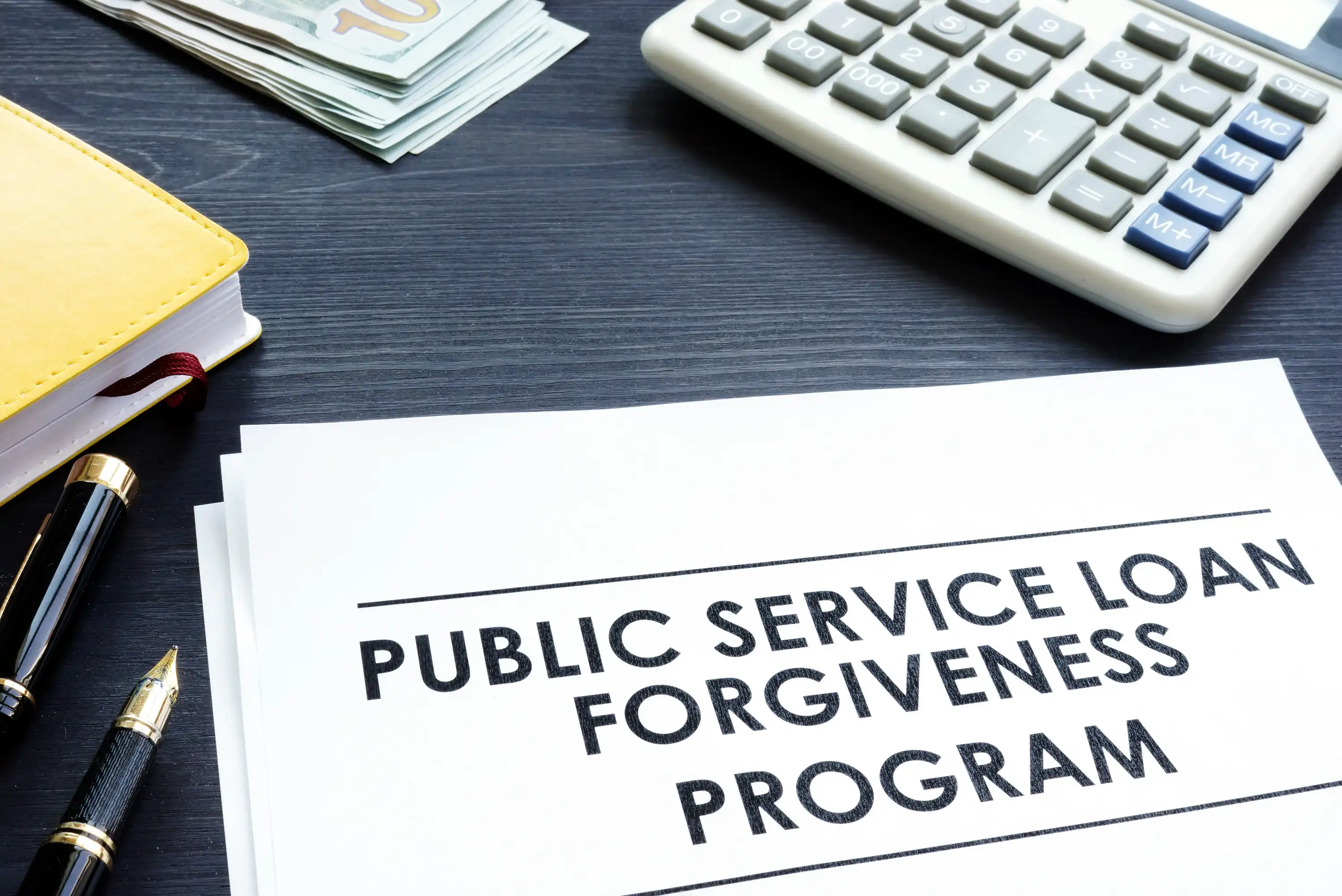

Summer turns student loan stress into guaranteed savings, with over $2 billion delivered and counting. Behind every dollar saved is a story of less stress, more breathing room, and greater freedom.
The platform works by simplifying that navigation at the product level. Clear eligibility checks. Guided workflows. Paperwork handled on the borrower's behalf. The money was always there. The design made it reachable.
Fadire's contribution to that platform represents exactly what he describes as his core approach: simplifying complex systems rather than building new products, enabling users to tap into benefits that already exist but are obscured by bureaucracy.