Why Most Cold Emails Fail (And How to Fix Yours)
Most cold emails fail for the same avoidable reasons. Learn the 7 mistakes killing your response rates and exactly how to fix each one.
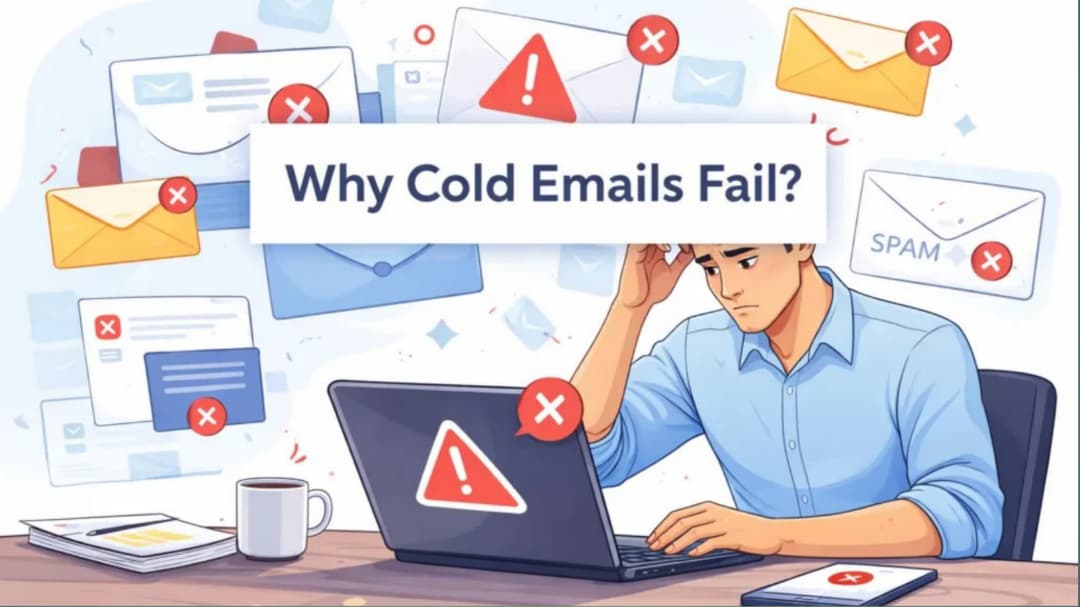
You wrote what you thought was a great email.
A clear subject line, polished copy, a strong call to action, but still after sending, there’s no response.
Cold emailing refers to the practice of reaching out to someone you have never interacted with before via email, usually for the purpose of business, employment, networking, or collaboration.
Studies consistently show that the average cold email response rate hovers around 1–5%, that means for every 100 emails sent, 95 to 99 people ignore you entirely.
What is interesting is that most cold emails fail for the same predictable reasons, and once you see them, they're surprisingly easy to fix.
You're Writing for Yourself, Not the Reader

The single biggest reason cold emails fail is that they're written from the sender's perspective. What you want, what you offer and what you need.
The reader opens the email asking one question:"What's in this for me?" Most cold emails never answer it.
Mistake 1: The Subject Line Sounds Like a Sales Pitch
Your subject line is a gatekeeper, if it doesn't pass, nothing else matters.
Subject lines that scream "cold email" like:"Quick question about your business", "Partnership opportunity", "I'd love to connect", are so overused and they trigger spam filters.
Write subject lines that spark genuine curiosity or reference something specific to the recipient.
Specificity signals that you actually did your homework, personalized subject lines are 26% more likely to be opened than generic ones.
Mistake 2: The Opening Line Is About You
Most cold emails open with some version of: "Hi, I'm [Name] from [Company], and we help businesses like yours..."
The recipient doesn't care. At least, not yet, because they have no reason to.
Open with something relevant to them like a specific observation about their work, a shared challenge in their industry, or a genuine compliment rooted in something real.

The goal of your opening line is not to introduce yourself, it's to earn the next sentence.
Mistake 3: The Email Is Too Long
Nobody owes you their time. A wall of text in a cold email is a fast path to the trash folder.
People scan cold emails in under 10 seconds to decide if they're worth reading and if your value isn't obvious immediately, they move on.
Research based on an analysis of 16.5 million cold emails, found that messages under 200 words consistently outperform longer ones.
Aim for 3–5 short paragraphs maximum. Every sentence should either build interest or push toward a next step. If a sentence doesn't do either, cut it.
A useful structure: Hook, credibility, value then ask.
Mistake 4: The Ask Is Too Big
Asking a stranger to jump on a 45-minute demo call as a first interaction is the cold email equivalent of proposing on a first date, because the relationship isn't there yet.
The bigger the ask, the higher the friction and the lower the response rate.
Make your call to action as small as possible, you're not trying to close a deal in one email, you're trying to open a conversation.
Don’t say "Are you free for a 30-minute call next week to discuss how we can help?", instead say "Would it be worth a 10-minute call to see if this is even relevant to you?"
Mistake 5: Zero Personalization (Or Fake Personalization)

Merge tags are not personalization, dropping someone's first name and company name into a template doesn't make it personal, it makes it feel like you're pretending.
Recipients can smell a mass email from a mile away.
If your email could have been sent to 500 people with a find-and-replace, it probably shouldn't have been sent to this person at all.
Do one genuine minute of research before writing. Read a recent post they published, check what their company just launched, or look at a mutual connection and reference something real.
Mistake #6: You Follow Up Once (Or Not at All)
Most responses to cold emails don't come from the first message. They come from follow-ups, yet, 70% of outreach reps stop sending emails after getting no response from the first email.
The key is that follow-ups should add value, not just bump your original message.
Build a sequence of 3–5 touchpoints spaced a few days to a week apart. Each follow-up should add a new angle like a relevant case study, a useful resource, a new question.
A simple final follow-up: "I'll stop reaching out after this, but if timing changes, feel free to get back in touch." This respects their decision while leaving the door open.
Mistake 7: Sending to the Wrong Person
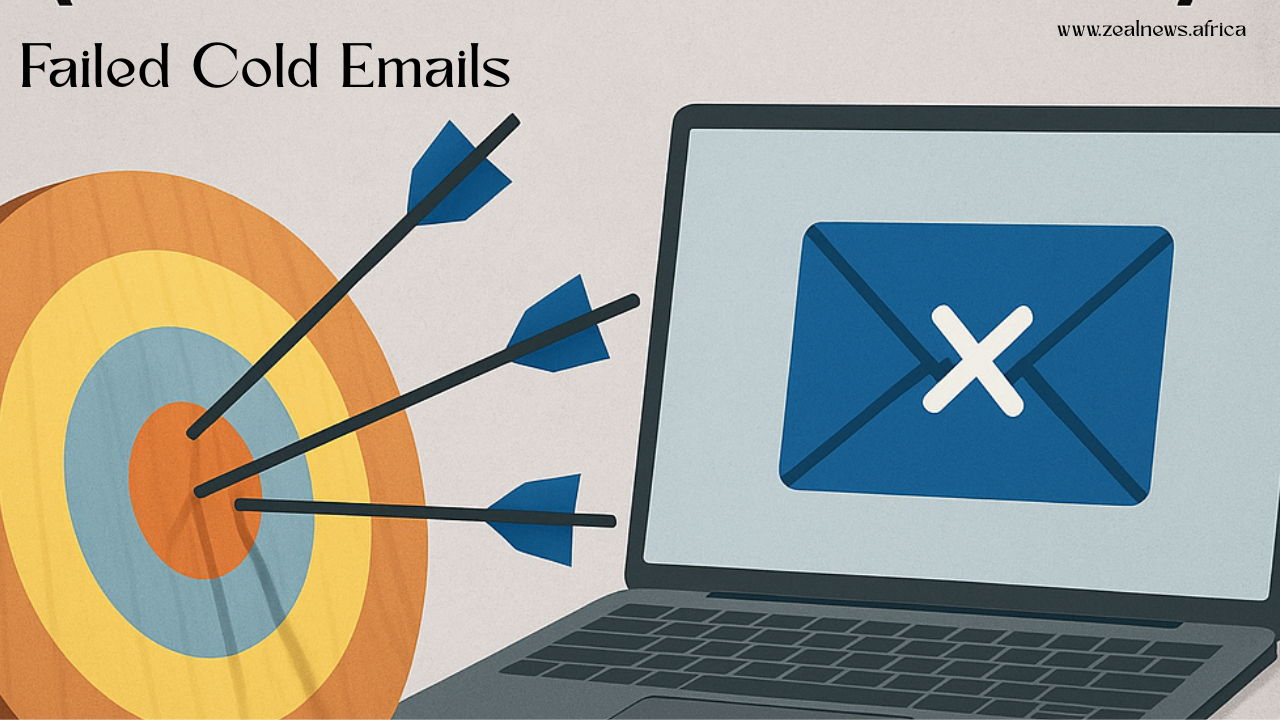
The most perfectly crafted cold email fails if it lands in the wrong inbox.
Emailing a junior marketing associate about a six-figure software contract, or reaching out to a CTO about office supplies, wastes everyone's time.
Identify your ideal decision-maker before you write a single word.
A Cold Email Checklist
Before you hit send, ask yourself:
Does my subject line sound like a human wrote it for one specific person?
Does my opening line reference something specific to them?
Is my email under 150 words?
Is my ask small and easy to say yes to?
Did I include at least one detail that proves I researched this person?
Do I have a follow-up sequence planned?
Am I reaching the right decision-maker?
Cold email still works.
If you can check every box, you're already ahead of 90% of the cold emails in someone's inbox today.
Start there.