When Women Roared: The Untold Story of the Aba Women’s Riot of 1929
Long before hashtags and protest signs, 10,000 Igbo women stood up to colonial power—and shook an empire. This is the untold story of the Aba Women’s Riot.
The Day the Market Women Marched
In the dry heat of late 1929, southeastern Nigeria witnessed a storm that rattled the British Empire to its core. But it wasn’t led by soldiers. It wasn’t a tribal war. It wasn’t even orchestrated by men.
It was a movement of women. Thousands of them. Traders, mothers, widows, warriors of spirit. They came not with bullets but with blazing voices. Not with bayonets but with bold chants. From the bustling markets of Aba to the sleepy villages of Oloko, Umuahia, and beyond, over 10,000 Igbo women mobilized in defiance of a colonial system that had ignored, underestimated, and finally enraged them.
What happened wasn’t just a protest. It was a political reckoning. And it was led by women who, in the face of imperial arrogance, refused to be silent.
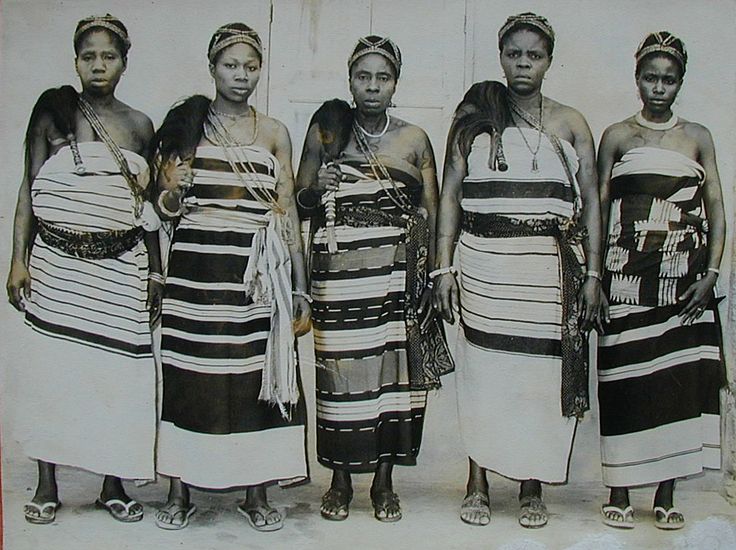
The World They Inherited: Women Before the British Came
Before colonial officers arrived with their ledgers, uniforms, and tax demands, Igbo society operated on its own complex, balanced terms. It wasn’t a feminist utopia—but it wasn’t a dictatorship of men either. Women played vital roles in social, political, and economic spheres.
They ran markets, controlled significant trade routes, and had access to land. Through systems like the Umuada (a council of female elders) and the Mikiri (a forum where women gathered to discuss community affairs), they wielded soft but firm power. These institutions gave women the ability to influence decision-making, challenge authority, and maintain the social balance.
While men held formal titles, women commanded respect in their own right. So when the British imposed indirect rule, they didn’t just impose a new system—they bulldozed over the nuanced gender balance of an existing society.
The Weight of Indirect Rule and a Rising Anger
The British colonizers introduced a model known as indirect rule, using local intermediaries to enforce colonial policies. But the system they set up was lazy, flawed, and completely alien to the decentralized political structure of the Igbo people.
They created and empowered warrant chiefs—often chosen arbitrarily or through bribes. These men were given sweeping authority to act as judge, tax collector, and administrator. Many were corrupt, disconnected from their communities, and resented by the people they supposedly represented.

And while the men chafed under these changes, it was the women who bore the brunt of the impact. The market—long dominated by women—was now taxed. Their husbands and sons were forced into colonial labor. Their authority within society was slowly being eroded.
History
Rewind the Stories that Made Africa, Africa
A Journey Through Time, Narrated with Insight.
These chiefs were often corrupt, extorted the people, and excluded women entirely from governance.
This exclusion was not just symbolic—it was economically devastating. By the late 1920s, Nigeria’s economy had been hit by the Great Depression, global prices fell, and trade dried up. For the many women who sustained themselves through palm oil, salt, produce, and cloth trading, this collapse meant disaster.
And then came the fear of direct taxation on women.
One Widow, One Question, One Revolution
The match that lit the flame was a confrontation between a widow named Nwanyereuwa and a man named Mark Emereuwa, a colonial tax agent working under the local warrant chief. On the morning of November 18, 1929, Mark arrived at Nwanyereuwa’s compound and told her to “count her sheeps, goat and people”—a euphemism for tax assessment.

To Nwanyeruwa, this wasn’t a question—it was a threat. In traditional Igbo society, widows were not taxed. She snapped back:
“Was your widowed mother counted?”
What followed was not a polite debate. Emereuwa grabbed her by the throat.
That question hit like a slap. She was essentially saying: How dare you come here to intimidate me when you wouldn't dare do the same to your own mother?
Incensed, she marched to the marketplace and sounded the alarm. She told the other women what had happened. The network of market women—already organized, already alert—went into action.
Within hours, the news had spread to neighboring communities. Within days, thousands of women were organizing.
The Protest Style That Terrified the British
This was not your typical colonial-era protest. The women didn't write petitions or file grievances. They used a traditional form of resistance known as "sitting on a man"—a powerful cultural practice of public shaming used to hold corrupt or abusive men accountable.
They gathered in front of warrant chiefs’ homes, courthouses, and government buildings. They sang satirical songs. They danced. They ridiculed. Some even stripped naked from the waist up—an Igbo symbolic gesture of ultimate rage and rejection.

History
Rewind the Stories that Made Africa, Africa
A Journey Through Time, Narrated with Insight.
These protests weren’t chaotic—they were strategic, rhythmic, and deeply communal. Women from different ethnic groups—Igbo, Ibibio, Ogoni, Andoni, Bonny, and Opobo—joined hands. The sheer coordination and scale of the protests caught the British completely off-guard.
Between November and December, protests swept through over five major towns and dozens of villages. Women blocked roads, stormed courthouses, and forced several warrant chiefs to resign. They weren't just resisting tax—they were resisting erasure.
British Panic and the Bloody Response
The colonial officers—unprepared and panicked—responded in the way empires usually do: violence.
They sent armed forces. And when that didn’t quell the rising tide, they opened fire.
In at least four key locations—Opobo, Abak, Utu Etim Ekpo, and Umuahia—British troops and police shot and killed dozens of unarmed women. Some estimates put the death toll at over 50. Others say more than 100 women may have been killed across the two-month uprising.
The British administration called it a riot to justify the crackdown. But calling it a “riot” was a linguistic smokescreen. It dismissed the movement as irrational chaos, when in truth it was a bold act of political resistance organized by women who were tired of being ruled, taxed, and dismissed.
What the Women Achieved
Though blood was shed, the women's resistance forced the colonial government to sit up.
Several key outcomes followed:
Direct taxation of women was suspended.
The warrant chief system was reviewed and in some cases dismantled or restructured.
A commission of inquiry was set up to investigate the causes of the uprising.
The colonial government was forced to acknowledge that their policy had ignored the role of women in traditional governance.
This uprising became one of the first mass protests in Nigeria’s colonial history and is considered a precursor to future nationalist movements. It was the first time British colonialism in Nigeria was seriously challenged—and it was women who did it.
History
Rewind the Stories that Made Africa, Africa
A Journey Through Time, Narrated with Insight.
The Names We Must Not Forget

Nwanyeruwa – The widow who defied a tax collector and sparked a revolution.
Ikonnia, Nwugo, and Nwannedia – The fearless Oloko Trio who organized thousands.
The Market Women – From Aba to Calabar, who risked everything for dignity.
They weren’t warriors in uniform. They were mothers, traders, and farmers who refused to be erased.
Beyond the Riot: Why the Language Matters
It’s time to retire the term “Aba Women’s Riot.” That word—riot—shrinks the magnitude of what happened. It sounds like chaos. Like looting. Like a lack of control.
But what took place between November and December of 1929 was none of those things. It was organized. It was deliberate. It was historically grounded in cultural resistance practices.
The women knew what they were doing. They had systems. They had leadership. They had courage that can only be described as revolutionary.
Let’s call it what it was:
The Women’s War
The Aba Women’s Uprising
Nigeria’s first feminist revolution
History
Rewind the Stories that Made Africa, Africa
A Journey Through Time, Narrated with Insight.
Why This Matters Today
Nearly a century later, the lessons of the Women’s War remain hauntingly relevant.
We still live in a world where women’s labor is undervalued, where their voices are silenced, and where policies are made without their input. But in that world, there is also resistance. From the market women of Mushin to the youth leaders of EndSARS, the spirit of 1929 lives on.
Today’s African feminists are not importing ideologies—they are reclaiming a lineage of resistance that predates colonialism, textbooks, and Twitter threads.
The women of 1929 may not have worn sashes or marched in capital cities, but they gave us a blueprint. Their memory demands not just commemoration, but continuation.
Conclusion: When Women Roared, the Empire Trembled
The Aba Women’s Uprising wasn’t just a chapter in colonial history. It was a loud, defiant footnote scratched into the margins of imperial arrogance. A reminder that African women have never been silent—they’ve only been silenced.
They roared. They wept. They organized. And in doing so, they taught us that real change doesn't always come from above. Sometimes, it rises from the ground, barefoot, bold, and singing protest songs in the language of the ancestors.
Their story is not just history.
It is prophecy.
And it is unfinished.