The Real Currency of Careers: What Employers Prioritize in the 2025 Workplace
As modern workplaces evolve, employers are shifting from degree-focused hiring to skill-driven, experience-centred recruitment. This feature talks about the traits, abilities, and real-world competencies companies now prioritise above traditional qualifications.
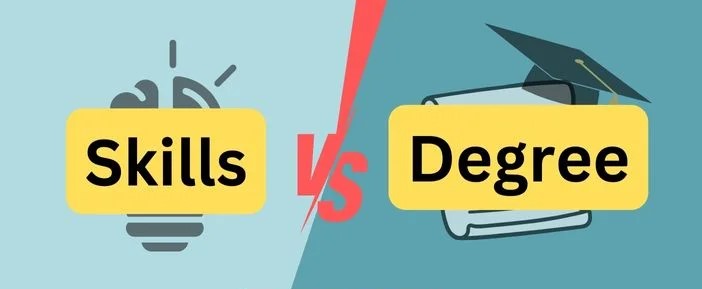
It’s becoming harder to pretend the workplace hasn’t changed. You can feel it in job interviews, see it in vacancy descriptions, and hear it in conversations among young professionals quietly confessing that a degree alone isn’t carrying the weight it once did. In this new hiring landscape, employers are looking far beyond academic credentials.
They’re scanning for something more textured, more practical, more rooted in the real world. And at the heart of this shift is a growing belief that relevance matters more than pedigree.
For decades, the expected pathway was linear: study, graduate, secure a job, and watch things unfold. But that old rhythm is fading. Companies are now stepping into a marketplace that changes almost faster than universities can update their curriculum.
As a result, hiring managers have become bolder about asking uncomfortable questions: Can you actually do the work? Can you solve problems on the spot? Can you learn something new without being handheld? These are the questions shaping the modern idea of competence.
One of the most significant changes is the rising emphasis on practical, demonstrable ability, what many now call skills-based hiring. Reports from platforms like LinkedIn show a steady increase in companies hiring based on capabilities rather than credentials. Employers want to see results: the project you completed, the system you improved, the problem you fixed when no one else could.
It’s no longer enough to know about something; you must be able to apply it. And in many industries, from media to tech to logistics, this shift has been so rapid that even senior professionals have had to rethink what value means.
Digital transformation has only accelerated the trend. The pace at which tools evolve has made it difficult for degree programs to keep up. That’s why employers have grown increasingly comfortable with candidates who learned their craft through online courses, bootcamps, workshops, and self-study.
Platforms such as Coursera have become widely accepted, not as shortcuts but as legitimate sources of technical training. What hiring managers want is proficiency, the confidence that you can work efficiently with modern tools, adapt to new software, and deliver quality results without long onboarding periods.
The Rise of Skills, Experience, and Human Ability

But technical skills alone no longer guarantee success. Companies have realised that the qualities that drive collaboration, trust, and leadership cannot be automated. These are the deeper attributes, communication, emotional intelligence, teamwork, that define who you are when things get complicated. Many recruiters now say they can train someone on a new platform, but they cannot teach someone how to listen, resolve conflict, or think creatively under pressure. As a result, soft skills have re-emerged as a new kind of professional currency.
In many workplaces, diversity of thought and adaptability have become two of the strongest predictors of long-term success. Employers are actively seeking people who can step into uncertain situations and figure things out without panicking. This requires both emotional stability and intellectual curiosity. And while degrees certify that you completed an academic program, they do not reveal whether you handle stress with composure or crumble under pressure.
Another powerful shift is the growing respect for alternative career paths. Many employers now view hands-on experience as equal or in some cases superior to traditional qualifications. Internships, apprenticeships, volunteering, freelancing, side hustles, open-source contributions, and entrepreneurial ventures all count as credible forms of learning.
A candidate who has built a small brand online or managed a local project in their community often brings a type of resourcefulness that companies prize. Real-world experience shows initiative, risk-taking, and an understanding of consequences, qualities that make someone reliable when the stakes are high.
For younger professionals, this shift has been both liberating and intimidating. On one hand, it reduces the pressure to follow a rigid educational path. On the other, it raises the expectation to consistently build, test, and refine one’s skills. Many now find themselves juggling micro-courses, side projects, and certifications, trying to stay sharp in a world that rewards continuous learning. That’s why platforms like Udemy have thrived, they offer a flexible pathway to building mastery across diverse fields.
Interestingly, the transformation isn’t just coming from companies or digital platforms; it’s also rooted in the demands of globalisation. Teams are now multicultural, spread across countries and time zones, and more dynamic than ever. In such environments, employers want people who bring adaptability and nuance—individuals who can navigate differences with clarity and empathy. Degrees rarely capture this. Lived experiences and exposure do.
And then there is the speed of change. If you ask hiring managers what keeps them up at night, many will tell you it’s unpredictability. Markets swing unexpectedly. Technologies disrupt entire industries. Customer behaviour shifts overnight. In this climate, companies need professionals who stay grounded but flexible, people who can take initiative, make informed decisions quickly, and pivot without losing their sense of direction. This quality of steady, self-driven initiative has started to outweigh traditional qualifications.
Yet, we cannot pretend degrees are suddenly useless. In certain industries- medicine, engineering, law, accounting, architecture, the foundations provided by formal education remain essential. But even in such fields, professionals are now expected to complement their qualifications with digital fluency, problem-solving, and curiosity. A medical student who has experience building a health tech app has an edge. An engineer who participates in open-source communities has added depth. The world wants specialists who are also versatile.
The New Hiring Lens: Proof, Adaptability and Professional Momentum

The hiring process itself has changed to reflect this new philosophy. Recruitment tests are increasingly scenario-based. Instead of asking theoretical questions, interviewers present real challenges: “Here’s a problem our team faced last quarter, how would you solve it?” Group tasks, role-play, timed case studies, portfolio reviews, real-time simulations, these have become central parts of modern hiring. Employers want to see how your mind works, how you structure ideas, how you approach ambiguity. And they watch closely for clarity.
Even how jobseekers present themselves has evolved. A degree listed on a CV is no longer a compelling story. What stands out now are tangible results: the campaign you launched, the systems you improved, the customers you retained, the crisis you managed, the innovation you sparked. Portfolios, GitHub repositories, personal websites, documentation, even social footprints have become evidence of growth. Careers are built less on paper and more on a trail of proof.
There is also the cultural shift happening within workplaces. Younger generations, Millennials and Gen Z, are entering the workforce with different expectations. They want purpose, flexibility, remote options, mentorship, mental health support, and environments that make room for creativity. This pushes employers to value workers who can contribute to a positive culture, not simply follow instructions. Someone who brings positive energy to a team is often more valuable than someone with a polished degree but toxic behaviour.
Furthermore, economic realities have transformed the metrics of success. With rising unemployment in certain sectors and a growing market of freelance and contract roles, candidates are increasingly evaluated as potential partners, not just employees. Companies want people who think entrepreneurially, individuals capable of seeing beyond their job description and taking ownership of outcomes. This entrepreneurial mindset is becoming a critical advantage.
The truth is, the new world of work rewards a blend of qualities: skill, curiosity, resilience, common sense, and humility. Employers want professionals who are both confident and teachable, people willing to unlearn outdated assumptions and embrace new ways of thinking. They look for those who show hunger for growth, not entitlement based on a certificate. That hunger rooted in ambition is what drives career acceleration.
So where does this leave the modern job seeker? The answer is surprisingly empowering. Degrees still hold value, but they are no longer the central currency. They are one part of a larger picture that includes experience, skills, mindset, emotional intelligence, and adaptability. Your career is no longer defined solely by where you studied, but by what you have built, what you have learned, and how you evolve. In a world filled with rapid change, the strongest advantage anyone can have is momentum.
The future belongs to those who are willing to stretch beyond their comfort zone, take risks, stay curious, and keep learning long after formal schooling ends. It belongs to the people who combine knowledge with action, and who treat every project, no matter how small as a stepping stone. Degrees may open doors, but it is your capacity to grow that keeps them open. And in this new world of work, that capacity is valued far above any certificate hanging on a wall.