A Woman Dies Every 7 Minutes Giving Birth in Nigeria. This Should Not Be Normal
Childbirth should not be life-threatening, yet a woman dies every seven minutes in Nigeria. The crisis reflects ongoing failures in healthcare access, hospital safety, and maternal support systems.

A woman goes into labour somewhere in Nigeria and for her family, it is a moment filled with hope and fear at the same time. For the health system she is entering, it is another case added to an already stretched reality.
UNICEF says a woman dies every seven minutes in Nigeria during childbirth.
It is a statistic that has been repeated in different forms over the years, but it does not lose its weight. If anything, it becomes harder to ignore.
It also raises a question that lingers beyond reports: why does something so preventable still happen so often?
A number that keeps repeating itself
Maternal mortality in Nigeria is not a new conversation and the figures reflect ongoing situations in hospitals and clinics across the country.
UNICEF has linked the situation to gaps in infection control, weak hygiene systems, and uneven safety conditions in many health facilities.
These are not complex explanations. They are basic elements of healthcare that decide whether childbirth becomes safe or risky.
And yet, they are not consistently available everywhere.
What many health facilities are working with
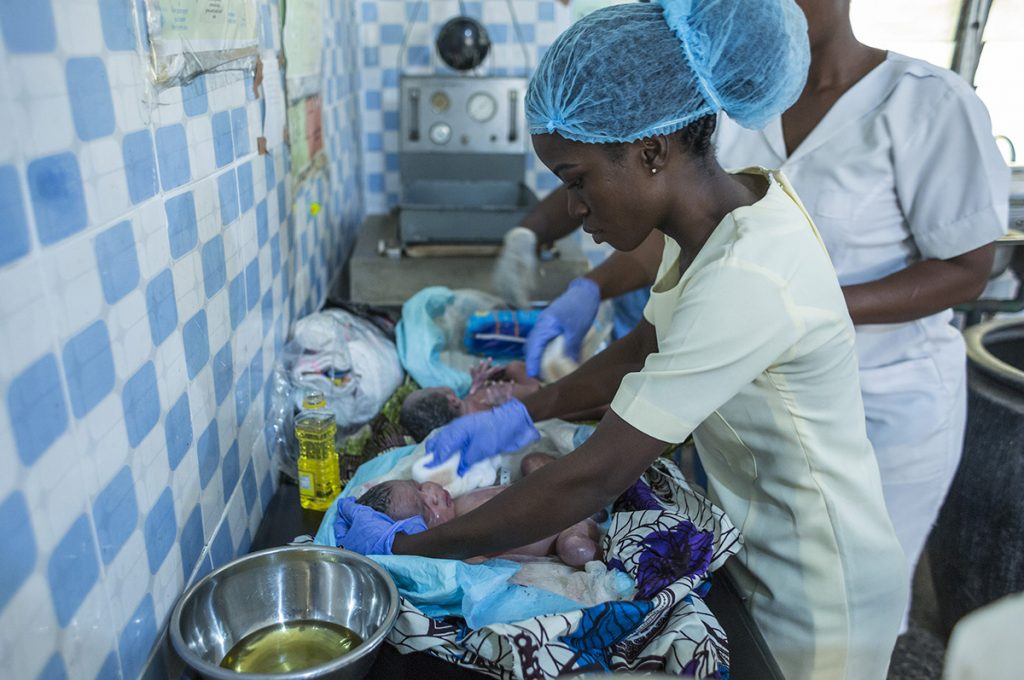
In several facilities, especially outside major urban centres, conditions are shaped by limitation more than design.
Clean water is not always reliable. Infection prevention practices are not always fully supported. Equipment can be stretched across more patients than it was meant to serve.
When these basics are unstable, childbirth becomes more unpredictable than it should be.
In conflict-affected or underserved regions like parts of Borno, the pressure is even more visible. Health centres often serve large populations with limited staff and resources, while still expected to respond to emergencies that cannot wait.
What this means in practice is simple: care is often delivered under strain.
What the statistic does not show
It is easy to read "one woman every seven minutes" as a national figure. It is harder to see what it looks like in real settings.
It is the mother who arrives at a clinic after travelling a long distance, it is the delay before a trained professional is available, it is the uncertainty when complications begin and resources are not immediately within reach.

Most maternal deaths do not begin as extraordinary cases. The most common causes include severe postpartum bleeding, infections, unsafe abortions, hypertension during pregnancy, and delayed access to emergency treatment, manageable situations that become complicated because something essential is missing at the wrong moment.
This is why the number feels persistent. It is not tied to one failure. It is tied to many small gaps that appear at the same time.
What UNICEF is trying to improve
UNICEF has supported efforts aimed at strengthening the basic safety of health facilities, particularly through water, sanitation, hygiene, and infection prevention programmes.
One of these isWASHFIT, which focuses on improving how facilities manage clean water, hygiene systems, infection control, and medical waste.
The goal is straightforward: reduce preventable infections and improve safety for both patients and health workers.
In practical terms, it means better-equipped delivery rooms, safer procedures, and fewer complications linked to avoidable environmental risks.
But progress is not uniform. Some facilities are still working without consistent infrastructure support, which affects how quickly improvements can be felt on the ground.
Why the problem continues
There is no single reason for maternal mortality in Nigeria. It sits at the intersection of access, infrastructure, staffing, and timing.
Some women live far from facilities that can handle emergencies. Others reach care late due to cost or distance. And the staffing crisis runs deep, Nigeria's doctor-to-population ratio stands at 1:5,000, far below the WHO recommendation of 1:600, while the exodus of healthcare workers continues to accelerate, with over 16,000 nurses migrating to the UK in 2025 alone.
So even when care exists, it is not always enough to meet demand at the right time.
This is where the system shows its strain most clearly, not in theory, but in timing and capacity.
A reality that keeps asking for attention

A woman dying every seven minutes during childbirth amounting to roughly 75,000 deaths a year, nearly 30% of the global total, is not just a health statistic. It is a reflection of how uneven safety still is across different parts of the country.
It also reflects something more uncomfortable: that many of these deaths are still preventable with systems that already exist in principle, clean facilities, trained staff, and timely intervention.
The gap is not in understanding what needs to be done, the gap is in how consistently it is delivered.
Until that changes, the number will continue to return in reports and briefings. And behind every return of that number is a life that should have had a different outcome.