The New Human Advantage: The 5 Skills AI Can’t Replace
As artificial intelligence becomes capable of writing, analyzing, and producing work at scale, the question shifts from what machines can do to what remains distinctly human. This article breaks down five human skills that will matter most in the AI era.
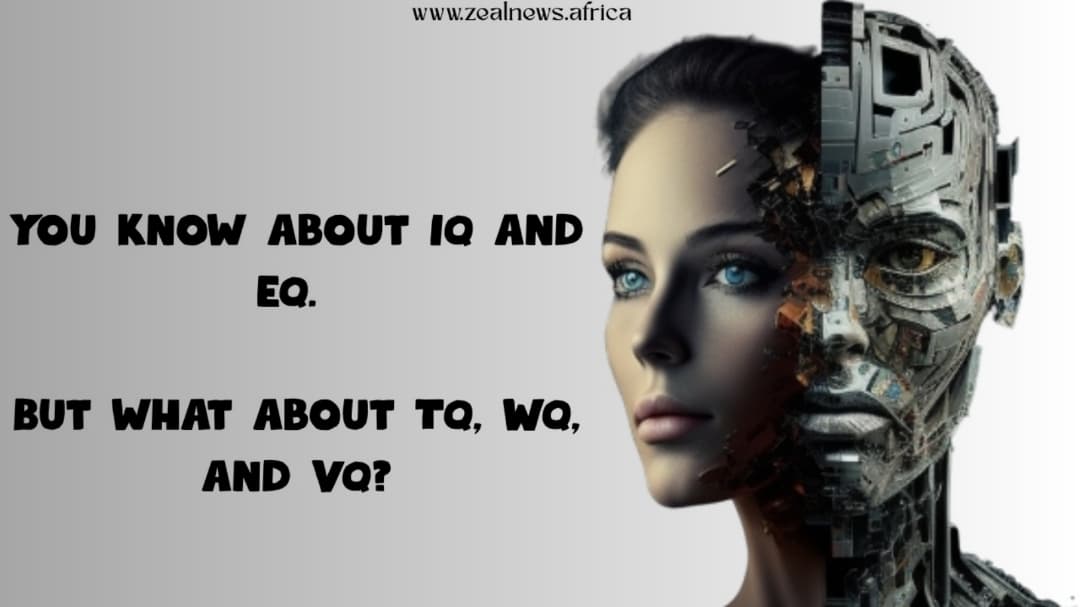
For a long time, success was built around a simple idea: if you were smart enough, you would go far.
Schools rewarded strong grades, companies looked for people who could think quickly and solve problems, and entire systems were built around the belief that intelligence was the clearest sign of potential.
Over time, that idea started to feel incomplete. People with strong technical ability did not always become effective leaders, and being intelligent did not guarantee influence, communication, or trust.
That gap pushed attention toward emotional intelligence, the ability to understand people, communicate well, and respond to situations with awareness rather than just logic.
Now the conversation is shifting again because artificial intelligence is changing what “being capable” even means.
Machines can think, they already can in structured ways. The question is what still separates you from them when thinking itself is no longer rare.
That is where a different set of human strengths begins to matter.
The Five Quotients That Will Matter Most
1. IQ — Intelligence Quotient
Intelligence still matters, but it no longer carries the same exclusivity it once did. You can still think your way through problems, break down complexity, and understand systems, but you are no longer the only one with access to that capability.
Information is everywhere now. If you want to understand something, you can get explanations, breakdowns, and summaries in seconds. That means intelligence is less about access to knowledge and more about how you use it.
IQ still helps you understand the world, but it is no longer enough to stand out in it.
2. EQ — Emotional Quotient
People still want to feel understood.
Whether it is in leadership, teamwork, or everyday communication, emotional awareness still plays a major role in how trust is built and how influence works.
AI can imitate emotional language, and sometimes it can even sound more composed than a real person. But there is a difference between producing the right words and actually understanding what someone is feeling in a real situation.
You still notice it in real life. People do not just respond to information; they respond to tone, timing, and intention. Research confirms that emotionally intelligent leaders directly improve engagement, morale, and team performance, outcomes that depend on genuine human connection, not language generation.

3. TQ — Trust Quotient
Trust is becoming harder to hold onto.
With deepfakes, manipulated content, and AI-generated media becoming more convincing, it is no longer easy to tell what is real at first glance.
Even state-of-the-art deepfake detection systems can drop in accuracy by up to 50% when tested against real-world, in-the-wild deepfakes, meaning the technology generating deception is outpacing the tools designed to catch it. In that kind of environment, credibility starts to matter more than presentation.
You are not just judged by what you say anymore, but by whether people believe you over time.
Trust is built slowly, through consistency and behavior, not performance. And once it is lost, no amount of communication fixes it quickly.
4. WQ — Work Quotient
Work is no longer about who can do the most in the shortest time. Machines are already better at speed, repetition, and constant output.
What still matters is whether you finish what you start and whether you take responsibility for what you produce.
You can have ideas every day, but execution is what separates intention from reality. A lot of people stop at thinking and very few stay long enough to complete the work.
AI does not get tired, but it also does not care. That difference matters more than it first appears.
5. VQ — Vision Quotient
This is where the real separation begins.
Vision is not about predicting the future with accuracy. It is about seeing possibilities before there is proof that they will work. It is the ability to look at what exists and still imagine what does not.
AI works from patterns, it generates outputs based on what has already been written and seen, and research shows it will even hallucinate patterns where none exist. But human progress has never come only from patterns. It has also come from people who ignored them.
Think about people like Steve Jobs, who pushed ideas that were not obvious at the time, or Elon Musk, who invested energy into ideas many people initially doubted.
The point is not agreement with their decisions, but the fact that they acted on visions that were not fully supported by existing evidence.
That ability to imagine first and prove later is still something machines do not have.
AI can improve what already exists. It cannot decide what should exist next.
The New Standard for Leadership

Leadership is also changing under this shift.
Being the smartest person in the room is no longer enough, and being good with people alone is not enough either. Technical skill, communication, and confidence still matter, but they are no longer the full picture.
The people who will stand out in the coming years are those who can combine thinking ability, emotional awareness, trustworthiness, discipline, and vision in a way that holds up under pressure.
Because as more tasks become automated, the value of a person will depend less on what they can produce quickly and more on how they think, what they stand for, and whether others can rely on their judgment.
And at that point, the real advantage is not speed.
It is direction.