The Cultural Meaning Behind Calling Every Older Person 'Aunty' or 'Uncle'
In Nigeria, every older person becomes an Aunty or Uncle, not because of blood, but because of culture, respect, fear, and a social language that has quietly redefined what those words mean for an entire generation.
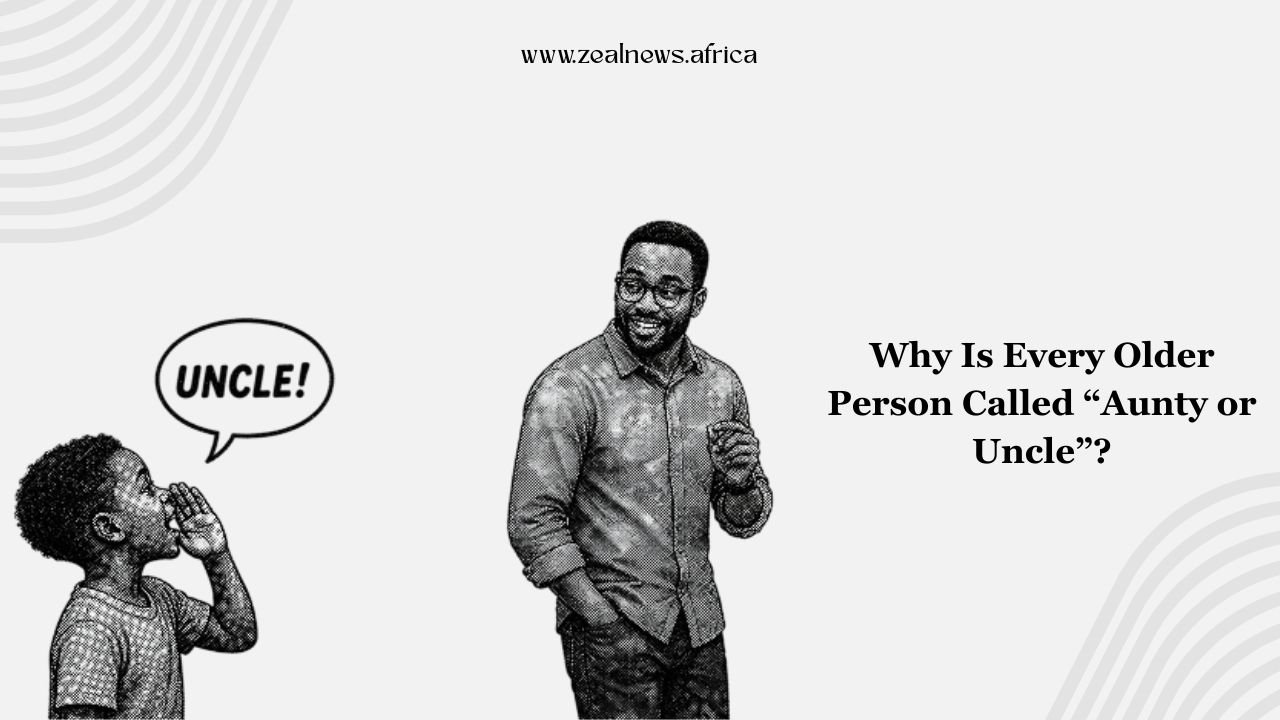
You know that man, the one who lived three houses down, whose name you never actually learned, but who you always greeted every morning with a 'good morning, Uncle' as you walked past his gate.
And then there is that friendly woman — the one everyone in the street loved, the one who always had something on the fire and whose compound smelled like soup at odd hours of the day. You called her Aunty without thinking, everyone did, and she answered to it without question.
Ifeanyi did too, that was what he saw growing, and it wasn't a strange thing to do
Ifeanyi and the World Full of Uncles and Aunties
Ifeanyi was seven, maybe eight, the age where the world is still a place you receive instructions from rather than question. His neighbourhood in Enugu was full of people, and in his understanding of things, those people fell into two clear categories: people his own age and everyone else. Everyone else was either Uncle or Aunty.
For Ifeanyi, there was Uncle Emeka at the end of the road, a mechanic with grease-stained hands who sometimes gave Ifeanyi biscuits when his mother was not looking.
There was also Aunty Ngozi, his class teacher, stern and soft in equal measure, whose real name appeared only on her office door and nowhere else in his world.
And then there was Chukwuemeka, his older cousin, nineteen, lanky, always wearing earphones, who Ifeanyi had been instructed to call Uncle Chukwuemeka, and did, without fully understanding why someone born from his mother's sister counted as an uncle.
There was this afternoon when a stranger knocked on their gate while his father was out. A man in a blue shirt, unfamiliar, polite. Ifeanyi opened the gate, the man introduced himself, and Ifeanyi, small, certain, entirely confident in the categories he had been given, ran inside and told his mother that an uncle had come looking for his father.
His mother did not correct him, she understood exactly what he meant. The man was simply older, and that was enough.
This is a scene that plays out in some version, in some form, in almost every Nigerian household. It is not confusion, it is culture, operating exactly as it was designed to.
Why We Actually Call Every Older Person Aunty or Uncle
In the strictest biological sense, an uncle is the brother of one of your parents. An aunty is their sister. These definitions exist in the dictionary, in family trees, and in legal documents.
They are clean and precise, but in the Nigerian social context, they are almost entirely beside the point. Calling an older person by their first name in Nigeria is not rudeness in the technical sense. It is something closer to a cultural violation and disrespect.
The first name of any individual belonged solely to peers and age mates. It also belonged to people who were deemed as equals.
To reach past the established distance of age and call an older person simply by the name their parents gave them is to erase a gap that Nigerian society considers sacred and protected across generations.
Culture
Read Between the Lines of African Society
Your Gateway to Africa's Untold Cultural Narratives.
And because a child cannot simply say nothing, cannot float through interactions without acknowledging the adults around them, a replacement was needed. And so Aunty and Uncle became the perfect replacements.
Respect is the first reason, and the most visible one. But it is not the only one. Environment also plays a deep role: in a community where every adult is expected to watch, correct, and sometimes discipline any child within range, the titles of Aunty and Uncle signal membership in a protective network.
When Ifeanyi called the mechanic at the end of the road, Uncle Emeka, he was not just being polite. He was placing that man within the circle of people who had informal authority over him and informal responsibility toward him.
Then there is the factor that is rarely discussed openly: fear, not the dramatic one, but the low-level, ambient awareness that a wrong word in the wrong direction carries consequences.
A child who called an older person by their first name in a Nigerian compound was not just being corrected, they were being talked about, cautioned and even regarded as a disrespectful child. Their upbringing was being assessed in every sense that it could be.

Their parents were being implicated. The titles Aunty and Uncle were, in part, a way for children to navigate that landscape safely, to produce the word that caused no trouble before any other word could get them in trouble first.
Influence compounds all of this, children learn by watching, and when every adult around you addresses every older person as Aunty or Uncle, the behaviour instils itself without instruction.
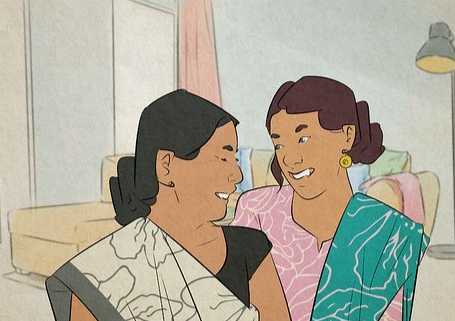
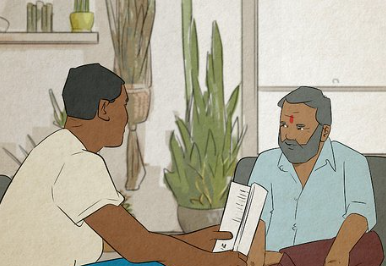
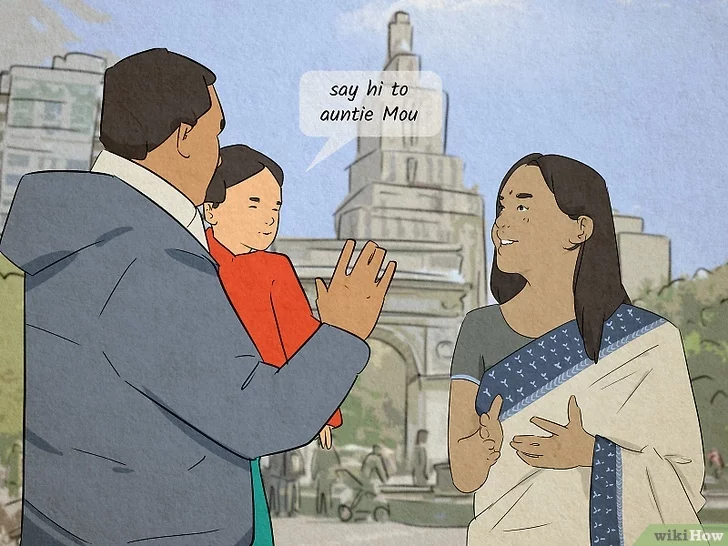
This cultural pattern is not just peculiar to Nigeria alone. Across India, children address every older neighbour, family friend, or passing acquaintance as Aunty or Uncle, the same instinct, the same social logic, the same invisible rule that first names belong only to equals.
In South Asian communities, the practice is so deeply embedded that it travels with the diaspora, into the United Kingdom, Canada, and the United States, where second-generation Indian and Pakistani children grow up calling their parents' friends Aunty and Uncle long before they understand that those people share no blood with them at all.
Parts of East Africa, the Philippines, and several Caribbean communities carry versions of the same convention. The details shift, the language changes, the tone changes, but the underlying context is identical: age creates distance, and a title bridges it.
What Happens When a Word Outgrows Its Meaning
Here is the quiet consequence of all of this, the thing that hides in plain sight: even when we all know what uncle and aunty technically mean, the repeated use of them in a different context rewires the association.
Language does not live in dictionaries, it lives in use, and when a word is used often enough in a particular way, the brain begins to respond to that use first, and the original definition second, if at all.
When Ifeanyi's mother tells him to go and greet his uncle, his first mental image is not a man who shares a father with one of his parents. It is simply an older man, the word has already been trained in him to mean something broader than its origin.
So when a true uncle, his father's actual brother, visits from Aba, the distinction has to be made explicitly. “This is your real uncle”, as if the word itself needs rescuing from the expanded meaning it has been given.
The confusion compounds along generational lines. An older cousin, say, Chukwuemeka, nineteen and barely a decade ahead of Ifeanyi, gets called 'Uncle Chukwuemeka' or maybe 'Brother Chukwuemeka' by household instruction.
Culture
Read Between the Lines of African Society
Your Gateway to Africa's Untold Cultural Narratives.
But what then does Ifeanyi call Chukwuemeka's father, his mother's actual brother, the man who is an uncle in every technical and biological sense?
Some families resolve this with 'Big Daddy or Uncle.' Others with a specific name. Others quietly accept that the entire hierarchy has been flattened by a social convention that prioritised age over lineage.
The cultural context for all of this was not and is not a mistake. It chose communal harmony and the preservation of age-based respect over terminological precision, and for decades, that trade-off has served Nigerian social life well.
The man down the road feels acknowledged. The teacher feels appropriately honoured. The stranger at the gate is handled without incident. Ifeanyi moves through his world with the right words for every situation, even if those words carry meanings his dictionary would not recognise.
Big Daddy and Big Mummy, the older siblings of your parents who outrank both Aunty and Uncle in the informal hierarchy, are a story for another day.
But they exist, and they tell you something important: Nigeria has always found a way to name the space between people, even when the official word was taken.