Ghana's oil sector surges with $3.5bn investment: Government eyes ownership and increased production
Ghana's Energy Minister, Dr. John Abdulai Jinapor, is spearheading efforts to revitalize the nation's upstream petroleum sector, emphasizing increased exploration and investment to reverse declining production. Significant new investment commitments from major oil partners signal renewed confidence, alongside a strategic shift towards empowering globally competitive indigenous Ghanaian companies. The Petroleum Commission is tasked with transforming its focus to maximize petroleum benefits and support Ghana's transition to a sustainable energy economy.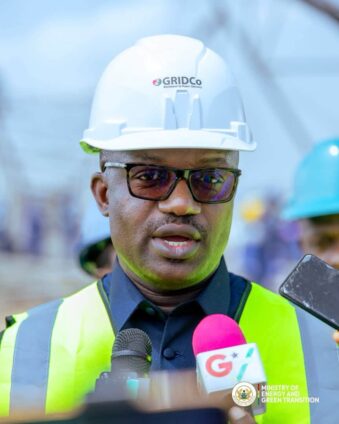
Ghana's upstream petroleum sector is at a critical juncture, grappling with declining production that necessitates urgent intervention to secure its long-term viability. Dr. John Abdulai Jinapor, the Minister for Energy and Green Transition, has underscored the imperative for increased exploration and substantial investment to reverse this trend and ensure the industry's future. Speaking at the 15th anniversary celebration of the Petroleum Commission, Minister Jinapor emphasized the need for Ghana to proactively enhance the attractiveness of its petroleum sector to international investors, especially amidst intense global competition for capital.
The government has prioritized the revitalization of the upstream sector, actively working to restore investor confidence, stimulate exploration activities, and halt the decline in production. This involves cultivating a competitive environment conducive to attracting the necessary capital and advanced technology for responsible and efficient resource development. Minister Jinapor highlighted that Ghana is already witnessing a renewed interest in its upstream acreage, including frontier basins, with several major international oil companies expressing interest. These expressions of interest are seen as strong indicators of Ghana’s potential to sustain investment in its petroleum industry, provided a robust regulatory and investment environment is maintained. The government is committed to reviewing the existing upstream petroleum policy, legislative, and regulatory frameworks to create a more competitive investment climate, ensuring both investor certainty and a fair return for the state.
Further demonstrating this renewed confidence, partners in the Jubilee and TEN fields have committed approximately US$2 billion towards future development, which includes the drilling of at least 10 new wells. Additionally, partners in the Offshore Cape Three Points project – comprising Eni, Vitol, and the Ghana National Petroleum Corporation (GNPC) – have pledged around US$1.5 billion. This investment is earmarked for increasing gas production, developing the Eban-Akoma discoveries, and undertaking new exploration activities. These significant investment pledges, as stated by Minister Jinapor, represent clear "votes of confidence in Ghana’s petroleum future." The government will persist in implementing policies that offer certainty to investors while safeguarding national interests and ensuring that petroleum resources contribute meaningfully to job creation, industrialization, energy security, and broader long-term economic development.
Beyond attracting external capital, Minister Jinapor also called for a transformative shift in Ghana’s local participation within the upstream petroleum industry. The vision is to move beyond merely securing contracts to fostering the development of globally competitive indigenous companies capable of owning and leading businesses in the sector. Ghana has made considerable strides in promoting local participation since the introduction of the Petroleum (Local Content and Local Participation) Regulations, 2013 (L.I. 2204). Indigenous Ghanaian Companies, which received approximately US$146 million in contracts in 2013, saw this figure surge to nearly US$5 billion out of a total contract value of about US$22.3 billion by the first half of 2026. While acknowledging this substantial progress, Minister Jinapor articulated an ambition for even greater empowerment: "from participation to capability, from contracting to ownership, and from opportunities for Ghanaian companies to globally competitive Ghanaian enterprises." The government is resolute in its support for policies that deepen Ghanaian involvement, simultaneously ensuring that local companies acquire the requisite capacity, technology, and expertise to compete on an international scale.
The Petroleum Commission, celebrating its 15th anniversary, has been charged by Minister Jinapor to embark on a transformative journey for its next 15 years. Since its establishment in 2011, the Commission has successfully created a credible framework for Ghana’s upstream petroleum industry. Its role is now poised to become even more pivotal as Ghana strives to attract increased investment, boost oil and gas production, enhance local participation, and ensure that petroleum resources serve as catalysts for industrialization and energy security. Minister Jinapor stated that while the first fifteen years focused on establishing the regulator and building institutional foundations, "The next fifteen must be about transformation." He emphasized that Ghana must strategically leverage the revenues, infrastructure, technology, and human capital generated from its petroleum sector to facilitate a transition towards a more diversified and sustainable energy economy. The overarching goal is to maximize the value derived from petroleum resources responsibly, while simultaneously utilizing these gains to construct a robust and sustainable energy future for the nation.