2027 Peace Accord Drama: Tinubu Absent, Obi Warns, Atiku/Makinde Skip Signing
Nigeria’s 2027 election candidates sign the National Peace Accord, but Tinubu’s absence and concerns over accountability raise questions about whether the pact can prevent electoral violence.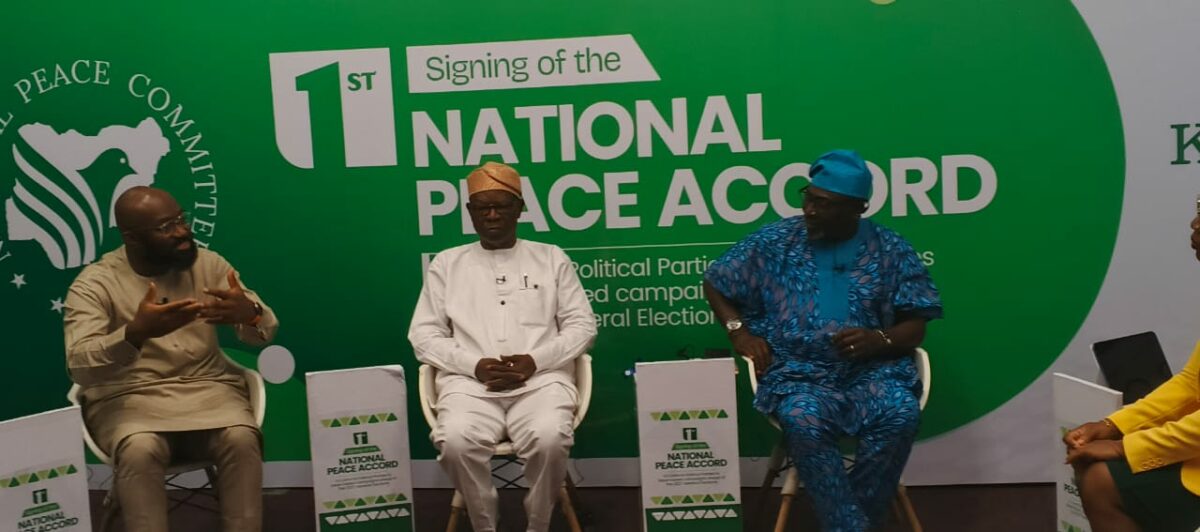
Ahead of Nigeria's 2027 general elections, political parties and their candidates gathered in Abuja for the signing of the National Peace Accord. This significant ceremony, organized by the National Peace Committee in partnership with The Kukah Centre, aimed to foster peaceful campaigns and ensure credible elections by securing commitments from political actors.
Professor Joash Amupitan, Chairman of the Independent National Electoral Commission (INEC), addressed the attendees, highlighting the Peace Accord as a critical political tradition. He emphasized its role in strengthening the moral authority required to promote decorum throughout the electoral process. Amupitan urged political parties and candidates to commit to issue-based campaigns, presenting measurable manifestos that prioritize the welfare and interests of Nigerians. He underscored that political campaigns should serve as a platform for candidates to present their programs and compete for public mandate, rather than devolving into violence and confrontation. The INEC chairman implored candidates to view the Accord as more than a mere ceremonial commitment, but rather a covenant to uphold the country's values and unity. He advised politicians to regard election campaigns as a competitive job interview where the electorate assesses candidates based on their competence, character, ideas, and proposed solutions to national challenges. Amupitan cautioned against transforming the electoral contest into a "war theatre," stressing the imperative for political actors to conduct themselves in ways that strengthen democracy and preserve national unity.
Several prominent political figures were notably absent from the signing. Former Vice President and presidential candidate of the African Democratic Congress (ADC), Atiku Abubakar, did not attend. Similarly, Oyo State Governor and presidential candidate of the Allied Peoples Movement (APM), Seyi Makinde, was also absent. President Bola Tinubu, the presidential candidate of the ruling All Progressives Congress (APC), was represented at the ceremony by the Secretary to the Government of the Federation, George Akume.
Peter Obi, the presidential candidate of the NDC, was present at the Bola Ahmed Tinubu International Conference Centre and shared his perspective on the accord. He asserted that political candidates seeking public office must ensure their conduct and behavior accurately reflect the responsibilities associated with the offices they aspire to occupy. Obi called for peaceful, issue-based campaigns, urging politicians to focus on the challenges Nigerians face. He expressed profound sadness over the loss of lives during the recently concluded Osun State governorship election, calling for remembrance and support for the families of those who died, and hoping such incidents would not recur. While committed to changing the electoral process, Obi questioned the fundamental need for political candidates to be compelled to sign a peace accord, arguing that anyone seeking public office should inherently demonstrate exemplary conduct. He maintained that excellence in public office begins with the character and conduct of the individual, and that whether termed a peace or justice accord, a candidate's personal behavior must reflect the office they seek. Obi appealed for an electoral system where votes genuinely count, for the sake of Nigeria's children, and suggested that voters should use their ballots to punish politicians who violate the commitments of the peace accord.
Adewole Adebayo, the presidential candidate of the Social Democratic Party (SDP), offered a critical view of the proceedings. He strongly criticized President Bola Tinubu's absence, stating it undermined the very essence of the peace accord process and sent a negative signal regarding the commitment of political leaders to peaceful elections. Adebayo, speaking on Channels Television, argued that political leaders should personally demonstrate their commitment rather than relying on representatives. He described the signing of the National Peace Accord as "meaningless without justice, accountability and respect for democratic principles," questioning its effectiveness given that similar agreements have been violated in previous elections without consequences. Adebayo accused the government of undermining democratic principles and intimidating opposition politicians, insisting that the government bears central responsibility for ensuring peaceful elections. He contended that electoral peace could be achieved without formal agreements if the government and relevant institutions performed their constitutional responsibilities diligently. Adebayo stated that if the President adhered to his oath of office and governed according to the law, ensuring all enforcement agencies, INEC, and other government institutions played their roles, there would be no need for such an accord. While he attended the ceremony out of obligation, Adebayo remained doubtful about the accord's ability to prevent electoral violence, noting that those who signed previous accords had violated them. He also rejected claims of improvement in Nigeria's electoral process, citing the deaths recorded during the Osun election and questioning the deployment of approximately 30 commissioners of police in one state. Adebayo emphasized the need for Nigeria to build a political system with effective and independent institutions, rather than relying on candidates to sign agreements. He concluded that a civilized government, one of conscience that follows the law, would naturally ensure peaceful elections without being compelled to sign an accord, suggesting that a president asked to sign such an agreement indicates a lack of leadership. He maintained that the ultimate responsibility for peaceful elections rests with the government, security agencies, the electoral commission, and other institutions mandated to protect democracy and enforce the law.